

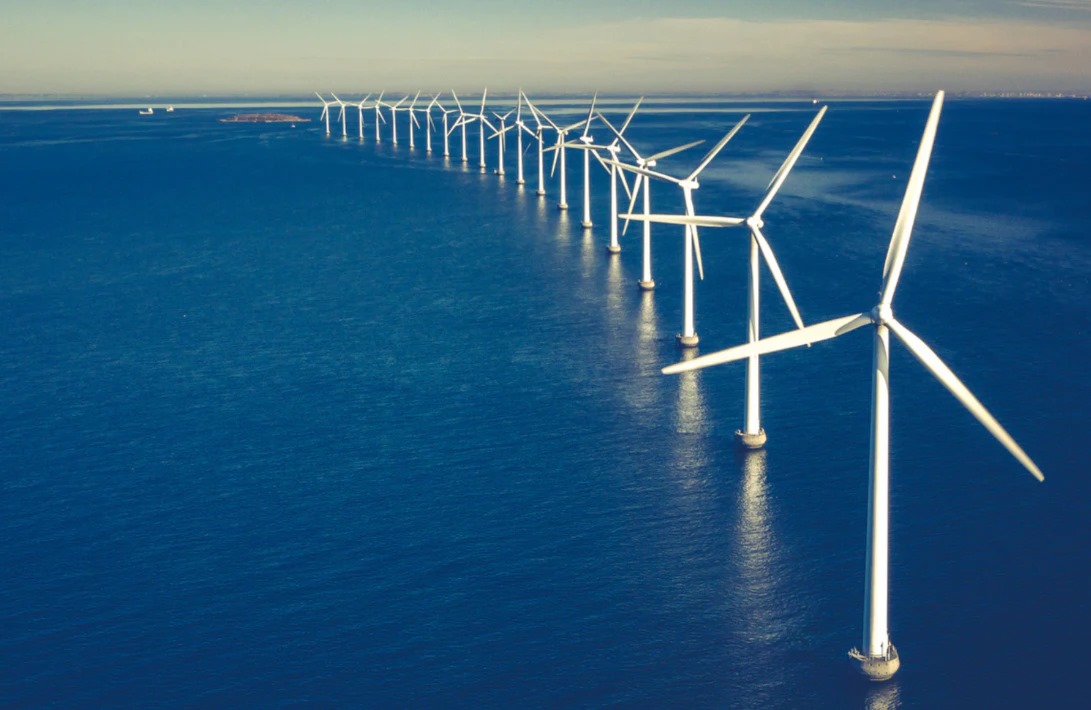




BAKU, Azerbaijan, August 24. The global offshore wind industry has faced substantial obstacles recently, including inflationary pressures and supply chain disruptions that have led to postponed permitting processes, delayed auctions, and slow supply chain development, Trend reports.
However, despite these challenges, the sector added 7 percent more capacity in 2023 compared to the previous year, according to a recent outlook from Rystad Energy.
This positive trend is expected to continue in 2024, with new capacity additions projected to increase by 9 percent, reaching over 11 GW by the end of the year. Rystad Energy anticipates that the offshore wind sector will maintain steady growth, forecasting that global installations, excluding mainland China, will surpass 520 GW by 2040.
Europe is set to play a pivotal role in this expansion, particularly through its reliance on floating wind technology to meet ambitious national targets and fully utilize its vast offshore resources. By 2040, Europe is expected to account for more than 70 percent of global floating wind installations. Although some delays in project timelines beyond 2030 are anticipated, a strong push for accelerated deployment is likely. As a result, floating wind capacity in Europe could approach 90 GW by 2040, with the UK, France, and Portugal leading the charge.
Asia is also expected to be instrumental in the development of floating wind as a mature technology, with the region (excluding mainland China) projected to capture 20 percent of global installations by 2040.
However, the floating wind sector, despite a surge in recent project announcements, faces challenges similar to those of the bottom-fixed segment, particularly in terms of supply chain constraints. These issues could limit floating wind capacity to less than 7 GW by 2030. To overcome these obstacles, increased government support will be essential to ensure the sector's continued advancement and growth.