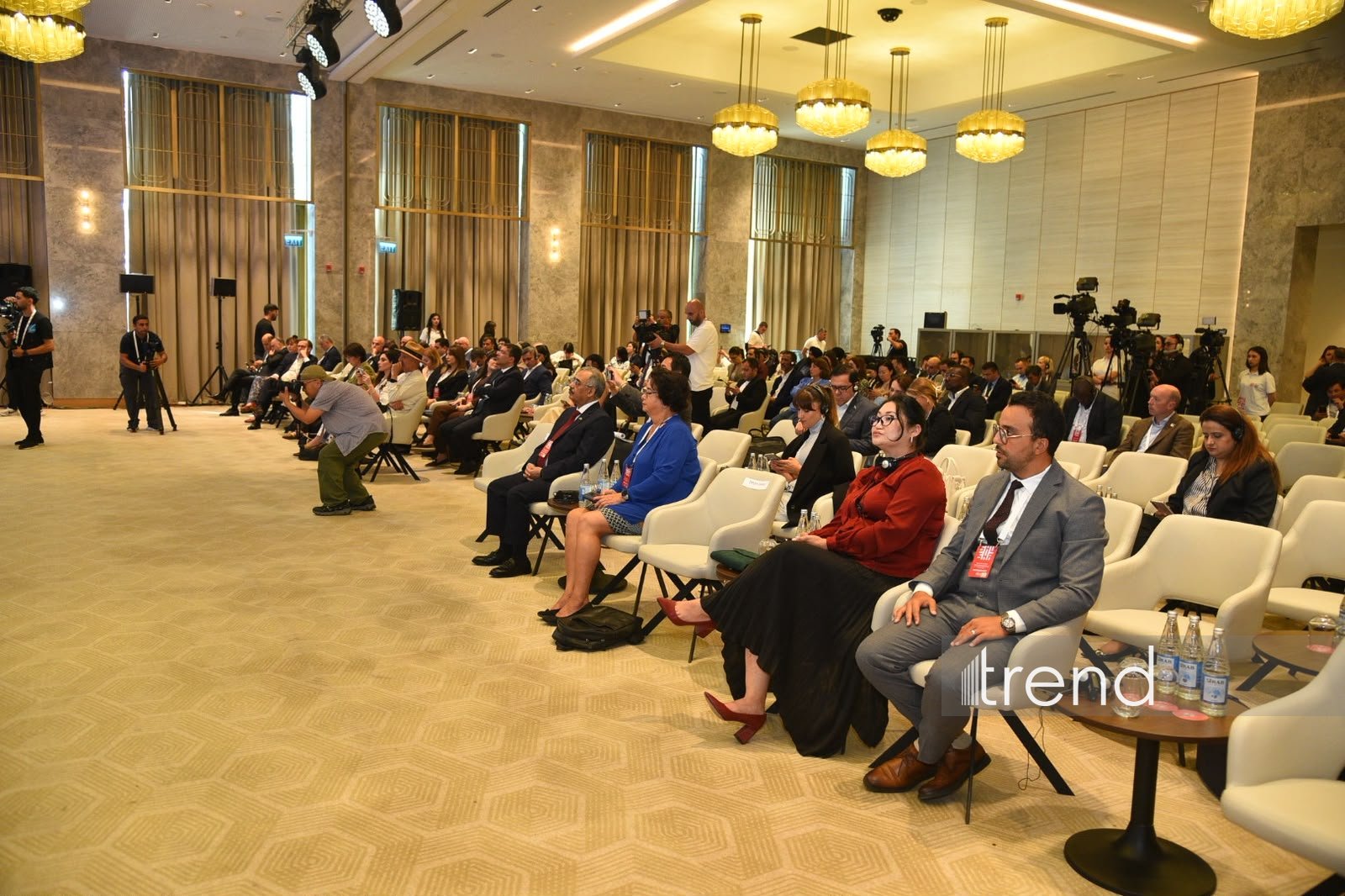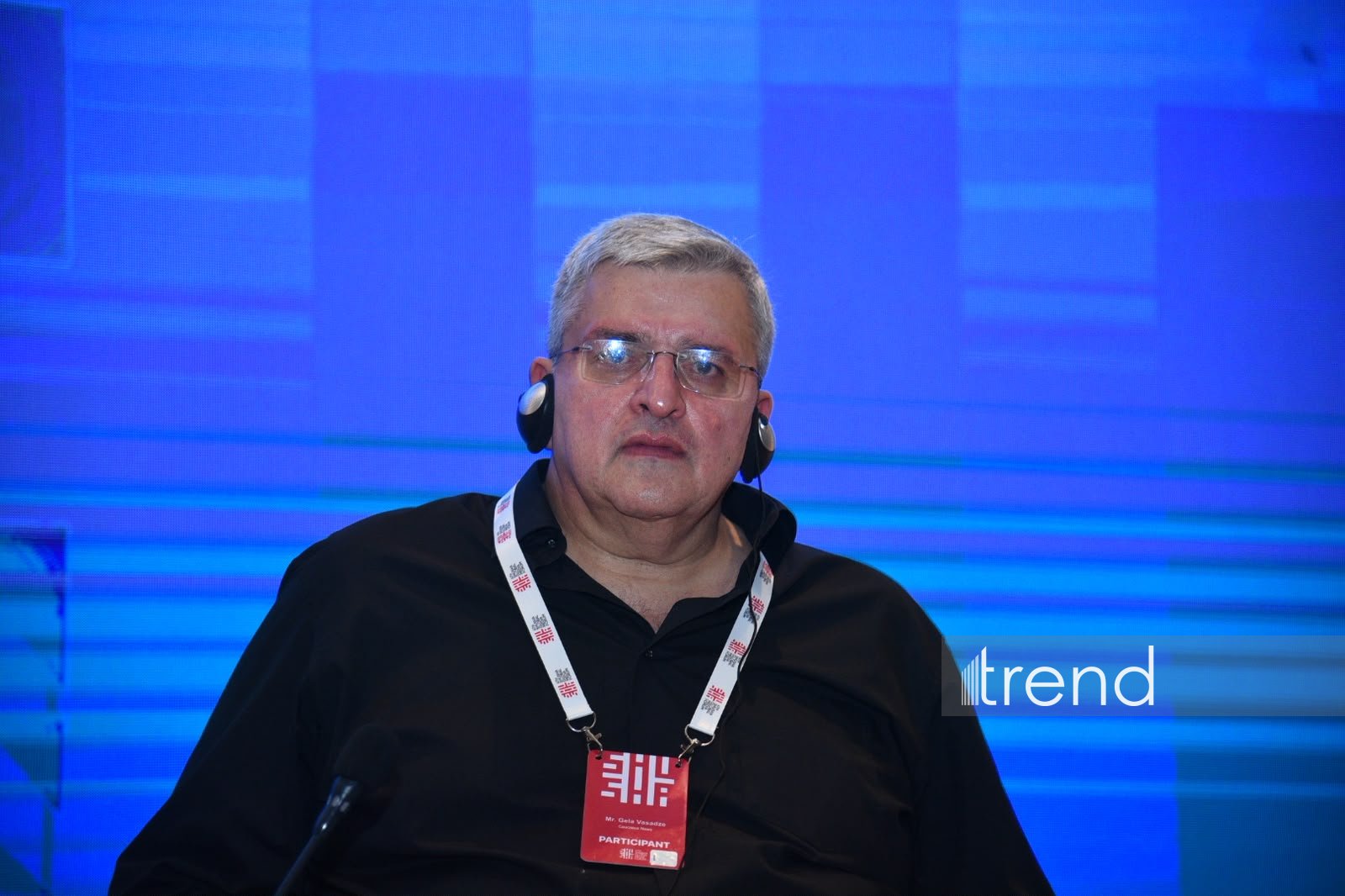

SHUSHA, Azerbaijan, July 13. A panel session titled "Media Horizon: Artificial Intelligence, Visual Storytelling, and the Next Generation Experience" was held as part of the 4th Shusha Global Media Forum, Trend's special correspondent reports.
During the panel discussion, participants discussed the impact of artificial intelligence on modern journalism, new formats for creating visual content, and the use of cutting-edge digital technologies in the development of the media industry.
Panelists also examined the integration of AI into editorial processes, the transformation of media consumption, the development of interactive storytelling, and the prospects for creating next-generation media products.
Speaking at the event, tech blogger Farid Pardashunaz noted that artificial intelligence opens up new opportunities for the media, but that human creativity and the ability to create unique content will remain key factors in journalism.
“With the advent of artificial intelligence, information has become more accessible. Today, virtually anyone can create content and share it with a wide audience. In the future, artificial intelligence will increasingly personalize information, offering each user content that matches their interests. This opens up new opportunities for the development of media and interaction with the audience,” Pardashunaz said.
According to him, artificial intelligence is already becoming part of the daily work of modern newsrooms, helping journalists perform various tasks.
“Artificial intelligence can serve as an assistant to journalists, editors, proofreaders, and translators. However, creative thinking, an author’s perspective, and the ability to independently analyze information will always be in demand. If a journalist creates their own unique content and offers the audience new ideas, they cannot be replaced by technology,” he noted.
Pardashunaz emphasized that the development of artificial intelligence depends directly on humans.
“Data and content created by humans remain the main source of artificial intelligence development. It is human creativity that serves as the foundation for the further improvement of these technologies. Therefore, artificial intelligence and humans should not compete, but rather complement each other,” added the tech blogger.
Kanat Iskakov, First Deputy Minister of Culture and Information of Kazakhstan, emphasized in his speech that while the development of information technology has expanded the possibilities for disseminating information, it has also made the information environment more complex.
“Ignoring existing rules leads to serious consequences: the spread of disinformation, a loss of trust among various participants in public life, a decline in accountability, and—most dangerously—the erosion of trust and the weakening of international relations. Disinformation is used not only to manipulate public opinion, but also to incite conflicts between countries and peoples, and within states—to spread hatred and destabilize society,” Iskakov said.
According to him, one of the most important areas in the fight against disinformation is close cooperation with digital platforms and increasing the transparency of the content being disseminated.
"We consider cooperation with online platforms to be of the utmost importance. Content created using artificial intelligence must be clearly labeled so that users can understand its origin. This is an important legislative measure, and Kazakhstan has already made significant progress both in combating misinformation and in collaborating with the world’s largest digital platforms,” he noted.