


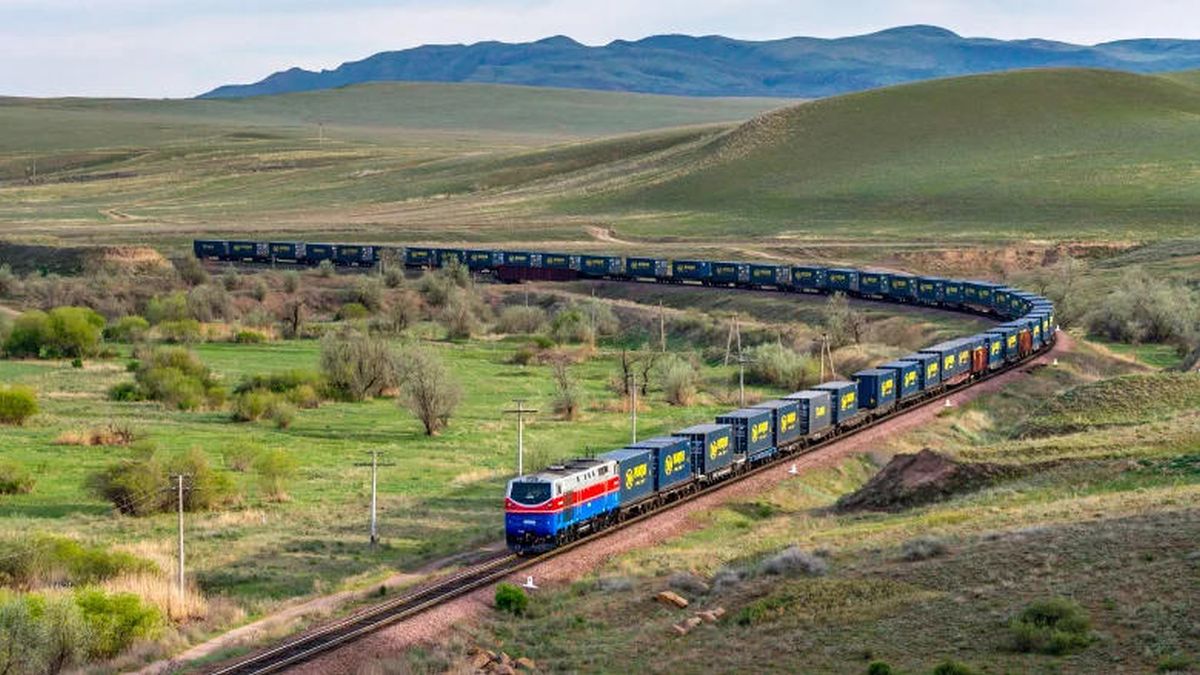

BAKU, Azerbaijan, October 20. The Trans-Caspian International Transport Route (TITR, Middle Corridor) can help expand trade opportunities, improve regional connectivity, and attract logistics operators, according to an analysis by the International Institute for Middle East and Balkan Studies (IFIMES).
Kazakhstan's position between Europe and Asia has historically shaped its role in regional exchange. Its geographic advantage is gaining further importance as international logistics chains are reconfigured, e-commerce expands and businesses seek alternative routes for transporting goods, the analysis said.
IFIMES noted that Kazakhstan is developing transport infrastructure, rail and road corridors, logistics hubs and multimodal solutions. The Middle Corridor links China and Central Asia with the Caucasus and European markets via the Caspian and Black Seas.
"The development of such routes matters for more than transit revenues. It helps expand trade opportunities, improve connectivity between regions, attract logistics operators and create new avenues for industrial cooperation. The competitiveness of transport corridors, however, is determined by more than geography alone: it requires harmonised customs procedures, predictable delivery times, efficient port infrastructure and digital data exchange among all parties involved in freight transport," IFIMES said.
According to the analyses, cooperation with European partners offers Kazakhstan additional opportunities. The European market is of interest not only as an export destination but also as a source of technology, engineering solutions, investment expertise and modern standards for infrastructure management.
At the same time, Kazakhstan needs to develop its own logistics and production base so that it serves not only as a transit territory but also as a place where high-value-added goods and services are created.
"It is the combination of transport connectivity, industrial development and technological renewal that can turn geographic position into a lasting competitive advantage," the analysis states.


