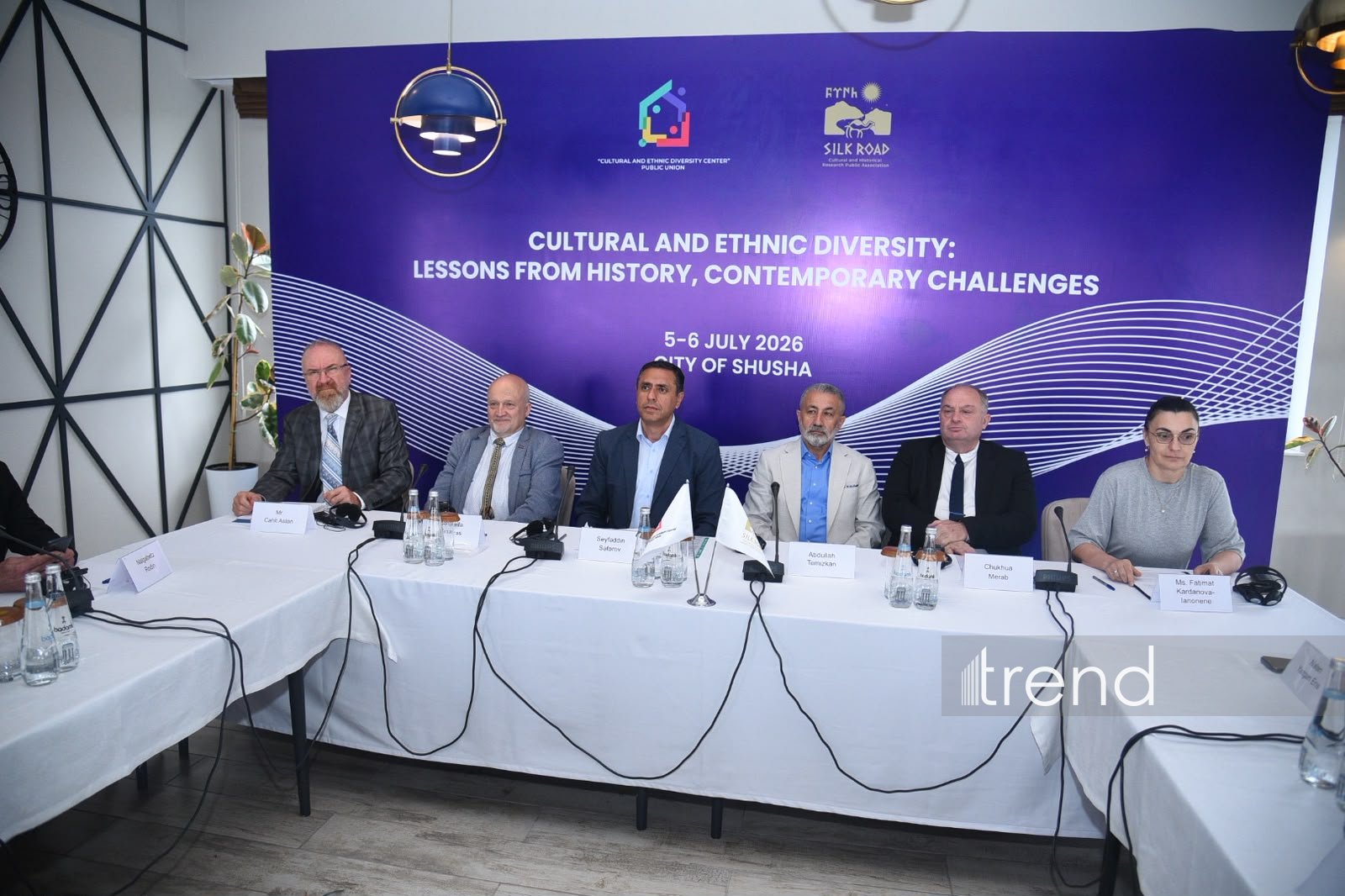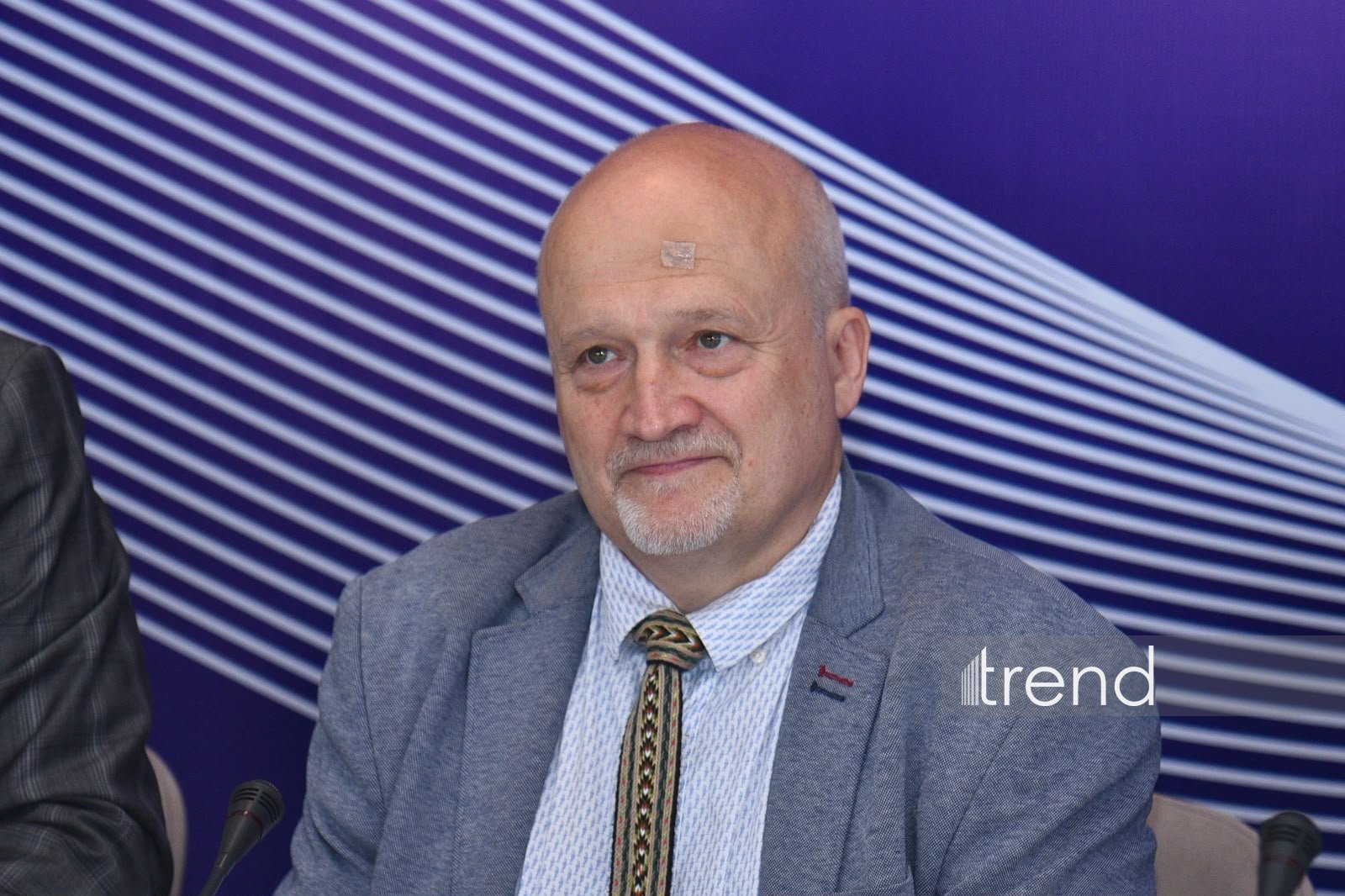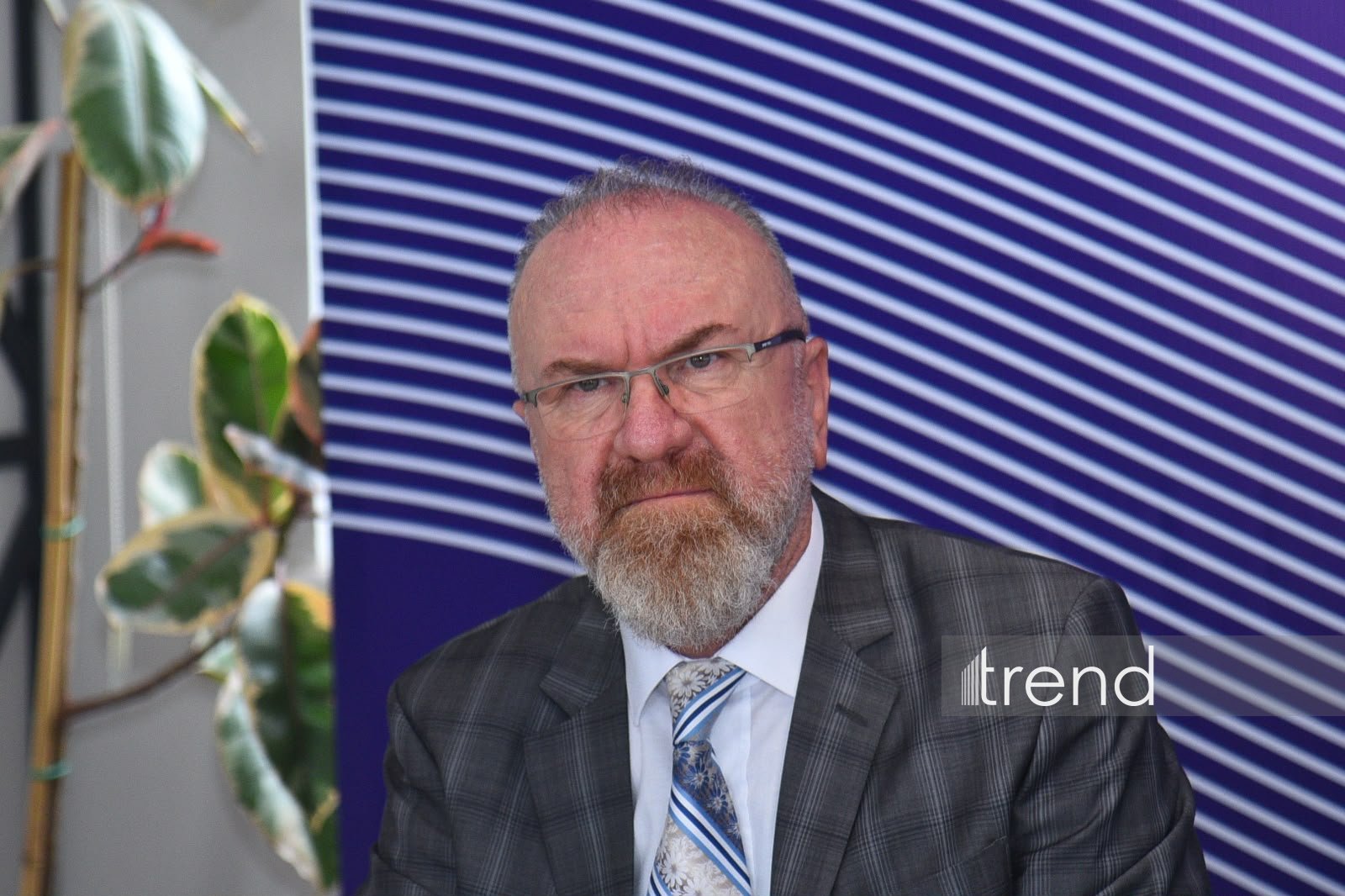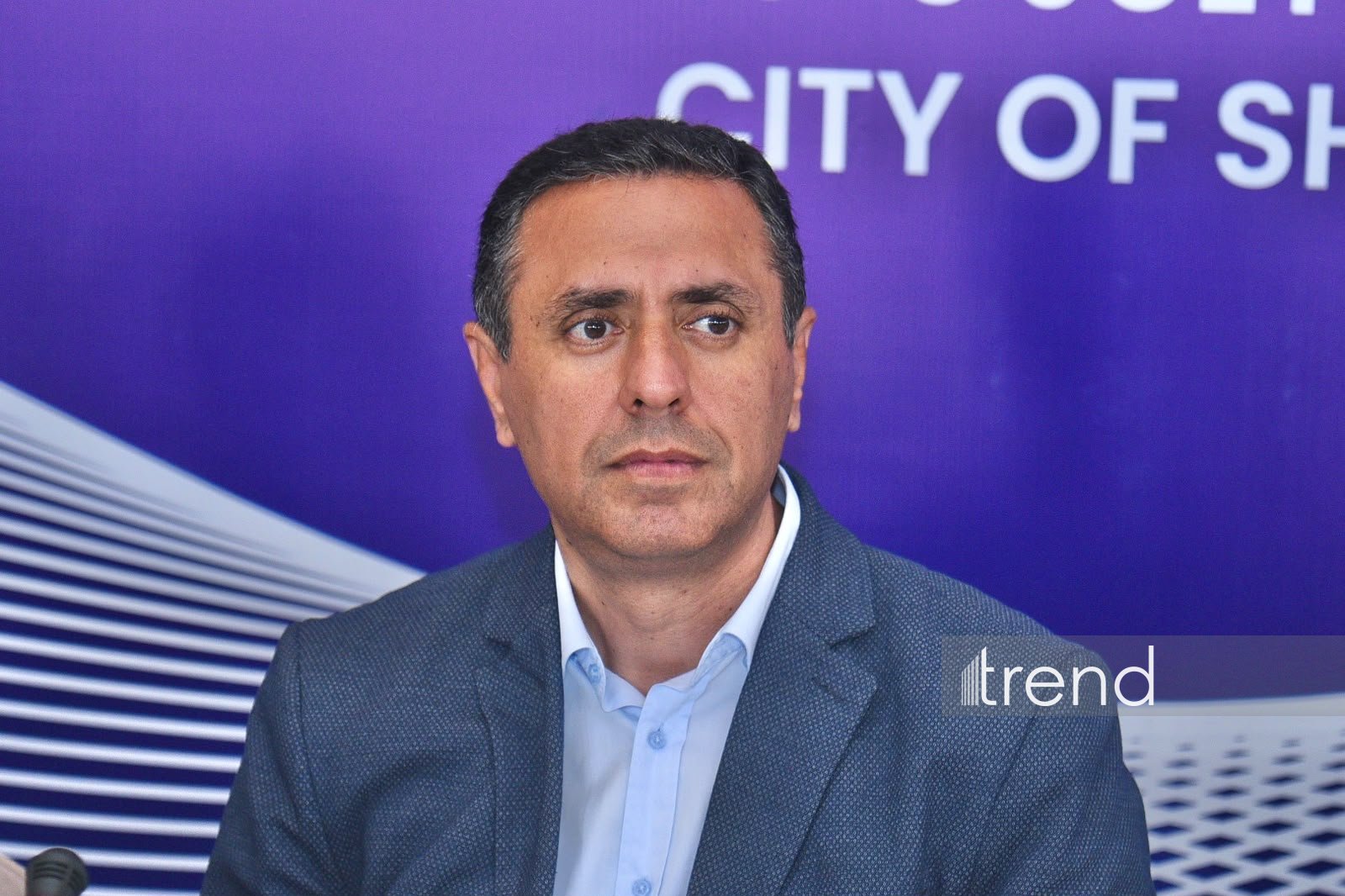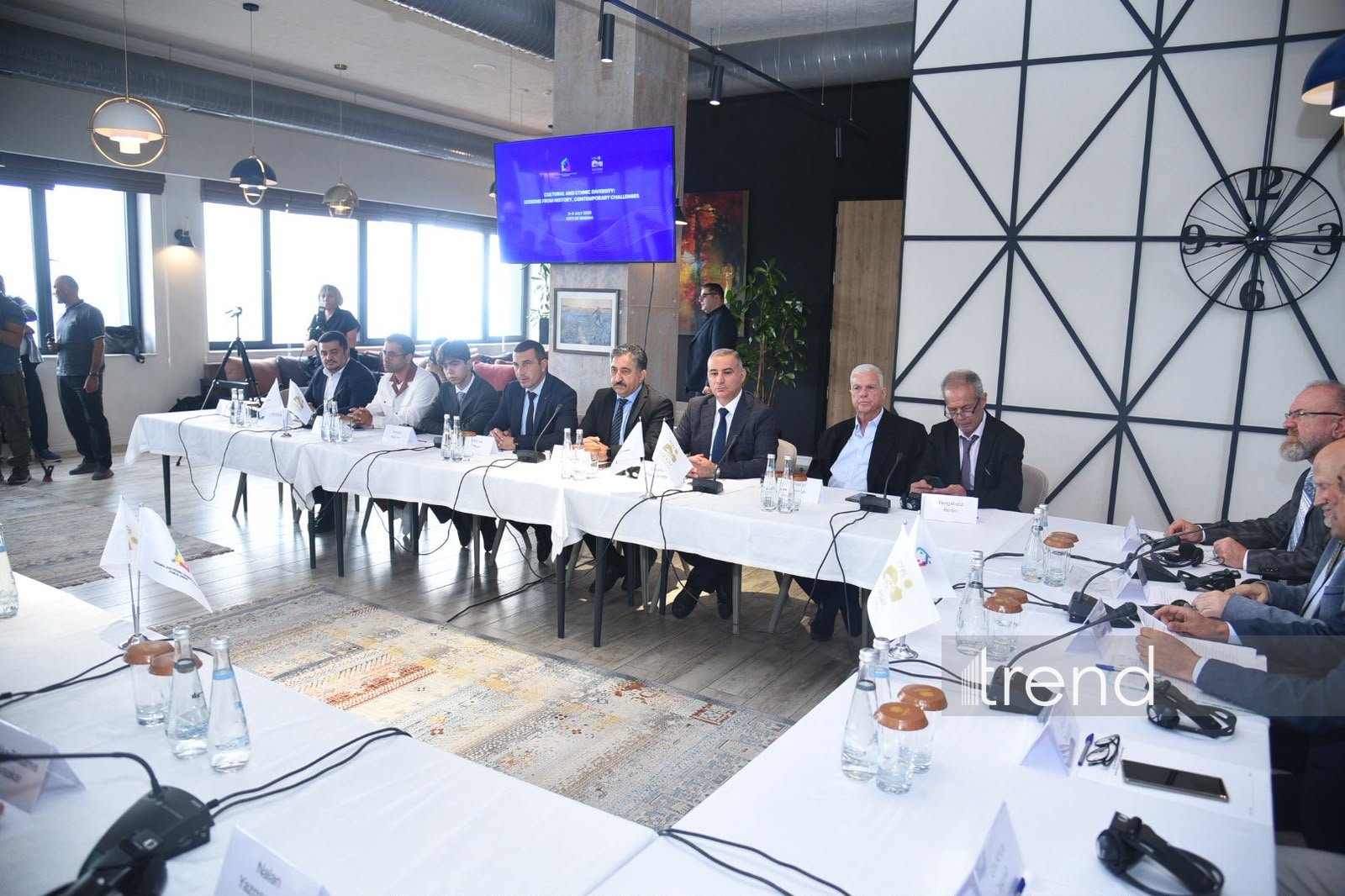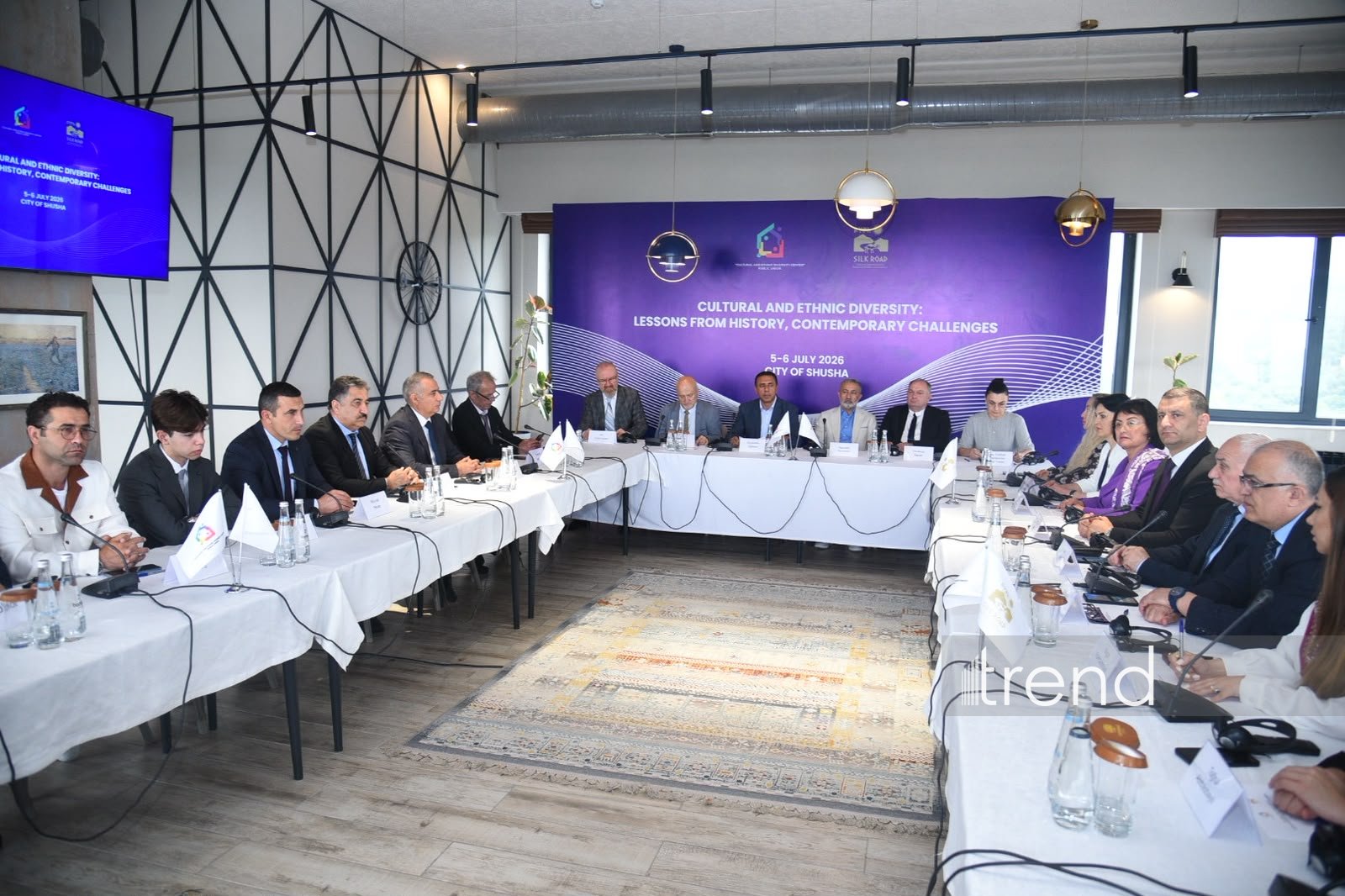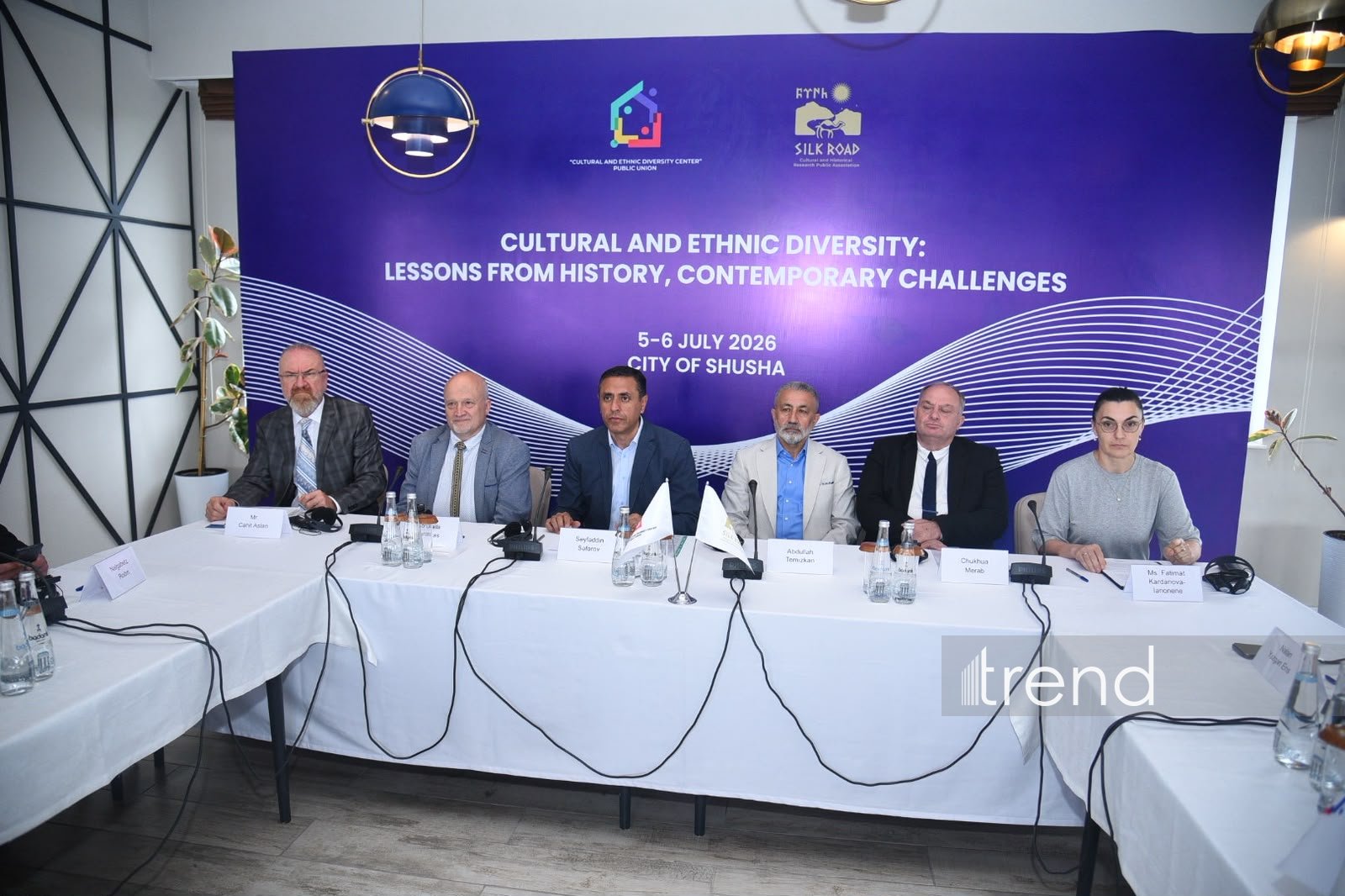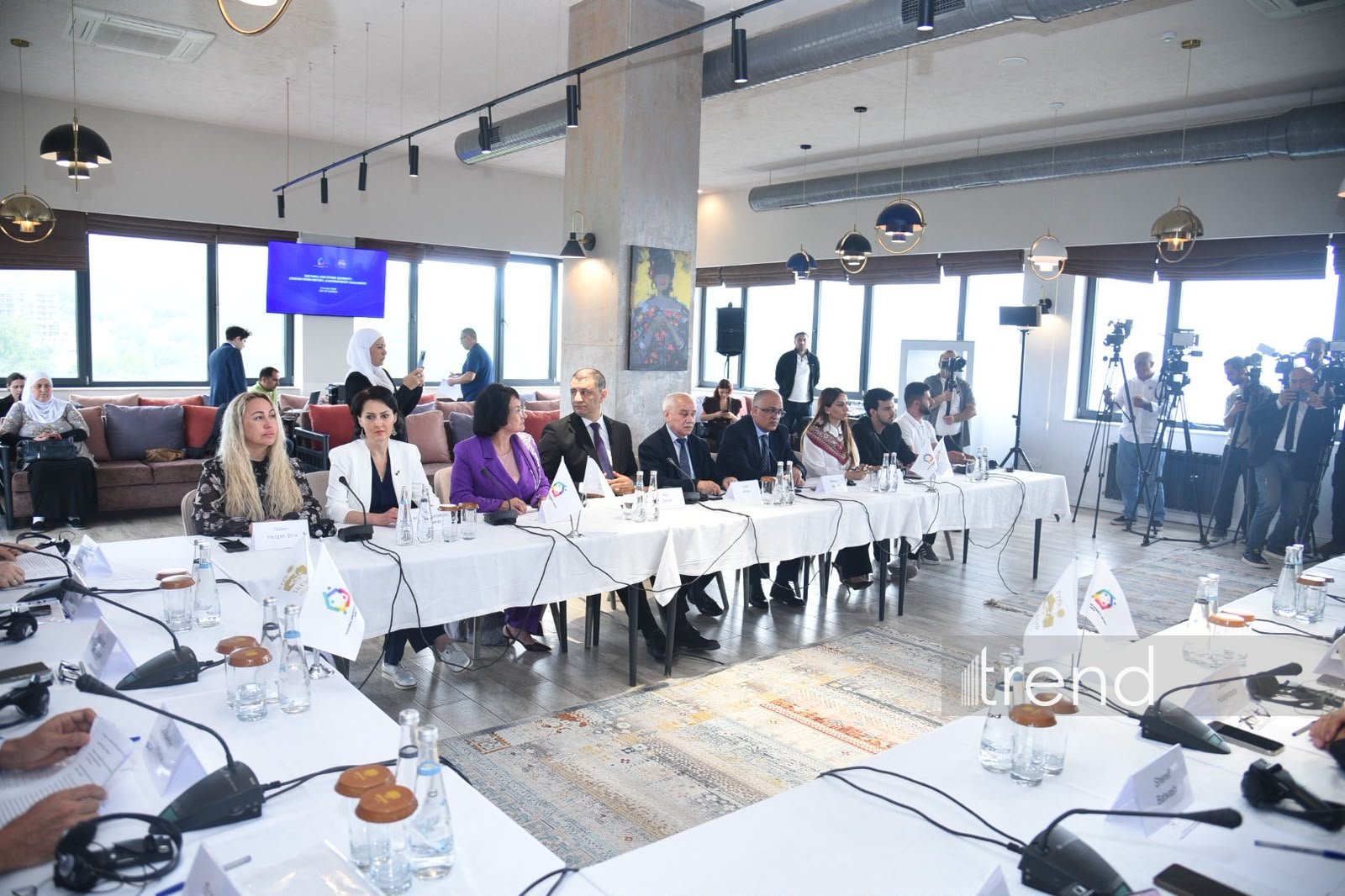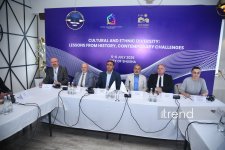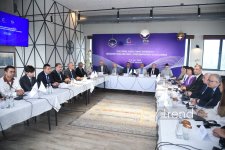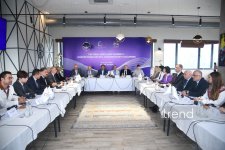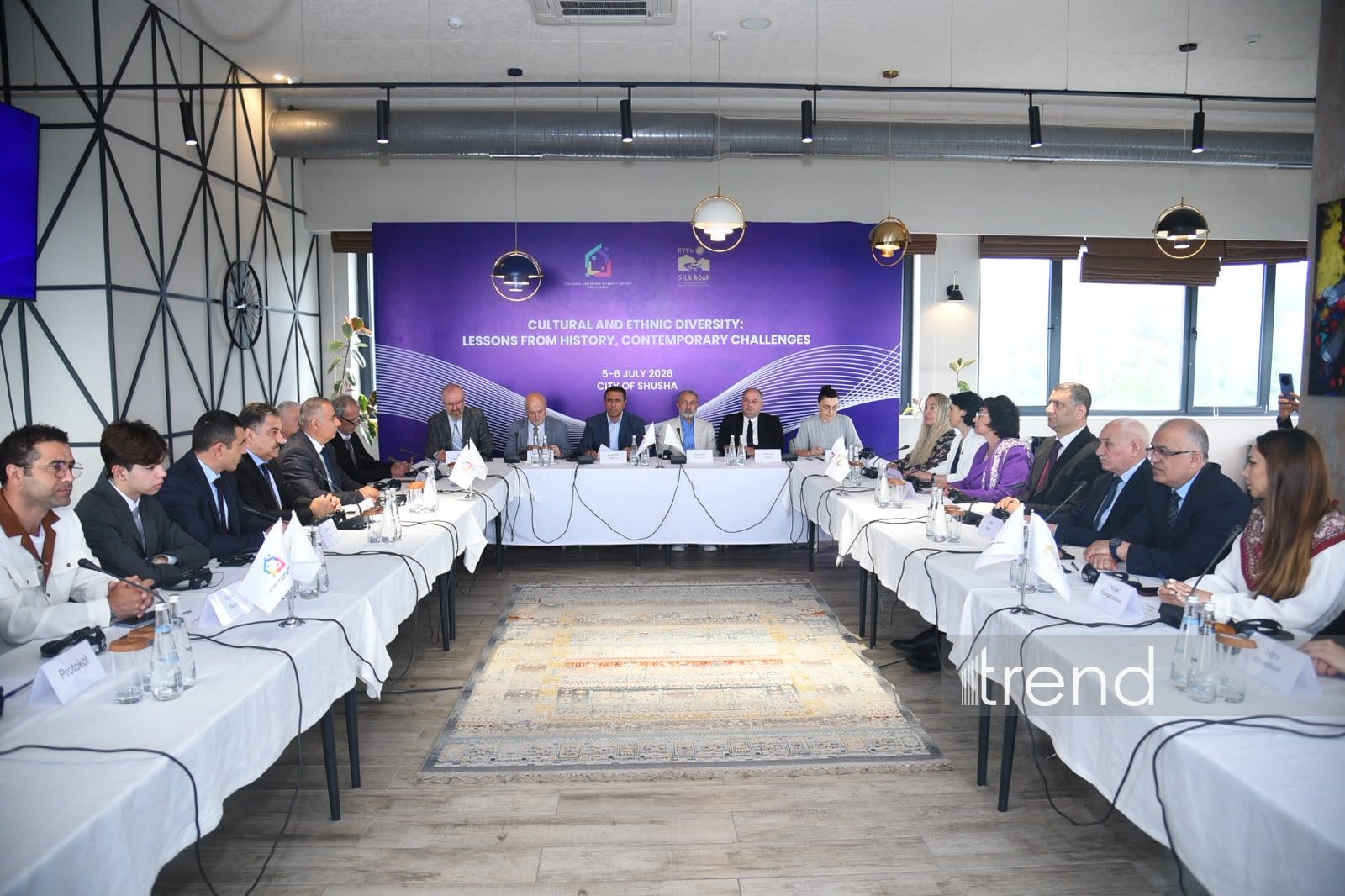
SHUSHA, Azerbaijan, July 6. An international conference on the topic “Cultural and ethnic diversity: lessons from history, contemporary challenges” was held in Shusha, Trend’s correspondent reports from the event.
Representatives from 10 countries participated in the conference.
The conference was organized by the “Center for Cultural and Ethnic Diversity” Public Association in partnership with the “Silk Road” Public Association for Cultural and Historical Research.
Representatives from Azerbaijan, the United States, France, Lithuania, Poland, the Czech Republic, Germany, Israel, Türkiye, and Georgia participated in the conference.
The Chairman of the Center for Cultural and Ethnic Diversity, Seyfaddin Huseynli (Safarov), spoke on the topic “Mobilization Against Activities Targeting Cultural and Ethnic Diversity.” He pointed out that many people, including Azerbaijanis, are systematically subjected to discrimination and violations of their fundamental rights in Russia based on their ethnic and religious affiliations.
"We feel this pain deeply through our own family’s experience. On June 27, 2025, in the city of Yekaterinburg, three of my brothers and several close relatives were subjected to an unprovoked attack by Russian law enforcement agencies. Russian law enforcement officers suddenly stormed into their homes. In full view of family members, including women and children, they were subjected to torture and suffering. Two of my brothers, Huseyn Safarov and Ziyaddin Safarov, were tortured to death. My other relatives, including my brother Bakir Safarov, as well as Ayaz, Akif, and Kamal Safarov, among others, remain in custody in the city of Yekaterinburg. They were subjected to show trials and handed down unfounded prison sentences ranging from 10 to 20 years. “We believe that cultural and ethnic diversity and tolerance should be the hallmark of every state, and that discrimination on ethnic and religious grounds must be rejected,” he said.
Professor Abdullah Temizkan, Chair of the Department of Turkish History, Institute of Turkish World Studies of Ege University in Türkiye, delivered a presentation titled “Characteristics of Russian Colonialism Against the Peoples of the Caucasus and the Lessons of History.” He stated that Russia has historically viewed the Caucasus as a region for military fortification, seeking to establish a foothold there, suppress the local peoples, and subjugate them.
“To this end, a policy was implemented aimed at dividing them, pitting them against one another, and isolating them,” he said.
Abdullah Temizkan highlighted the remarkable strength of resistance and the spirit of freedom among the peoples of the Caucasus: “Freedom lives not only on the battlefield — it is preserved by safeguarding national culture, historical memory, and the homeland.”
At the conference, Gintaras Songaila, Expert Advisor to the World Circassian Agency in Lithuania. The Director of the Lithuanian Media Association gave a presentation titled “Circassians in Search of Historical Justice.” G. Songaila called on Russia to recognize the genocide it committed against the Circassians in the past. He noted that in the 19th century, 90% of the Circassians were subjected to genocide, their historical homeland was destroyed, and they themselves were scattered across various locations.
“Today, Circassian culture is subject to constant persecution and is on the verge of extinction. According to my information, the Republic of Lithuania will recognize the genocide of the Circassian people committed by the Russian Empire in the near future. As a result, Lithuania will be able to raise the issue of recognizing the Circassians’ historical homeland within the framework of the UN,” he said.
Gintaras Songaila noted that Russia must abandon its imperialist policies and take responsibility for its actions.
Prof. Merab Chukhua, the Chairman of the İnstitute of Caucasology at the Tbilisi State University, delivered a presentation titled “The Problem of Studying the Genocides Against the Circassians: The Georgian Experience.” The scholar specializing in Circassian studies noted that the Circassian population worldwide numbers about 6.2 million people, but currently only 10% of them live on their historical lands.
“Today, the Circassians, facing the threat of extinction, want to return to their historical homeland, from which they were forcibly expelled, and they have the right to do so,” he said.
Merab Chukhua emphasized that a number of regions in Russia, including the city of Sochi, are historic Circassian lands. He spoke of falsifications in modern Russian place-name usage and noted that some settlements, named by Russia’s ruling circles after Circassians, are in fact places completely foreign to the Circassians — they were never there before, and they are not there now. Merab Chukhua interpreted this as steps aimed at erasing the historical memory of the Circassians.
Ibrahim Yaganov, President of the Caucasian Union, member of the Council of the World Circassian Agency movement, who joined the conference via video link from France, spoke on the topic “Ethnic and Cultural Intolerance in Russia: Local Peoples Forcibly Drawn into the War in Ukraine.”
"Today, in the provinces of Russia, indigenous peoples—especially small ethnic groups—are being forcibly conscripted into military service and sent to the front lines. The Circassians, like many other peoples, are being drawn into this war, and a large number of Circassians have already lost their lives in it. The Circassians have no reason or obligation to support this war. Despite this, Russian law enforcement agencies are forcibly detaining our young people and taking them to the front lines in Ukraine. Russian forces conduct nighttime raids, arrest people, and force them to make a difficult choice: either prison for refusing military service or signing a contract and being sent to war. Some sign contracts, fearing that their refusal will lead to persecution and suffering for their families and children. Those who refuse are sent to prisons, where they are subjected to such inhumane torture that, in the end, to escape prison, they agree to sign a contract—they go to war and die. For what purpose? What are they fighting for? Who is the enemy? There is no answer. Instead, there is confusion, fear, and violence,” he said.
The international conference also noted that in Russia, “skinhead” groups operating under new names are expanding even further and growing stronger, and that non-Russians are becoming the primary targets of these groups, subjected to a system of punishment they have created that operates parallel to the state.
Rodin Nalgabetz, Chairman of the National Council of the Circassian Community of Israel and President of the World Circassian Agency, gave a presentation titled “Circassian Heritage in Israel and the Challenges of Time.” R. Nalgabets noted that Israel is also one of the places where Circassians have found refuge.
“Our goal is to take our destiny into our own hands and build our future. We see Azerbaijan as a tremendous source of inspiration—as a country that has managed to proudly preserve its independence, sovereignty, culture, and language in an extremely complex geopolitical environment,” he said.
Aida Eyvazli Goyturk – Chairperson of the “Silk Road” Cultural and Historical Research Public Union, delivered a presentation titled “The Victory in Karabakh and the End of the Russian Occupation.” She said that the tragedies of genocide and the expulsion of peoples living in the Caucasus are very similar to one another.
"In the early 19th century, Russian imperial forces completed their occupation of Azerbaijani lands. In 1918, we declared our independence, but just two years later, we faced occupation once again—this time by Russia. During the Soviet era, our historic lands, such as Zangezur and Daralayaz, were torn away from us and annexed to Armenia; in 1937, our intellectual elite was subjected to repression. Hundreds of thousands of Azerbaijanis living in Armenia were deported. Thousands of people lost their lives during this deportation. On January 20, 1990, Soviet military personnel shed the blood of the Azerbaijani people. In 1992, in Karabakh—in Khojaly—with the participation of the 366th Russian regiment, approximately 700 civilians were subjected to genocide. Twenty percent of Azerbaijan’s territory was occupied. We have not forgotten what was done to us; we did not give up; we have kept our national memory alive. How did Armenia manage to keep Azerbaijani territories under occupation for 30 years? Of course, because of Russia. Those Russian tanks that advanced on us are now in Baku’s War Trophies Park. This is a triumph of historical justice. All people suffering from colonial oppression in Russia have a share in this Victory. Shusha is a symbol of this Victory. That is precisely why we are in Shusha today, together,” she said.
The international conference continued with panel discussions on the topics “Ethnic and Cultural Diversity as a Treasure of Humanity” and “Modern Forms of Colonialism: Actions That Bring Tragedy, Enslavement, and Suffering to Peoples.” During the panel discussions, representatives of civil society from the United States, Germany, Poland, the Czech Republic, and other countries will share their views on the topic.