


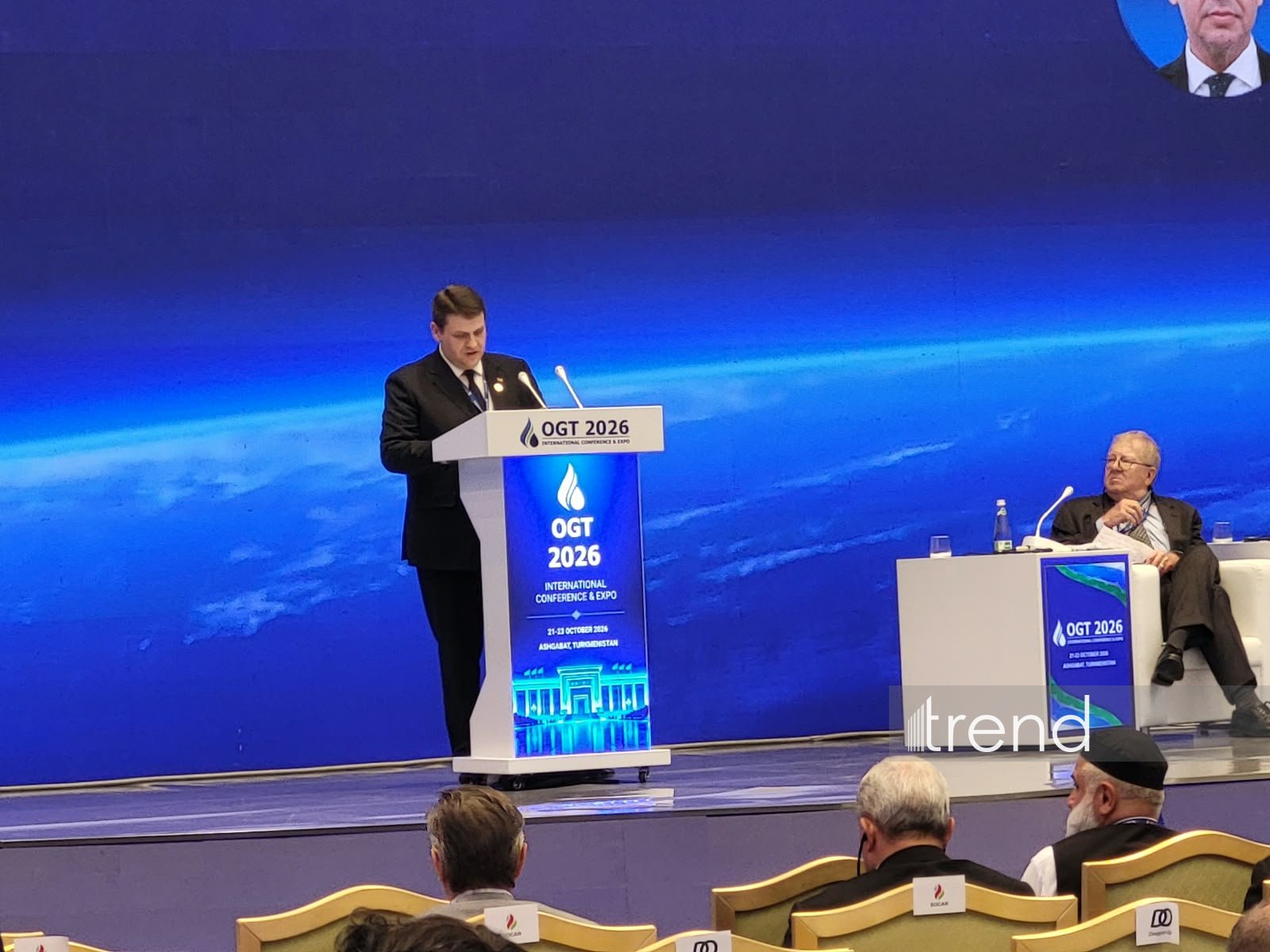
ASHGABAT, Turkmenistan, October 21. Turkmenistan is developing three natural gas export routes — eastern, southern, and western — with a particular focus on long-term contracts, the implementation of the TAPI gas pipeline, and the use of Caspian infrastructure for the transit of energy resources, said Myrat Archayev, Deputy Chairman for Exports and Foreign Economic Ties at the state-owned Turkmengaz concern, Trend's special correspondent reports.
Archayev made the statement at the 31st International Conference and Exhibition “Oil and Gas of Turkmenistan” (OGT 2026) in Ashgabat.
According to him, the diversification of gas supplies serves the interests of both buyers, who need access to multiple energy sources, and suppliers, who are interested in expanding their sales markets.
“That is precisely why we are simultaneously developing three directions: east, south, and west,” Archayev noted.
Speaking about the eastern direction, he emphasized that the Turkmenistan–China gas pipeline remains the most established example of long-term energy cooperation. The pipeline has been in operation since December 2009, and as of October 1, 2026, more than 477 billion cubic meters of natural gas had been delivered through it.
Myrat Archayev also noted Turkmenistan’s long-standing cooperation with the Malaysian company Petronas, which has been operating in the Turkmen sector of the Caspian Sea since 1996.
According to him, in 2025, the partnership was extended thanks to a new production-sharing agreement for Block I and a long-term gas purchase and sale agreement with “Turkmengaz.” In addition, the service company ADNOC joined the project.
He added that “Turkmengaz” signed a confidentiality agreement with Petronas to explore opportunities for cooperation in the development of subsequent phases of the Galkynysh gas field, including Phase 3.
Within the southern corridor, Archayev highlighted the Turkmenistan–Afghanistan–Pakistan–India (TAPI) gas pipeline, which has a design capacity of 33 billion cubic meters of gas per year.
According to him, the project is geared toward the South Asian market, where demand for energy resources is growing rapidly.
Archayev also mentioned a memorandum signed on August 10, 2026, between “Turkmengaz” and the Afghan state-owned company Afghan Gas. The document concerns gas supply and the development of related infrastructure in Herat Province.
Speaking about the western direction, the deputy chairman of “Turkmengaz” stated Turkmenistan’s readiness to offer Caspian transport and logistics infrastructure, including the Turkmenbashi International Seaport, for the transit of energy resources on mutually beneficial terms.
He recalled that the approach to multi-vector transit of energy resources across the Caspian Sea was outlined by the President of Turkmenistan at a consultative meeting of the heads of state of Central Asia and Azerbaijan, held on October 8, 2026, in Awaza.
According to Archayev, diversification is not limited to gas pipelines but also involves the development of electricity supply projects, which will enable the region to reduce its dependence on fluctuations in global energy markets.
He emphasized that the implementation of new energy projects requires the systematic determination of technical parameters, the negotiation of commercial and legal terms, and only then the making of investment decisions.
“Turkmenistan is open to dialogue and ready to consider specific proposals,” Archayev concluded.


