


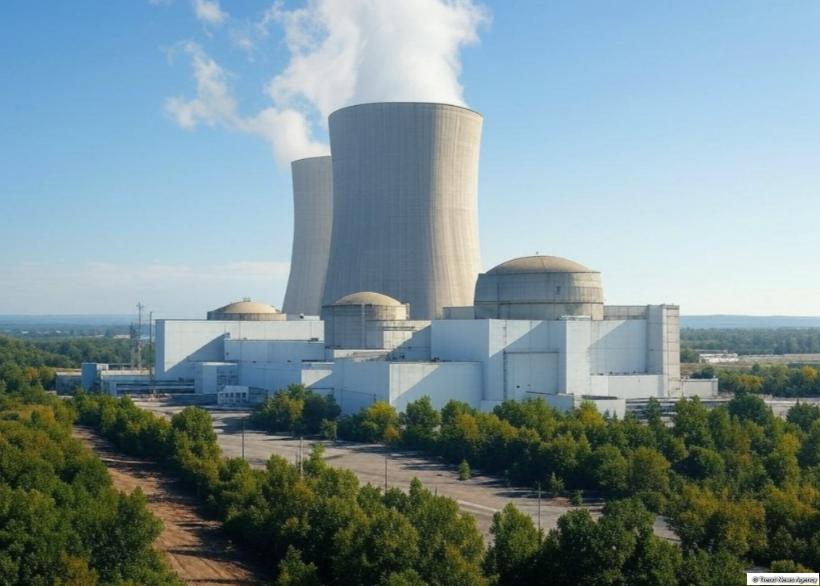

TASHKENT, Uzbekistan, October 13. The implementation of the nuclear power plant (NPP) project will provide a reliable foundation for the energy supply of the country’s central regions—Jizzakh, Samarkand, and Navoiy, Azim Akhmedkhadjaev, Director of the Agency for Atomic Energy under the Cabinet of Ministers of Uzbekistan (Uzatom), told local media, Trend reports.
According to him, the integrated nuclear power plant, comprising two small-capacity RITM-200N reactors and two large-capacity VVER-1000 reactors, will serve as a stable source of base-load electricity, reducing dependence on gas-fired generation and seasonal fluctuations in renewable energy output.
“The construction of the NPP will lay a solid foundation for the development of industry, agriculture, and infrastructure. This is a strategically forward-looking decision that reflects national interests, global trends in nuclear energy, and the need to transition to a sustainable, reliable, and low-carbon energy system,” Akhmedkhadjaev emphasized.
He noted that the project’s implementation will attract significant investment and provide a boost to the construction, transport, and service sectors of the economy.
At the end of September, Uzatom and the state corporation Rosatom signed an additional agreement on a new configuration of the NPP project, consisting of four power units—two large-capacity VVER-1000 generation 3+ reactors and two small-capacity 55 MW RITM-200N reactors. According to Deputy Prime Minister of Uzbekistan Jamshid Khodjaev, the combined nuclear power plant, being constructed on a 525-hectare site, will produce over 15 billion kWh of electricity annually by 2035.


