


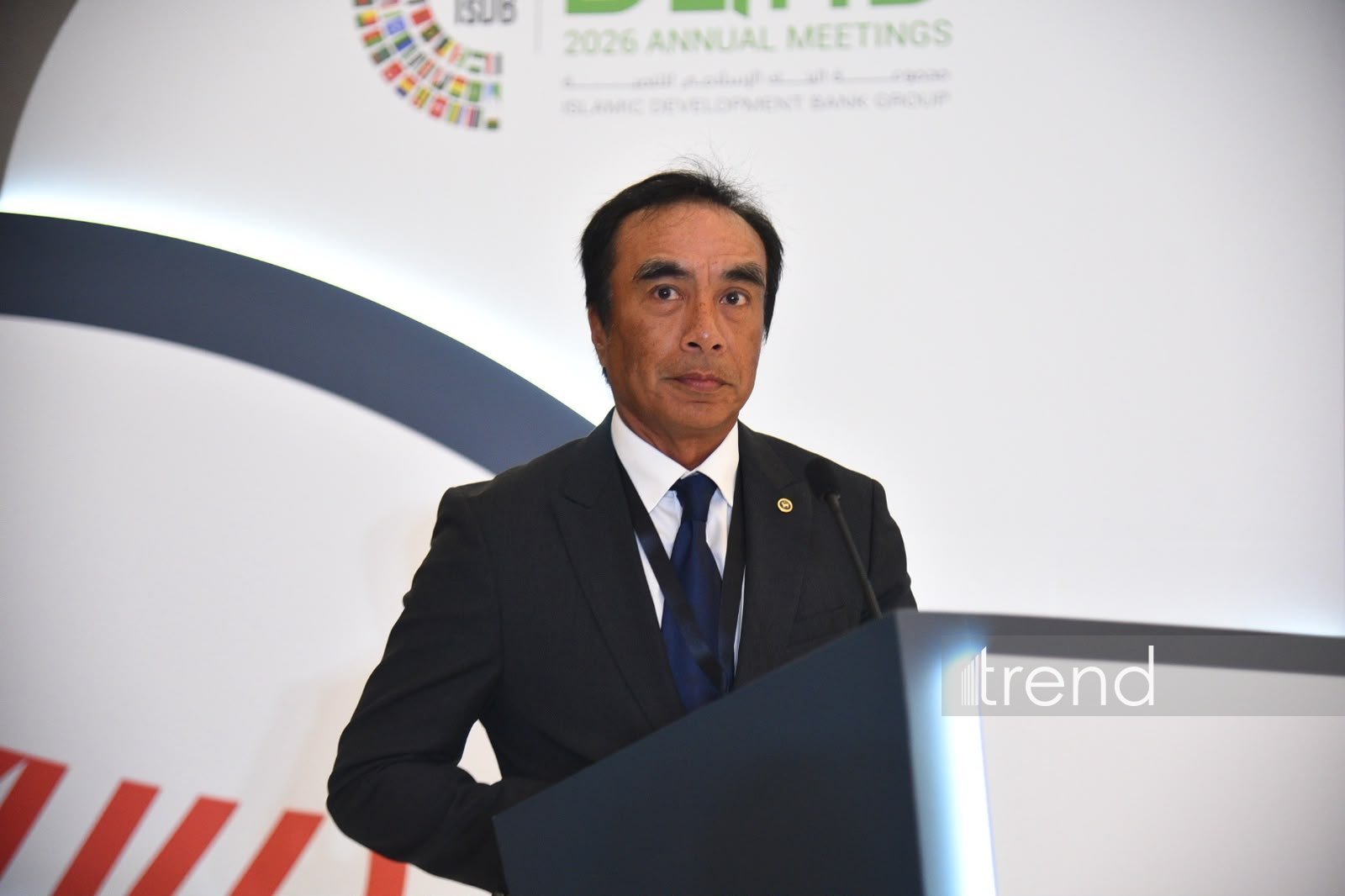

BAKU, Azerbaijan, June 18. The volume of the global sukuk market could reach $1.8 trillion by 2030, Adnan Zaylani Zahid, Deputy Governor of the Central Bank of Malaysia, stated within the framework of the 14th Private Sector Forum of the Islamic Development Bank Group, Trend's correspondent reports from the event.
According to him, over the past two decades, the global sukuk market has transformed from a niche segment of Islamic finance into a fully-fledged global asset class and an instrument for long-term financing.
"What began as a niche segment of Islamic finance has today evolved into a global asset class, an instrument for ensuring liquidity and long-term financing for economies around the world. The aggregate volume of the global sukuk market already exceeds $1 trillion. The global sukuk market now exceeds 1 trillion dollars in terms of outstanding instruments, increasing nearly five-fold compared to the indicators from a decade ago. It is expected that by 2030, this figure will reach $1.8 trillion," he stated.
The Deputy Governor of the Central Bank of Malaysia noted that the global economy's needs for infrastructure investments require new approaches to capital mobilization.
"Public financing is no longer sufficient, especially against the backdrop of the global infrastructure financing deficit, which is estimated at $15 trillion by 2040. Islamic financial instruments possess high potential for financing long-term infrastructure projects. Islamic financial instruments, particularly sukuk, provide a solid foundation for more sustainable and stable economic growth," he said.
According to him, sukuk have already played an important role in the development of key infrastructure in various countries around the world.
Zahid noted that sukuk are used to finance renewable energy facilities, logistics supply chains, digital communication networks, as well as transport infrastructure, including railway and urban transport systems.
He informed that in Malaysia, more than $34 billion of investments in the real sector of the economy were financed through sukuk in 2025.
The volume of outstanding sustainable and ESG-linked sukuk as of the end of 2025 is estimated at approximately $70 billion, reflecting the growing direction of capital into environmental and socially significant projects.



