



BAKU, Azerbaijan, August 4. Kazakhstan has financed hundreds of local business initiatives and increased the share of domestic products in retail chains as part of efforts to support local producers.
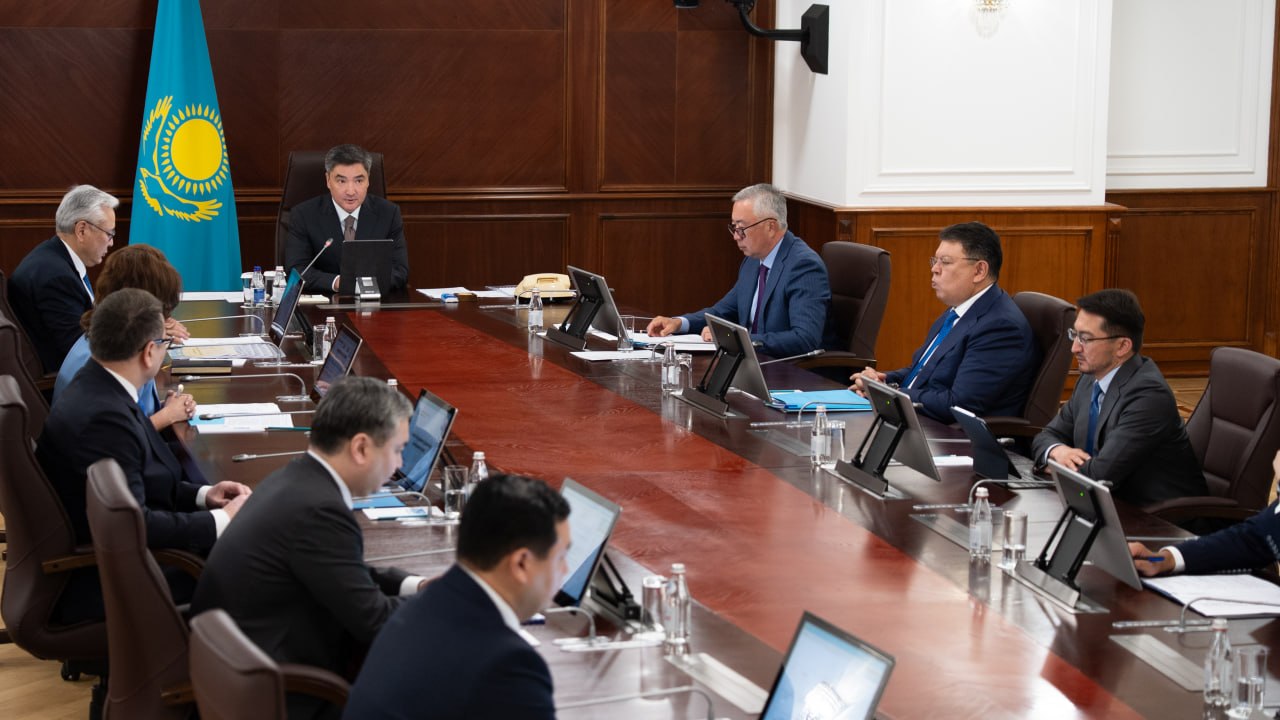
Since the launch of the "One Village – One Product" project in 2023, 238 entrepreneurs have been selected, with 136 projects receiving financing totaling 642 million tenge ($1.3 million), Chairman of the Presidium of the National Chamber of Entrepreneurs "Atameken" Kanat Sharlapayev said at a government meeting.
"As a result, 116 entrepreneurs were able to equip their production facilities with modern equipment and create 564 new jobs. The implementation of the project has contributed to the development of local businesses and the formation of a sustainable entrepreneurial environment in the regions," Sharlapayev said, the press service of Kazakh government reports.
The project is aimed at supporting rural entrepreneurs, developing local production and creating new opportunities for businesses outside major urban centers.
Domestic producers are also strengthening their positions in Kazakhstan’s retail sector. Deputy Chairman of the Board of the Union of Retail Chains of Kazakhstan Elbegi Abdiev said locally produced goods account for 81% of shelf space in key categories of major retail chains.
In particular, the share of Kazakh-made products reaches 87% in dairy products and 79% in grocery categories. "Of the 20 best-selling products in retail chains, 14 are produced in Kazakhstan," Abdiev said.
He added that more than 50% of private label products sold by retail chains are manufactured domestically, providing producers with guaranteed orders and access to consumers. "For enterprises, this means a long-term guaranteed order, predictable capacity utilization and access to shelves without investments in branding and promotion — we take these costs upon ourselves. For many small producers, this is the only realistic way to enter the national market," Abdiev noted.
According to him, retailers have simplified the procedure for local manufacturers to enter trading networks, reducing it to five stages, including a trial placement of products in 5-10 stores before broader distribution. The representative of the retail sector also noted that cooperation with social-entrepreneurial corporations through a revolving financing mechanism helped save consumers 1.5 billion tenge ($3.16 million) in 2025. Meanwhile, turnover of goods under private labels exceeded 10%.
Prime Minister Olzhas Bektenov said expanding the presence of domestic products in retail chains remains one of the key priorities for supporting Kazakh producers. He instructed government agencies, businesses and the National Chamber of Entrepreneurs "Atameken" to continue joint efforts to promote locally manufactured goods on the domestic market.



