


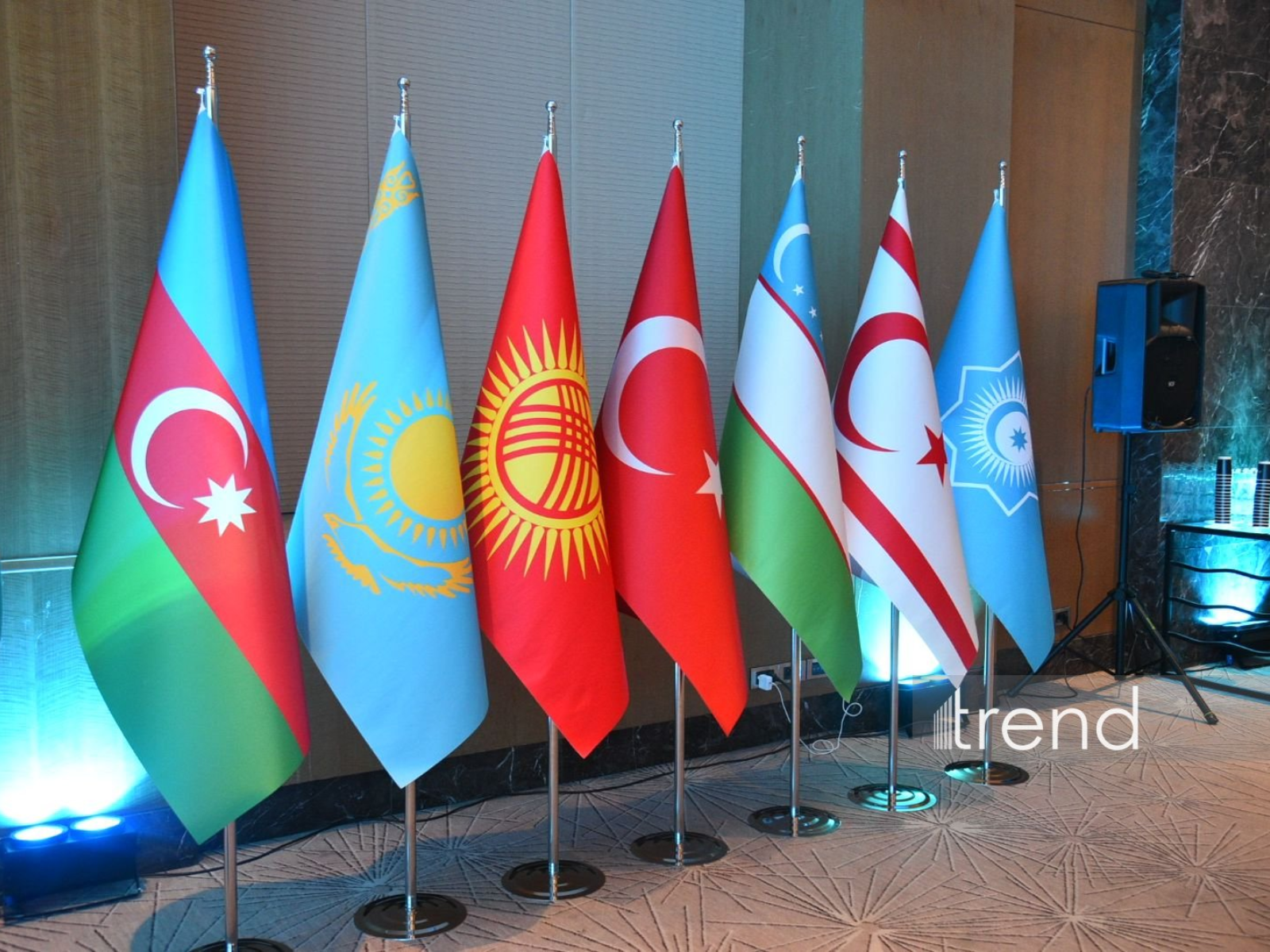

BAKU, Azerbaijan, September 17. The objectives facing the Organization of Turkic States (OTS) are no longer limited solely to preserving cultural and humanitarian ties. The organization is evolving into a vital platform where political, economic, energy, transport, and security interests across a vast geography are harmonized; Azerbaijan’s role in this process is clearly evident in the approaches outlined by President Ilham Aliyev in his recent address. Baku’s simultaneous hosting of religious leaders and heads of security agencies from OTS countries demonstrates Azerbaijan’s standing within the organization as a reliable platform, an initiator, and an active partner.
Baku becomes key venue for dialogue within OTS
Recent events in Baku are of particular significance in assessing Azerbaijan’s role within the OTS. Just days ago, religious leaders representing the organization's member states were received by President Ilham Aliyev, followed by a gathering in Baku of the heads of security councils from OTS member states for the council's fifth meeting. The fact that these events took place in the same location within a short timeframe should be viewed not merely as a coincidence of the diplomatic calendar, but as an indication of the systematic and multifaceted relationship established between Azerbaijan and the OTS. It's not merely a matter of hosting events here. The agenda of discussions within the framework of the OTS covers a broad spectrum, ranging from international relations and security to multiculturalism, trade, transport, and humanitarian cooperation. In this regard, Baku’s emergence as a reliable venue for discussing diverse issues highlights the multifaceted nature of Azerbaijan’s position within the organization.
The current stature of the OTS is the logical outcome of its development history. The organization was founded at the historic Summit held in Nakhchivan in 2009. At that summit, Azerbaijan, Türkiye, Kazakhstan, and Kyrgyzstan signed the Nakhchivan Agreement on the Establishment of the Cooperation Council of Turkic-Speaking States. The agreement entered into force in November 2010, and the organization's institutional framework was subsequently expanded. According to the OTS itself, the informal Summit held in Shusha in 2024 also marked a significant milestone in the organization's development.
Today, the primary strategic goal is to transform the OTS into a leading international organization. To achieve this, alongside the political will of the member states, there exists significant potential in terms of their economic, geographic, energy, transport, and human resources. President Ilham Aliyev’s address highlighted the strategic aim of more effectively harnessing this potential and consolidating it into a unified force.
New format originating in Shusha: annual meeting not enough
One of Azerbaijan’s initiatives for the development of the OTS is the holding of informal summits for heads of state. Although traditional summits are held regularly, the organization determined that, given the rapidly changing international landscape, a single annual gathering of heads of state was insufficient. Consequently, a proposal was made to establish an additional informal meeting format—an initiative that was realized with the support of partner nations. The inaugural meeting of this kind took place in Shusha, and the format has since continued in other countries.
The choice of Shusha holds particular political and symbolic significance. The 2024 Shusha Summit served as a platform for discussions on the OTS agenda regarding transport, connectivity, and climate action, resulting in the adoption of key documents, including the Karabakh Declaration. An official statement from the OTS describes the meeting held in Shusha as a significant milestone in strengthening the organization's cooperation and the unity of the Turkic world.
Thus, Azerbaijan's initiative goes beyond merely establishing a new meeting format. The primary objective is to foster a political dialogue within the OTS that is more dynamic, responsive, and sustained.
Energy and transport security enhance the geopolitical weight of the OTS
The vast geographical expanse spanned by the OTS member states grants the organization a significant advantage. Energy and transport routes of vital importance—not only to the member states but also to the broader region—traverse this territory. Consequently, assessing the role of the OTS solely within the context of political and humanitarian cooperation fails to fully reflect the organization's true potential.
President Ilham Aliyev’s approach presents energy security and transport connectivity as integral components of overall security because long-term regional stability and economic development are difficult to achieve without the reliable supply of energy resources and the connectivity required for the secure transportation of goods. This is also linked to the growing interest—in both the western and eastern parts of the OTS space—in the organization's role regarding connectivity, transport, energy security, and general security.
Natural resources are also a significant factor in this context. OTS countries possess vast natural resources, and these resources play a role in ensuring the economic resilience of states, the well-being of peoples, and, in a broader sense, the stability of the global economy. The importance of energy security is further heightened, particularly at a time when complex geopolitical situations exist along state borders.
Azerbaijan holds a special place in this system due to its geographical location. On one hand, the country acts as a supplier of energy resources to global markets; on the other, it utilizes its transit capabilities to transport energy resources originating from Central Asian countries—via the Caspian Sea—to international markets. Its location at the crossroads of Europe and Asia, combined with close ties to Türkiye and the Central Asian member states of the OTS, further enhances the role Azerbaijan plays in energy and transport security projects.
In this context, transport and energy projects are not merely economic endeavors for Azerbaijan; they also serve as instruments for strengthening strategic connectivity across the OTS region.
Bilateral relations form the backbone of multilateral cooperation within the OTS
Another crucial aspect of strengthening the OTS is the deepening of bilateral relations among member states. Azerbaijan pursues an active policy in this area as well. The numerous visits by President Ilham Aliyev to OTS countries, as well as visits by the leaders of those states to Azerbaijan, demonstrate the intensity of the mutual political dialogue.
Azerbaijan has signed treaties and declarations on alliance with Türkiye, Kazakhstan, Kyrgyzstan, and Uzbekistan. These documents reflect the high political level of bilateral relations and lay the groundwork for developing cooperation in specific areas.
Parallel processes are also underway in the economic sphere. Azerbaijan has established joint investment funds with Kazakhstan, Uzbekistan, and Kyrgyzstan, and work continues on attracting and mobilizing mutual investments. These mechanisms enable political relations to be complemented by economic substance.
This approach is underpinned by one of Azerbaijan's foreign policy priorities. As President Ilham Aliyev has stated, the Turkic world represents a family space for Azerbaijan, and developing relations with this region is a key direction of its foreign policy. Consequently, cooperation with the OTS is not an isolated or sporadic element of Azerbaijan's foreign policy, but rather an integral part of a broader strategic course.
Shared ethnic roots complement political and economic cooperation
One of the features distinguishing the OTS from other international organizations is the existence of shared ethnic, historical, cultural, and linguistic ties among its members. Given that such organizations are not widespread in the international system, the spiritual foundation possessed by the OTS represents a significant advantage.
While political and economic interests may form the basis of interstate relations, the historical and cultural affinity existing between peoples renders these relations more enduring. Shared linguistic elements, cultural similarities, common ethnic roots, and spiritual closeness create additional opportunities for strengthening solidarity within the OTS. These factors enable the organization to evolve not merely into a mechanism for intergovernmental cooperation, but also into a platform for fostering connections between peoples.
This unity can also serve as one of the ideological pillars for the future development of the OTS. However, the key lies in approaching the preservation of national identity and spiritual values not as a means of confrontation with other nations, but as a way to reinforce the member states' commitment to their own historical and cultural heritage.
Stability ranks among the economic advantages of OTS space
In today's international system, stability and security are not merely political issues; they are also fundamental prerequisites for economic development. It is difficult to attract a steady flow of investment, technology, and innovation to a country lacking political and economic stability. In this regard, maintaining stability within the OTS region is a key factor that enhances the organization's development potential.
As noted in President Ilham Aliyev's address, the growth of industrial production, positive economic indicators, and the stability of financial systems within the OTS region stand out against a global backdrop of economic stagnation, decline, and various socio-economic challenges. This dynamic is significant for strengthening the economic capabilities of the member states.
At the meeting held in Baku, OTS Secretary General Kubanychbek Omuraliev also presented data regarding the economic potential of the organization's region. According to him, the aggregate GDP of the OTS region stands at $2.4 trillion, a figure that places it roughly 12th globally. Meanwhile, the organization's trade turnover amounts to $1.7 trillion. These figures demonstrate that the OTS is not merely a political and cultural union, but also a region with immense economic potential.
The combination of economic opportunities with political stability, energy resources, and transport connections creates additional grounds for enhancing the role of the OTS in the international system.
Youth issues represent a long-term dimension of security
One of the key factors shaping the future of the OTS is the set of values that mold the younger generation. The relatively young populations of the member states and the observed demographic growth constitute a significant advantage for the organization. At a time when concerns regarding rapid population decline are mounting in a number of countries, the opposite trend observed within the OTS region fosters significant human capital for the future.
However, a demographic advantage does not automatically translate into an economic one. Population growth must be accompanied by active economic policies, the expansion of social infrastructure, and the creation of new jobs. Otherwise, rapid growth could lead to certain economic and social challenges. President Ilham Aliyev’s speech highlighted the positive dynamics observed in addressing issues related to economic growth and social welfare across OTS countries.
Another aspect of the youth issue concerns national self-awareness and moral values. A shared characteristic of OTS countries is their commitment to their national and moral principles. In this regard, raising the younger generation in a spirit of patriotism and commitment to national principles and moral values is not merely a matter of upbringing; it is a strategic priority linked to the long-term stability of states.
The foundation of Azerbaijan's youth policy was established within the framework of the state policy initiated by the National Leader Heydar Aliyev. Key aspects of this policy include paying attention to and caring for young people, creating conditions for their development, strengthening their role and standing in society, and fostering a spirit of patriotism.
This approach can also be advanced at the level of the OTS. It is essential to involve young people in processes not merely as subjects of decisions made about them, but as active participants whose views and positions are heard. Gathering their input, bringing together youth from various countries, and expanding their mutual interactions can strengthen the organization's future social foundation.
Concept of security no longer limited to military threats alone
The expansion of the OTS security agenda holds a special place in Azerbaijan's own agenda. The continuation of wars in surrounding regions, the expansion of their geographical scope, and the increasingly overt nature of the conflicts bring the issue of regional security to the forefront. This reality is of particular significance for Azerbaijan; the presence of states engaged in warfare to both the country's north and south heightens the sensitivity of the security environment.
In such a situation, the need to strengthen coordination among the security structures of the OTS countries becomes apparent. Information exchange, particularly the sharing of operational intelligence, joint action, coordination against existing threats, and the proactive identification and prevention of potential risks must become core elements of the security system.
In this context, the agenda of the fifth meeting of Security Councils held in Baku is no coincidence, either. The gathering of security agencies facilitates not only the discussion of current challenges but also the comparison of experiences across different nations, the identification of vulnerabilities, and the refinement of mechanisms to prevent threats. According to information released by the Secretary General of the OTS, the recent holding of several high-level meetings across the organization's region—covering security and other areas—demonstrates the expansion of this agenda. Meetings of interior ministers in Astana (Kazakhstan) and prosecutors general in Turkistan have taken place; religious leaders were received by President Ilham Aliyev two days prior to the meeting in Baku; and a meeting of defense industry chiefs is scheduled for October 1. It was also noted that 63 mechanisms and platforms, ranging from foreign policy to culture, operate within the framework of the OTS.
These figures and events indicate that OTS cooperation is no longer limited to meetings between heads of state; rather, multi-level mechanisms for interaction among various government agencies have been established.
Ideological threats create new security agenda
In the modern era, threats to state security are not limited to border violations or physical attacks. Ideological influences exerted through the information space, media, social platforms, and various communication channels can also impact the internal stability of states.
President Ilham Aliyev’s speech emphasizes the importance of a joint struggle against these threats. The focus here is on preventing ideological provocations that run counter to the interests of countries and peoples. Particular attention is drawn to influence exerted through media outlets reportedly funded by centers located far beyond national borders. According to the approach presented by President Ilham Aliyev, such financing could serve the aims of undermining the state structure, disrupting social solidarity, and instilling narratives and values alien to society.
According to Azerbaijan’s position, efforts to counter such risks must be undertaken to safeguard national interests and the constitutional order. President Ilham Aliyev has stated that active measures are being taken in this regard in Azerbaijan and that significant results have been achieved.
It was also noted that "anti-national" networks operating within Azerbaijan—allegedly directed and funded from abroad—are rejected by the vast majority of society. A key point here is that adherence to national values, traditions, and ways of life stands as the prevailing trend in Azerbaijani society.
However, the fact that these threats are being countered does not mean they have been completely eliminated. On the contrary, given the potential for continued attempts to destabilize the situation, preventive mechanisms must be constantly strengthened.
Primary objective: to protect youth from informational and ideological threats
Youth is regarded as a particularly vulnerable group regarding the issue of ideological security. As noted in President Ilham Aliyev's speech, the younger generation—which is still in its formative stage and more susceptible to manipulation—is a primary target of external activities aimed at undermining state interests. Therefore, youth policy within the framework of the OTS (Organization of Turkic States) can be approached not merely as a matter of social and cultural cooperation, but as an issue of long-term security.
In this regard, it’s proposed to expand interaction among the youth organizations of OTS member states and to hold regular forums, conferences, and other events. The aim is to facilitate direct communication among young people from different countries, enhance their knowledge of shared history and culture, and ensure that the bonds between kindred nations are preserved within the new generation.
Such an approach serves as more than just a means to counter ideological influences; it is also a long-term mechanism for shaping the human capital that will underpin the OTS's future political, economic, and social ties. Fostering closer mutual understanding among young people can create a social foundation for future cooperation in business, science, education, technology, culture, and other fields.
New phase for OTS: transforming existing potential into tangible strength
The task facing the OTS countries is not merely to enumerate existing opportunities, but to translate them into concrete results through coordinated policy. Factors such as energy resources, transport corridors, a favorable geographic location, economic potential, a young population, a shared historical-cultural heritage, and political will can be viewed not as isolated advantages, but as elements of a unified strategic system.
Azerbaijan’s position in this process is particularly noteworthy. The country acts as both an energy producer and a transit state; it is situated at the crossroads of Europe and Asia; it actively cooperates with Central Asian nations and Türkiye; and it spearheads various political and institutional initiatives within the OTS.
The emphasis placed by the Kazakh side—during the meeting in Baku—on the development of Trans-Caspian infrastructure and the significance of the Middle Corridor underscores the practical importance of this direction. Aida Balayeva, Deputy Chair of the Security Council of Kazakhstan, highlighted the importance of economic cooperation with Azerbaijan, Trans-Caspian infrastructure, and the project to establish a fiber-optic communication link across the bed of the Caspian Sea. President Ilham Aliyev noted that the fiber-optic cable project is nearing completion and holds significant importance for Azerbaijan-Kazakhstan relations as well as for the broader region, including the OTS space.
These facts demonstrate that cooperation within the OTS is not limited to political declarations but is also reinforced by tangible infrastructure projects.
Experience of independence shapes shared political memory
For a significant number of OTS countries, the restoration of independence represents a relatively recent stage in their modern statehood history. As President Ilham Aliyev pointed out, setting aside their ancient statehood legacies, the modern statehood of most member countries spans approximately 35 years. Azerbaijan restored its state independence in 1991; Kazakhstan, Kyrgyzstan, and Uzbekistan also regained their independence during the same period.
Each of these countries faced unique challenges on its post-independence path of development. Azerbaijan, too, has navigated complex trials. However, as emphasized in the President's speech, this phase has been both challenging and honorable; having emerged from the most complex trials, the countries now find themselves in a position where they have left behind a significant portion of the global problems they once faced.
This experience forms another foundation for political solidarity within the OTS. The importance of the history of statehood, independence, and the preservation of national sovereignty constitutes a crucial element of the shared political memory for the organization's member states.
Azerbaijan’s approach: security and development inseparable
The overarching logic of President Ilham Aliyev’s address regarding the OTS highlights two complementary directions: security and development. Without security, it is impossible to create a sustainable environment for economic development, investment, technology, and innovation. At the same time, the expansion of economic opportunities and the strengthening of transport and energy connections are factors that reinforce the stability of states and societies.
For this reason, the approach Azerbaijan advocates within the framework of the OTS is based not only on a political and security agenda but also on economic and humanitarian components. Enhancing the organization’s international standing, strengthening energy and transport corridors, deepening bilateral relations, increasing mutual investments, expanding ties among youth, and strengthening coordination against ideological threats are all facets of the same strategic picture.
Baku’s recent hosting of religious leaders and high-ranking security officials from the OTS serves as a practical manifestation of this approach. The organization’s agenda is steadily expanding, with mechanisms across various fields complementing one another. As noted by the Secretary General of the OTS, there are currently 63 mechanisms and platforms—ranging from foreign policy to culture—where not only are meetings held, but concrete decisions are adopted and tasks set by the leaders are implemented.
Primary task ahead: transforming potential into a leading international force
The OTS now faces a more complex stage of development. The organization’s potential—encompassing political, economic, geographic, energy, transport, and human capital assets—creates a solid foundation for it to play a greater role in the international system. However, transforming this potential into tangible power requires coordination, mutual trust, and sustained cooperation on concrete projects among member states.
In this process, Azerbaijan positions itself not merely as one of the member states, but as a country that advances initiatives, organizes dialogue across various formats, and serves as a key link connecting the OTS region through its energy and transport capabilities.
In this regard, Azerbaijan’s stance is clear: developing ties with the Turkic world is a top foreign policy priority, and the OTS serves as the multilateral institutional platform for this policy. Strengthening the organization is viewed as a course of action that aligns not only with Azerbaijan’s national interests but also with the shared interests of all member states. Ultimately, the future of the OTS will depend not only on the shared history and cultural affinity of its members but also on the extent to which this affinity translates into modern statehood, economic cooperation, energy security, transport connectivity, and collective security mechanisms. The approach put forward by Azerbaijan is aimed precisely at facilitating this transition.
The central theme of President Ilham Aliyev’s address is that the OTS countries possess shared interests across a vast geography, significant economic and energy potential, vital transport capabilities, a young population, historical-cultural ties, and the political will to cooperate. Coordinating these resources could further strengthen the organization's international standing.
The objective ahead is clearly defined: to transform the Organization of Turkic States into a leading international institution through joint efforts. Azerbaijan’s role in this process is grounded in taking the initiative, acting as a reliable partner, and providing a platform for regional and international cooperation. The successive meetings in Baku, the informal summit format launched in Shusha, energy and transport projects, bilateral alliance relations, investment funds, and growing coordination in the security sphere demonstrate that a broad institutional and practical foundation for this objective has already been established.



