


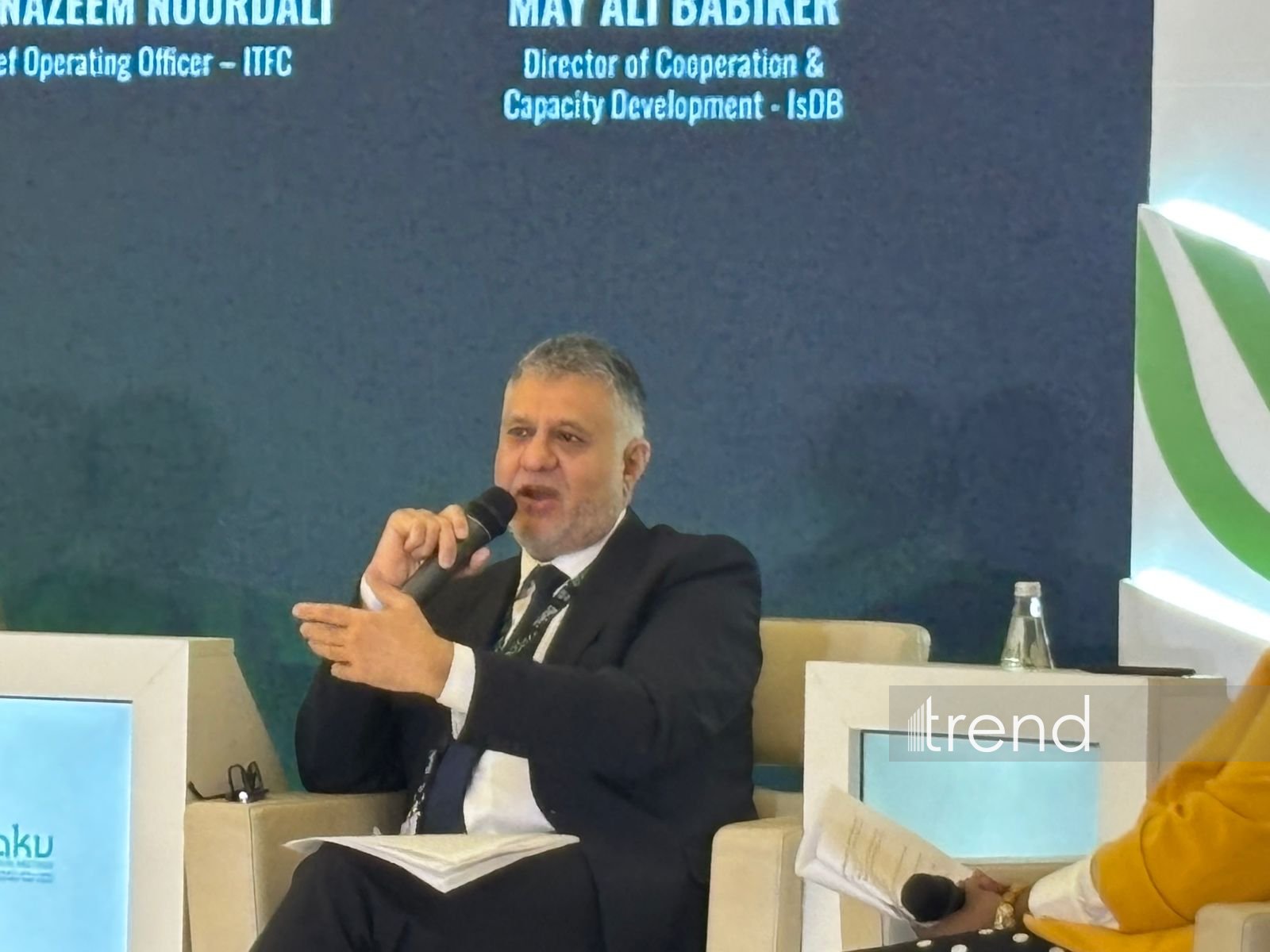

BAKU, Azerbaijan, June 19. The International Islamic Trade Finance Corporation (ITFC) has already begun implementing a number of projects in Central Asian countries that are in line with the Middle Corridor initiative, Chief Operating Officer at International Islamic Trade Finance Corporation, Nazeem Noordali, said at the 14th Islamic Development Bank (IsDB) Group Private Sector Forum, Trend's correspondent reports from the event.
According to him, the ITFC was established in 2008 as a specialized structure within the IsDB Group to support trade finance.
"Since its inception, the corporation has financed trade transactions worth over $93 billion, and including its activities within the Islamic Development Bank, the total volume of trade finance since 1977 has exceeded $120 billion. Trade finance is a crucial element of any ambitious project related to transport corridors. If a corridor ensures regional connectivity, then trade finance and trade facilitation connect all the elements of this system.
Trade finance itself does not create trade, but rather serves as a tool to support it. Trade must first exist. We can be a catalyst and facilitate its development, but we cannot create it from scratch," he noted.
According to Noordali, any restrictions in the transport and logistics chain reduce opportunities for trade and business access to financial instruments.
According to the ITFC representative, the Asian Development Bank estimates that the global trade finance gap for SMEs is approximately $2.5 trillion.
"We cannot solve this problem alone. We need to join forces with our partners. ITFC supports financing for small and medium-sized businesses through local banks and is mobilizing additional financial resources. For every dollar of its own funding, the corporation attracts an additional four dollars from partners. Less than two years ago, ITFC launched the Trade Connect Central Asia Plus program, covering six countries in the region, from Kazakhstan to Azerbaijan," he noted.
According to Noordali, the program is aimed at developing so-called "soft" trade infrastructure.
"Specifically, this includes implementing paperless border procedures, digitalizing transport documents, ensuring the compatibility of digital systems across various countries, data exchange, and strengthening coordination between government agencies and the private sector. We have already begun implementing several projects in Central Asia that align with the Middle Corridor initiative," he explained.
Noordali added that ITFC expects to further expand cooperation with partners and countries in the region as part of the program.



