


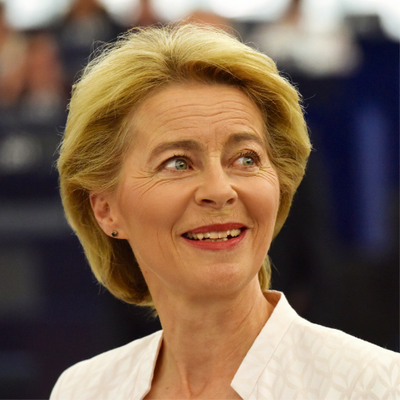

BAKU, Azerbaijan, June 15. The European Commission welcomes the agreement reached between the U.S. and Iran, emphasizing that the immediate priority must be its swift and full implementation by all parties involved.
This is reflected in an official statement issued by European Commission President Ursula von der Leyen regarding the conclusion of the U.S.–Iran agreement.
"I welcome the agreement reached between the U.S. and Iran, following sustained diplomatic efforts by several partners. The priority now is its swift and full implementation by all parties," the statement says.
According to the EU chief, the deal is expected to enable the immediate reopening of the Strait of Hormuz, with a clear insistence that freedom of navigation must be restored toll-free. The president noted that this development is essential for both regional stability and the global economy, as it potentially opens the door to broader negotiations on peace and security across the Middle East. Furthermore, the head of the commission pointed out that the agreement should ultimately lead to the termination of Iran's nuclear and ballistic programs alongside its destabilizing regional activities.
However, the EU leadership stresses that sustainable peace in the Middle East remains unachievable while Lebanon is in flames, calling on all parties to respect Lebanese sovereignty and territorial integrity through a genuine ceasefire.
"Once again, Europe calls on all parties to respect Lebanon's sovereignty and territorial integrity and implement a genuine ceasefire," von der Leyen emphasized.
The institution also highlighted a critical geopolitical lesson from the crisis, observing that energy dependencies have once again been weaponized. To counter this vulnerability, the organization intends to focus on diversifying supply routes and developing alternative export corridors to reduce reliance on the strategic bottleneck of Hormuz, a topic slated for discussion at the upcoming G7 meeting in Evian alongside partners from the Gulf and the wider Middle East.



