


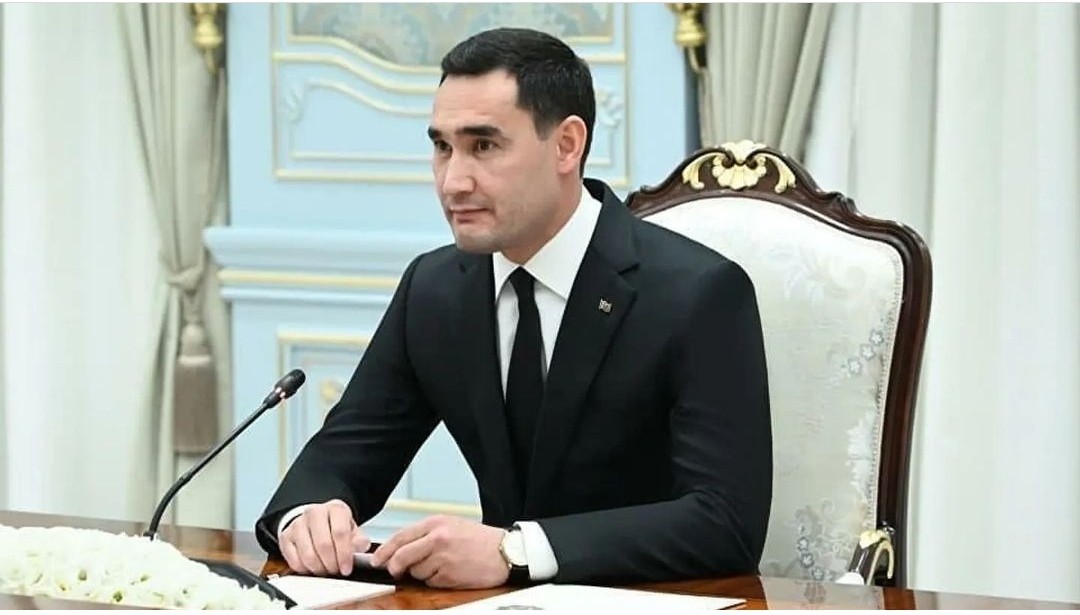

BAKU, Azerbaijan, August 6. Turkmenistan is ready to expand secure energy supplies to global markets through broader cooperation with the Organization for Security and Co-operation in Europe (OSCE), President Serdar Berdimuhamedov said.
This was reflected in a statement published by the Turkmen government following Berdimuhamedov's meeting with Swiss Vice President and OSCE Chairperson-in-Office Ignazio Cassis in Ashgabat.
"We have favorable prerequisites for expanding cooperation in such areas as ensuring secure and reliable supplies of energy resources to global markets, creating conditions for sustainable economic growth, fully utilizing transport potential, environmental protection and the rational use of water resources," Berdimuhamedov said.
According to the statement, the president also reaffirmed Turkmenistan's readiness to deepen cooperation with the OSCE in support of peace and sustainable development.
The remarks came during talks on the future development of cooperation between Turkmenistan and the OSCE, as well as broader regional and international issues.
Meanwhile, Turkmenistan's energy sector remains the backbone of the national economy, with natural gas accounting for the bulk of export revenues. According to official statistics, the country produced more than 76.5 billion cubic meters of natural gas and 8.4 million tons of oil in 2025, while the government has identified diversification of export routes as one of the fuel and energy sector's strategic priorities. Alongside pipeline exports, Turkmenistan has continued expanding production of value-added petroleum products, including gasoline, diesel fuel, lubricants and liquefied petroleum gas, at the Turkmenbashi Complex of Oil Refineries and the Seidi Oil Refinery.
The country currently exports natural gas primarily to China via the Central Asia-China gas pipeline, while also supplying gas to Türkiye through Iran under a swap arrangement and continuing work on the Turkmenistan-Afghanistan-Pakistan-India (TAPI) pipeline. Refined petroleum products are shipped to foreign markets through the Turkmenbashi International Seaport and the Kenar oil loading terminal, which serve as the main logistics hub for exports across the Caspian Sea. In parallel, Ashgabat has repeatedly stated that expanding export geography and strengthening transport infrastructure remain central objectives of its long-term energy strategy.
In early June, the Belfer Center for Science and International Affairs at Harvard’s Kennedy School noted in its analysis that the TAPI gas pipeline is being re-anchored in regional energy discussions as a structured mechanism for regional energy flows, connecting Turkmenistan’s gas resources with demand centers in South Asia.



