


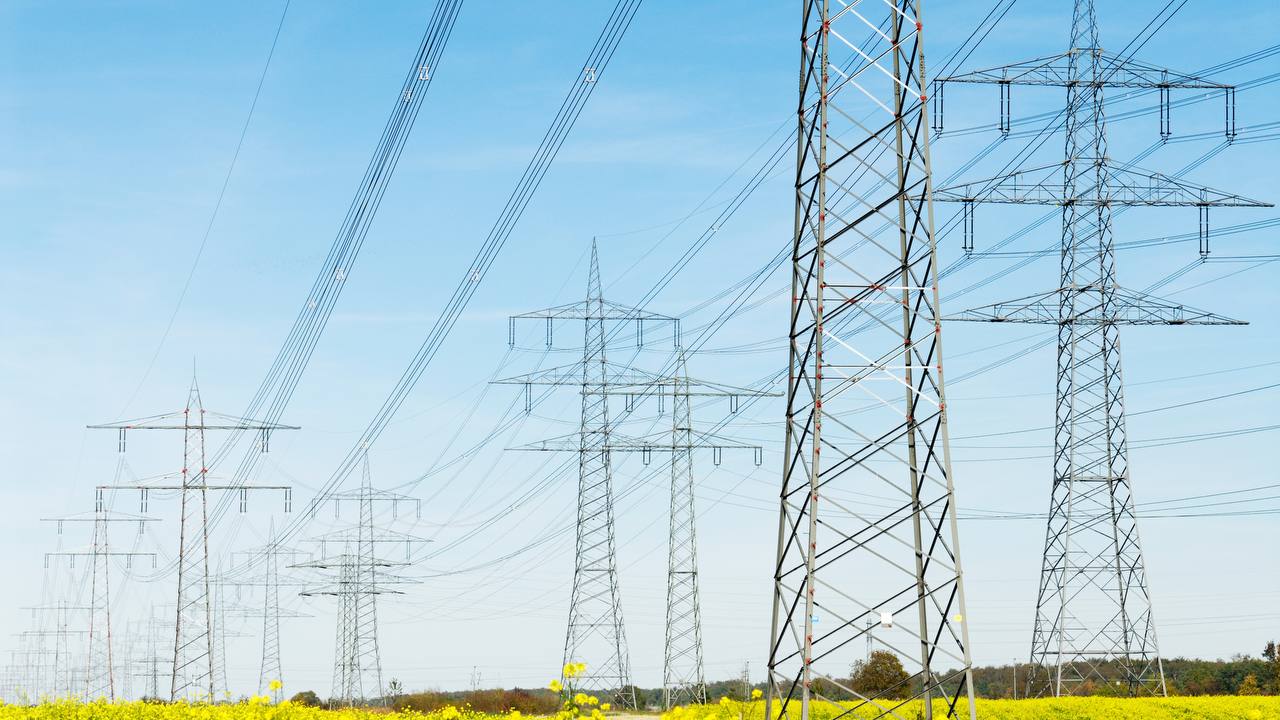

BAKU, Azerbaijan, November 4. Kazakhstan plans to commission 13.3 gigawatts (GW) of new power generation capacity by the end of 2029, which will fully cover domestic electricity demand and create a 20% surplus in generating capacity, according to the Kazakh government.
First Deputy Prime Minister of Kazakhstan Nurlybek Nalibayev made the remarks at a government press conference on the development of the real sector of the economy.
He noted that currently, Kazakhstan's unified power system comprises 254 power generation facilities, 172 of which are renewable energy facilities. The available capacity of the system stands at 17 GW.
During the first ten months of 2026, electricity generation exceeded 102 billion kilowatt-hours (kWh), while consumption amounted to more than 103 billion kWh. During peak hours, the shortage of flexible generation capacity ranges from 800 megawatts (MW) to 2 GW. This deficit is covered through parallel operation with the power systems of neighboring countries.
Nalibayev added that Kazakhstan plans to commission 1.27 GW of new generation capacity in 2026 and 2.5 GW in 2027, including 574 MW from renewable energy sources (RES). Of the 13.3 GW of new capacity planned by the end of 2029, 7.4 GW will be provided by base-load generation facilities, including 4.3 GW of gas-fired capacity. The remaining 5.9 GW will come from renewable energy sources.
In addition, Kazakhstan will update its energy balance through 2035 with the support of international institutions, following the President's instructions, the deputy PM said.
Forecasts of future economic growth will take into account projects in the industrial and digitalization sectors, as well as the modernization of existing power plants using clean coal technologies.
Particular attention will be paid to the development of renewable energy, including solar power generation, and energy storage systems to improve the stability of the country's power system.


