


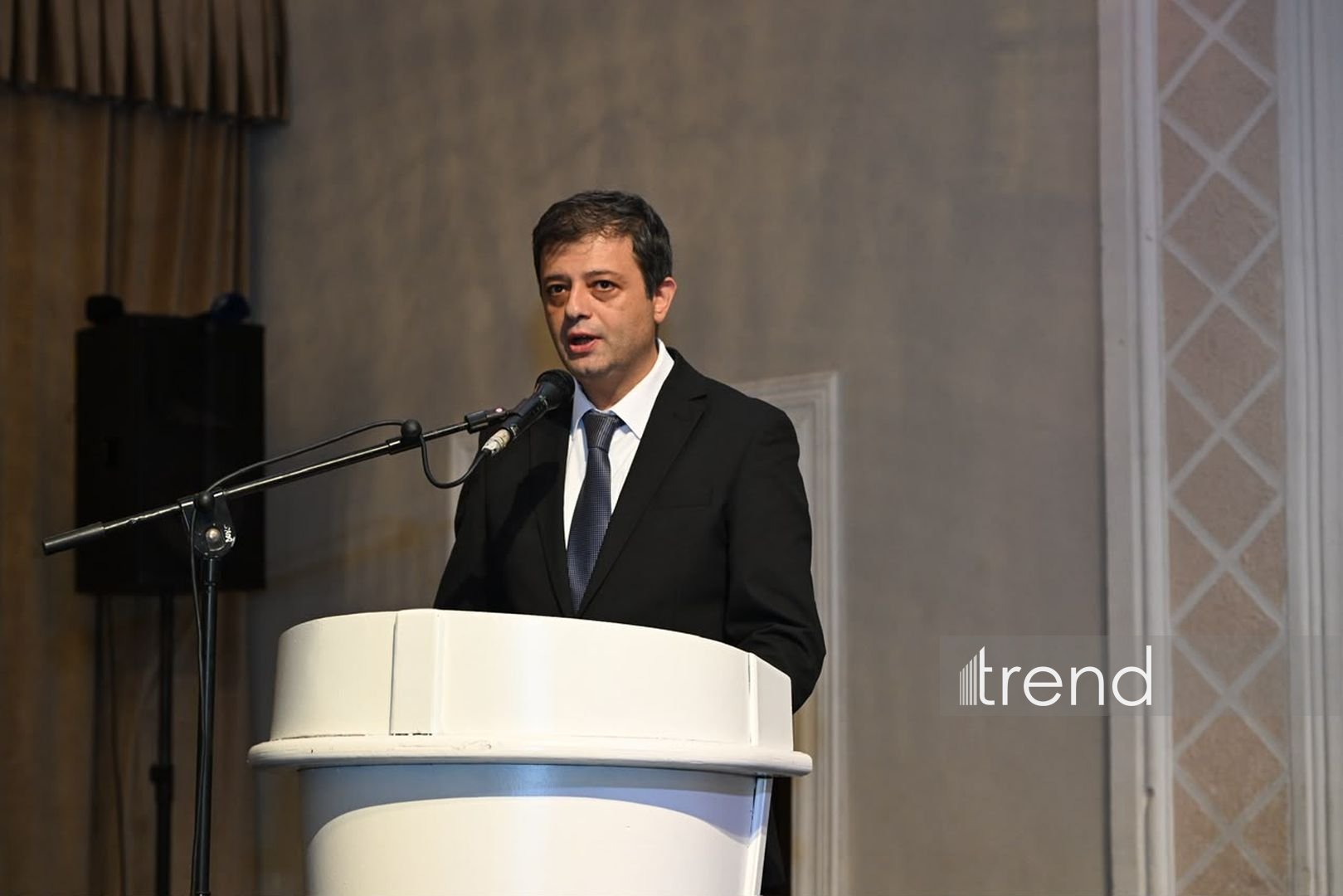

BAKU, Azerbaijan, November 3. Attributing Azerbaijan's Victory in the 44-day Patriotic War solely to drones isn’t correct, Chairman of the Press Council, Dean of the Faculty of Journalism of Baku State University, Vugar Zifaroghlu, told Trend.
He said that the book "The War for Karabakh: Strategy, Technology, and Victory," presented today, is a significant event in terms of evaluating the historic Victory achieved by Azerbaijan in the 44-day war within the international military-scientific sphere.
According to him, the book’s primary merit lies in presenting an alternative scholarly perspective to the widely held view that attributes Azerbaijan’s Victory solely to military technologies, specifically the use of drones. One of the points highlighted in the work is the integrated application of modern combat systems.
“One of the book’s most significant conclusions is the demonstration that the foundation for military victory wasn't laid solely on the battlefield. Azerbaijan’s triumph was the result of years of state-building, economic development, army development, military modernization, and the mobilization of national strength. In this regard, national will, the determination of the political leadership, and the solidarity of society served as vital components of the military success.
Another notable aspect of the book is the emphasis placed on information and communication strategy. The 44-day war demonstrated that, in the modern era, military operations cannot be conceived of separately from the information struggle. President Ilham Aliyev’s interviews with international media, his efforts to convey Azerbaijan’s position to the global community, and his prompt response to disinformation were key elements of this strategy.
The international significance of this publication also lies in the fact that Azerbaijan’s military experience is being examined by foreign military experts and evaluated within the context of the study of modern warfare. This is significant in terms of incorporating the experience of the Patriotic War into international military-scientific discourse," he added.


