



BAKU, Azerbaijan, November 3. Gas supplies to the European Union via the Trans Adriatic Pipeline (TAP) are expected to remain broadly flat this heating season, says the International Energy Agency (IEA) in its Global Gas Security Review 2026.
IEA analysts note that piped gas supplies have limited flexibility upward as deliveries typically run close to nameplate capacity.
“Europe’s pipeline imports are expected to marginally decline compared with the previous heating season. Flows from Norway to the rest of Europe are projected to decline by 1% (or 1 bcm) y-o-y amid the outage at the Ormen Lange field, which is expected to last until the end of January 2027. Natural gas exports from Azerbaijan to the European Union via the TAP pipeline are expected to remain broadly flat, with flows running close to nameplate capacity,” the report reads.
Similarly, according to the IEA, Russia’s piped gas exports to the European Union are expected to stay close to their levels during the 2025/26 heating season as the full ban on Russian piped imports is only due to enter into force in Q4 2027.
Meanwhile, IEA notes that gas exports from Azerbaijan to the European Union remained close to last year’s levels in Q1-Q3 2026.
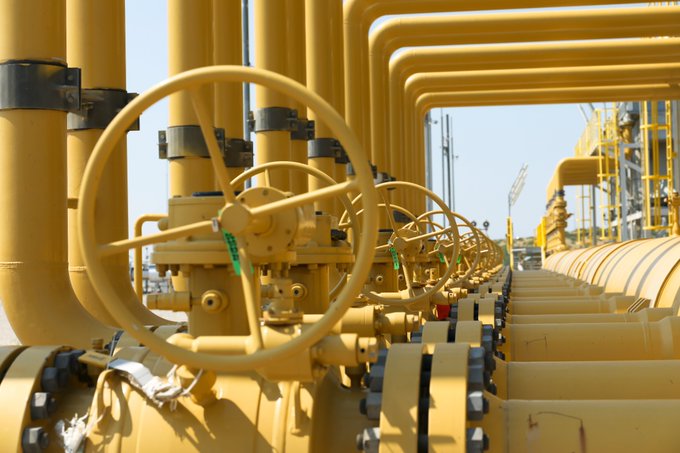
TAP forms the European section of the Southern Gas Corridor, through which natural gas from Azerbaijan's Shah Deniz field is delivered to European markets. The 877-kilometer pipeline runs from the Greek-Turkish border through Greece and Albania, crosses the Adriatic Sea and reaches the southern coast of Italy. TAP has an initial capacity of 10 bcm of gas per year, with the potential to increase capacity to 20 bcm per year.
TAP has to date delivered more than 60 billion cubic meters of natural gas to Europe, including 50 billion cubic meters to Italy.



