



PARIS, France, June 30. Banks must accelerate the modernization of their infrastructure.
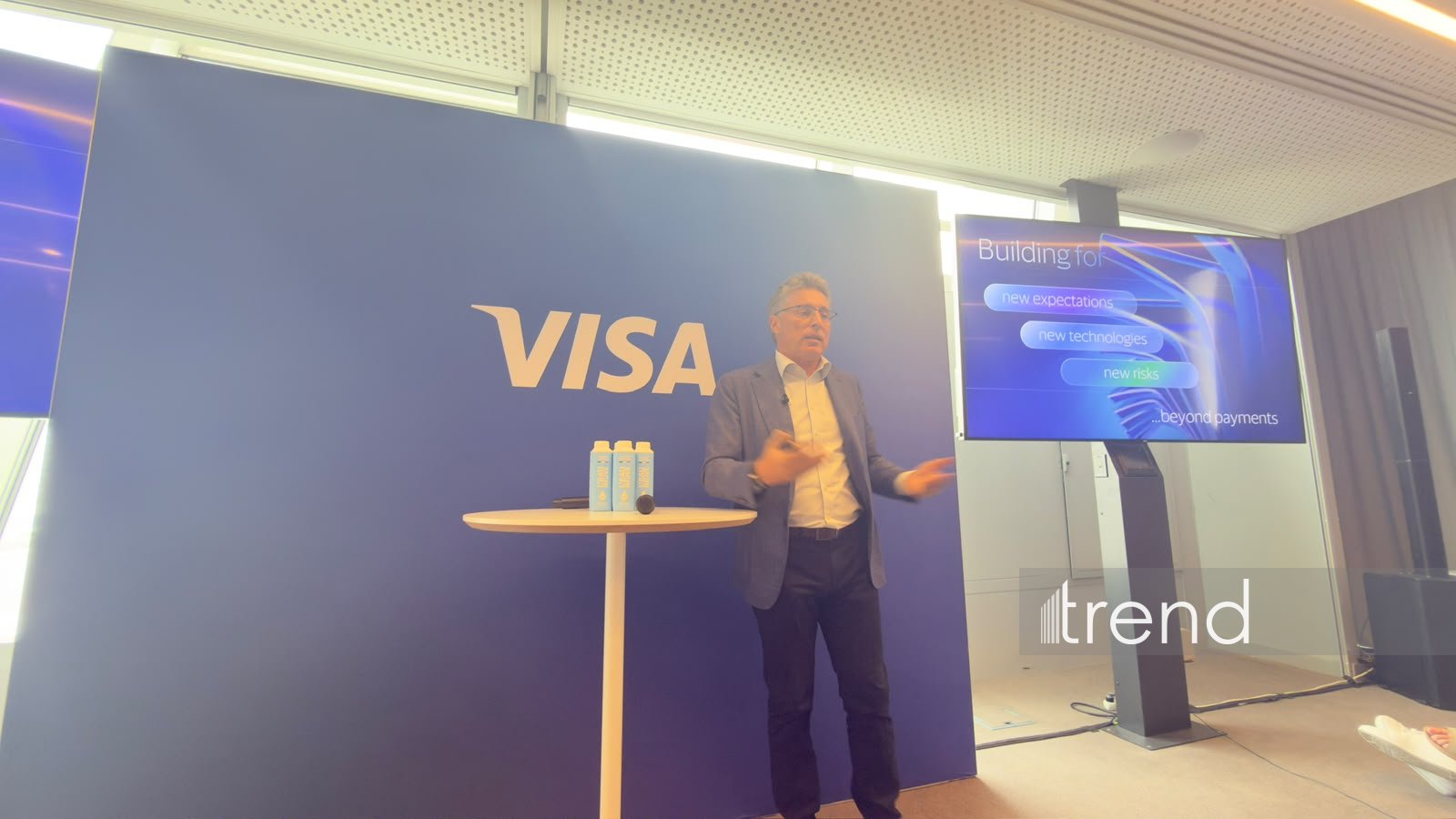
The remarks were made by the Senior Vice President and Head of Value-Added Services for Visa in the CEMEA (Central and Eastern Europe, Middle East, and Africa), Walter Lironi during an information session at the Visa Payments Forum in Paris, Trend's special correspondent reports.
According to him, the financial sector is undergoing several fundamental shifts at once: changing consumer expectations, technological transformation, and the rise of new types of risks.
“Generation Z expects commerce to be available where they are—on social media. They expect every transaction to be a one-click process, as seamless as possible. And, of course, they expect these processes to be secure,” Lironi noted.
He emphasized that the increasing complexity of payment ecosystems and the growing number of payment channels and methods are making it increasingly difficult to meet these expectations.
Moreover, Lironi pointed out the expansion of the risk landscape, ranging from traditional transactional threats to cybercrime and more sophisticated fraud schemes.
“In the past, risk existed only at the moment of the transaction. Today, it extends much further—including cybercrime,” he said.
Lironi also noted that the modernization of financial institutions’ infrastructure cannot be delayed.
“If you’re a financial institution today, you can’t wait to modernize. Otherwise, you risk going out of business in the near future,” he said.
According to him, outdated banking systems based on monolithic architecture and batch data processing are unable to meet modern requirements for speed, security, and service personalization.
He noted that modernization improves the effectiveness of risk and fraud management, as intelligent mechanisms are integrated directly at the transaction level rather than added on top.
In addition, modern platforms provide greater system resilience and scalability, whereas banks with outdated architecture face an increase in the number of outages and longer recovery times.
“We see that banks with outdated systems experience up to five times as many outages and significantly longer recovery times,” Lironi emphasized.
He also added that modern digital platforms enable companies to innovate three times faster and tap into new revenue streams more quickly, including the embedded finance market, which is estimated to reach more than $7 trillion by 2030.
During his presentation, Lironi outlined Visa’s approach to modernizing banking infrastructure, which includes three key areas: infrastructure transformation, the creation of intelligent user services, and the strengthening of security systems.
He noted that many banks still use “monolithic” systems that are difficult to adapt to new requirements.
As a solution, Visa is developing the Pismo cloud platform, an API-first core banking system that is already operational in more than 20 countries and serves over 200 million accounts.
“Pismo enables banks to modernize their infrastructure gradually and securely, starting with individual use cases and scaling solutions,” he noted.
He specifically emphasized that Visa is also developing a payment acceptance platform that enables medium and large merchants to connect to a global infrastructure with access to 190 countries, more than 150 acquirers, and over 50 currencies through a single connection.
Concluding his remarks, Lironi noted that Visa will continue to invest in the development of modernization tools, including solutions for issuers and acquirers, to accelerate the digital transformation of the payments industry.



