


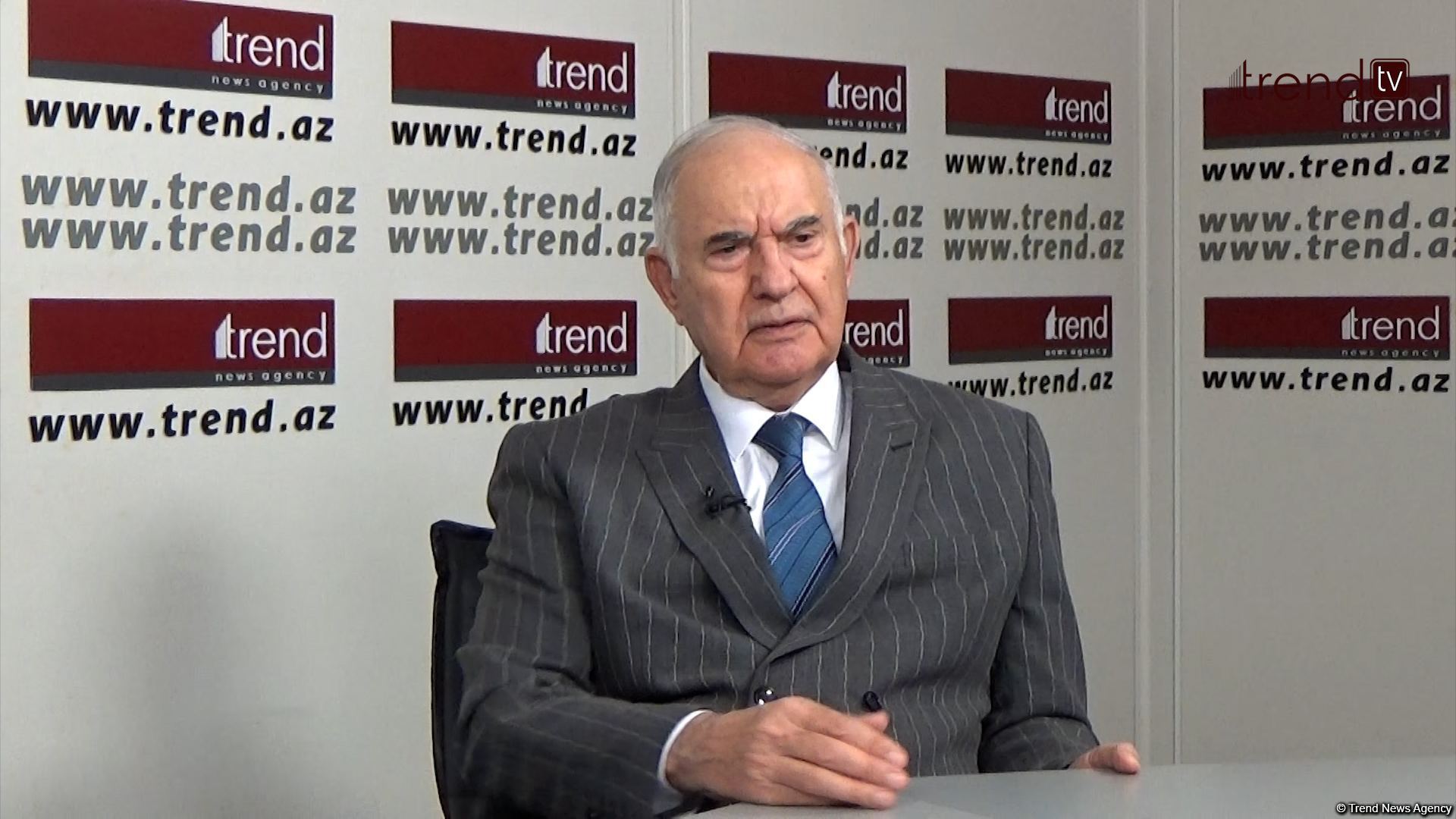

BAKU, Azerbaijan, June 3. Azerbaijan becomes one of the key energy security destinations, political analyst Azer Garayev told Trend.
He said that the 31st Baku Energy Week held in Baku has once again demonstrated Azerbaijan's place on the global energy agenda and its growing geoeconomic importance. The event, which brings together government representatives, heads of international organizations, top managers of energy companies, and investors from different countries of the world, is not only a traditional forum dedicated to the energy sector, but also acts as an important platform for discussing global energy policy.
"The ideas voiced at the Baku Energy Week, which was attended by 276 companies from 46 countries, the documents signed, and the agreements reached show that Azerbaijan is no longer just an oil and gas exporting country. The country has become an important participant in the new geopolitical realities emerging in the fields of energy security, green energy transition, international investments, and regional cooperation.
The foundation of Azerbaijan's energy successes was laid with the Contract of the Century, signed in 1994 and considered one of the turning points in the modern history of the country. At that time, the main goal was to bring hydrocarbon resources to world markets and attract foreign investments to the country. In subsequent years, giant projects such as the Baku-Tbilisi-Ceyhan oil pipeline, the Baku-Tbilisi-Erzurum gas pipeline, the Southern Gas Corridor, and TANAP radically changed Azerbaijan's role on the energy map. These projects not only brought billions of dollars in revenue to the country's economy, but also turned Azerbaijan into an energy bridge between Europe and Asia," he said.
According to him, today the country is entering a new stage. If earlier the main priority was the export of energy resources, now the agenda includes issues such as energy security, green energy, technological innovations, and the formation of new energy markets.
"Speaking at the opening of the Baku Energy Week, President Ilham Aliyev noted that Azerbaijan's economic activity is very positive today. The head of state emphasized that our rating in leading international rating agencies is increasing year by year. "Countries should not be blamed for having oil and gas because oil and gas are commodities like any other. And every country uses what it has under its soil or on the seabed in order to develop. And that was the case for Azerbaijan in the beginning of our independence. Oil and gas were the only way for us to survive as an independent country. So countries should be judged not by whether they have oil or not, but by how they use the revenues," the head of state noted. This idea actually sounds like a brief summary of the development path that Azerbaijan has taken over the past three decades. At the expense of energy revenues, large infrastructure projects have been implemented in the country, transport networks have been expanded, social programs have been financed, and strategic foreign exchange reserves have been formed. Today, the fact that Azerbaijan's external debt remains low in GDP and that financial reserves exceed debt many times over is also considered a result of the implemented policy," the analyst said.
Garayev pointed out that the geopolitical processes taking place in the world in recent years have once again made the issue of energy security one of the main topics of the international agenda. In particular, European countries have begun to pay more attention to the diversification of energy sources.
"It's in these circumstances that the role of Azerbaijan has significantly grown. The figures announced by President Ilham Aliyev confirm this once again. According to the head of state, the number of countries to which Azerbaijan exports gas has increased from 12 to 16 in the past year. 10 of these countries are members of the European Union. This fact shows that Azerbaijan is no longer one of the important participants in energy security on a regional, but on a continental scale. In his speech, the President also emphasized that the country's energy potential is sufficient for long-term prospects: "With our gas reserves, which will be sufficient for at least 100 years—not only for us but also for our clients—we actually do not need any other source of electricity generation." This statement is an important signal that the position of Azerbaijani gas in the European market will continue to strengthen in the future," Garayev explained.
The analyst underscored that one of the most notable events of the Baku Energy Week was the start of the first free natural gas production from the Azeri-Chirag-Gunashli (ACG) field block.
"For many years, ACG, known as the main oil project of Azerbaijan, is now creating new opportunities in terms of gas production. This both increases the country's export potential and creates conditions for more efficient use of the existing energy infrastructure. New gas volumes can expand Azerbaijan's supply opportunities to Europe, and at the same time form an additional base for future energy projects. The new stage launched in the ACG project is an important part of the long-term development strategy of the energy sector of Azerbaijan," Garayev noted.
According to him, the international prestige of the Baku Energy Week was also reflected in the high-level appeals sent on the occasion of the event.
"In his address, U.S. President Donald Trump highly appreciated Azerbaijan's contributions to energy security and emphasized the country's strategic importance for the region. He noted that Washington is interested in expanding energy cooperation with Baku. Turkish President Recep Tayyip Erdoğan stated that the strategic partnership established between Azerbaijan and Turkey in the energy sector has changed the energy map of the region. He emphasized that projects such as Baku-Tbilisi-Ceyhan, Baku-Tbilisi-Erzurum, and TANAP are of great importance not only for the two countries, but also for the Eurasian space as a whole. UK Prime Minister Keir Starmer also drew attention to Azerbaijan's growing role in the field of energy security and green energy in his address. He noted that the country's investments in renewable energy projects create new opportunities for international cooperation. The fact that the leaders of the U.S., Türkiye, and the UK addressed the Baku Energy Week with special addresses demonstrated that the forum is in the spotlight not only regionally, but also globally," the analyst said.
Garayev noted that one of the most discussed topics at the event was green energy.
"Azerbaijan has begun to implement large-scale projects in the field of renewable energy in recent years. The rich wind potential of the Caspian Sea, the country's solar energy capabilities, and the growing interest of foreign investors open up new prospects in this direction. According to President Ilham Aliyev, by the end of next year, the country's solar and wind energy production capacity is expected to reach 2 gigawatts. By 2032, this figure is planned to increase to 8 gigawatts.
Azerbaijan is also working on international projects that envisage the export of green energy to Europe via the Black Sea. Energy initiatives implemented with Central Asian countries are also part of this strategy. It's no coincidence that, as the country that hosted COP29, Azerbaijan pays special attention to the green energy agenda. Baku is now presenting itself not only as a hydrocarbon producer, but also as an active participant in the energy transition," he noted.
The analyst said that one of the main results of the Baku Energy Week is the numerous cooperation documents signed.
"SOCAR has reached cooperation agreements with the world's leading energy and financial companies in various areas. The documents signed with companies such as Shell, Chevron, Comstock Resources, J.P. Morgan, and Apollo Capital Management indicate continued international interest in Azerbaijan's energy sector. New agreements on the sale of gas from the Absheron field, cooperation on the gas turbine power plant project in Serbia, documents on the application of artificial intelligence technologies in the energy sector, and partnerships with international universities were among the practical results of the forum.
One of the areas that attracted particular attention was cooperation on critical minerals and rare earth elements. This area is considered one of the most strategic areas of the global economy in recent years. Azerbaijan's expansion of partnerships in this area indicates the country's intention to play a role in resource markets of strategic importance beyond the energy sector in the future," he said.
According to him, the 31st Baku Energy Week shows that Azerbaijan is no longer perceived only as a country that produces and exports energy. The country has become one of the important participants in the processes taking shape in the field of energy security, international transport routes, green energy transition, and new technologies.
"Today, Baku plays the role of a platform where various interests and partnerships intersect. Not only energy contracts are signed here, but also discussions are held on the energy map of the future. At a time when uncertainties persist in global energy markets and energy security remains one of the main topics of international politics, the message from Baku is quite clear: Azerbaijan continues to strengthen its position as a reliable supplier, strategic partner, and one of the active authors of new energy initiatives," the analyst added.



