


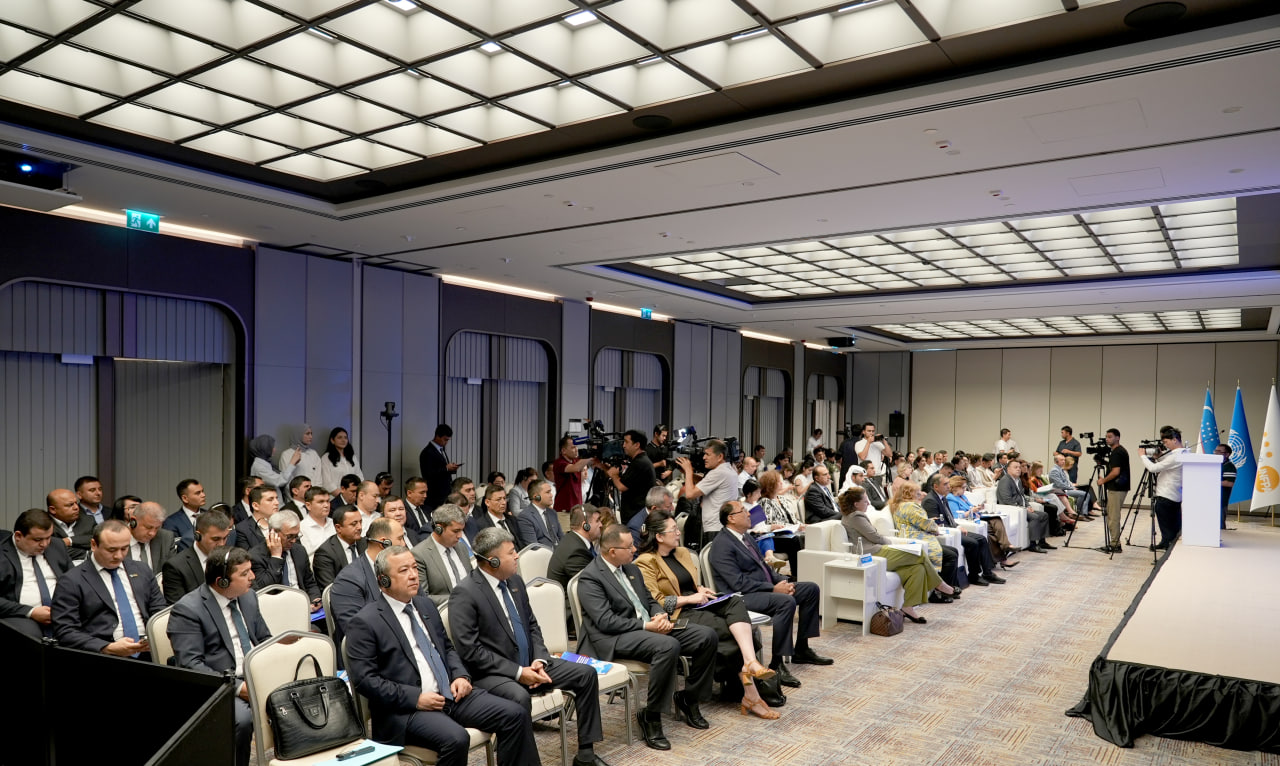

BAKU, Azerbaijan, June 30. Uzbekistan's population has reached an estimated 39.05 million, according to preliminary results from the country's first nationwide population and agricultural census since gaining independence.
This was reflected in the statement published by the National Committee on Statistics of Uzbekistan following the official announcement at a conference on June 30.
The census, conducted between Jan. 15 and Feb. 28, 2026, was organized by the National Statistics Committee in cooperation with the United Nations Population Fund (UNFPA). It marked the first census carried out in independent Uzbekistan and was conducted under a presidential decree signed in September 2025.
According to preliminary findings, Uzbekistan's population stands at 39,047,321, about 810,600 higher than previous official statistical estimates of 38.24 million. Officials said the population has roughly doubled since the country's last census in 1989.
"The census provides a reliable statistical foundation for shaping future public policy and strategic development decisions," the National Statistics Committee said.
The preliminary results show that 19.77 million residents are male and 19.28 million are female. The census also counted 56,900 foreign nationals who have lived in Uzbekistan for more than one year, with most coming from India, Russia and Kazakhstan.
The Committee said 82.3% of the population completed the census online, while the remaining households were visited in person by more than 55,000 local enumerators using tablet computers. A post-enumeration survey found that 97.3% of the country's population was successfully counted, leaving 2.7% unaccounted for—a figure officials said is well within international standards.
"By international practice, an undercount of this size is considered acceptable, as many countries record non-response rates of 10% or more," the committee said.
The digital census also generated geolocation data for more than 8.2 million addresses, providing a detailed geographic database of residential buildings, agricultural facilities and other properties. During the census period, more than 2.1 million people registered for the government's OneID digital identification system.
The Committee estimated the cost of the census at 12 U.S. cents per person, describing it as a cost-efficient operation supported by extensive digital technologies and a nationwide public awareness campaign.
The census found that ethnic Uzbeks account for 89.4% of the population, followed by Tajiks (3.3%), Karakalpaks (2.2%), Kazakhs (1.8%), Russians (1.6%), Kyrgyz (0.6%), Turkmen (0.5%) and other ethnic groups (0.6%). About 91.3% of respondents identified Uzbek as their native language.
Preliminary agricultural census results also revealed notable changes. Compared with existing statistical estimates, the area devoted to annual crops increased by 23%, orchards and vineyards by 18.8%, fish farms by 15%, and greenhouses by 2.2%. Livestock figures showed cattle numbers were 14.9% lower than previous estimates, while poultry numbers were 12.7% higher.
It was said that the census data will support evidence-based planning in areas including education, healthcare, infrastructure, employment, social protection and agriculture. Preliminary results will continue to be published on the National Statistics Committee's official website and social media platforms.



