


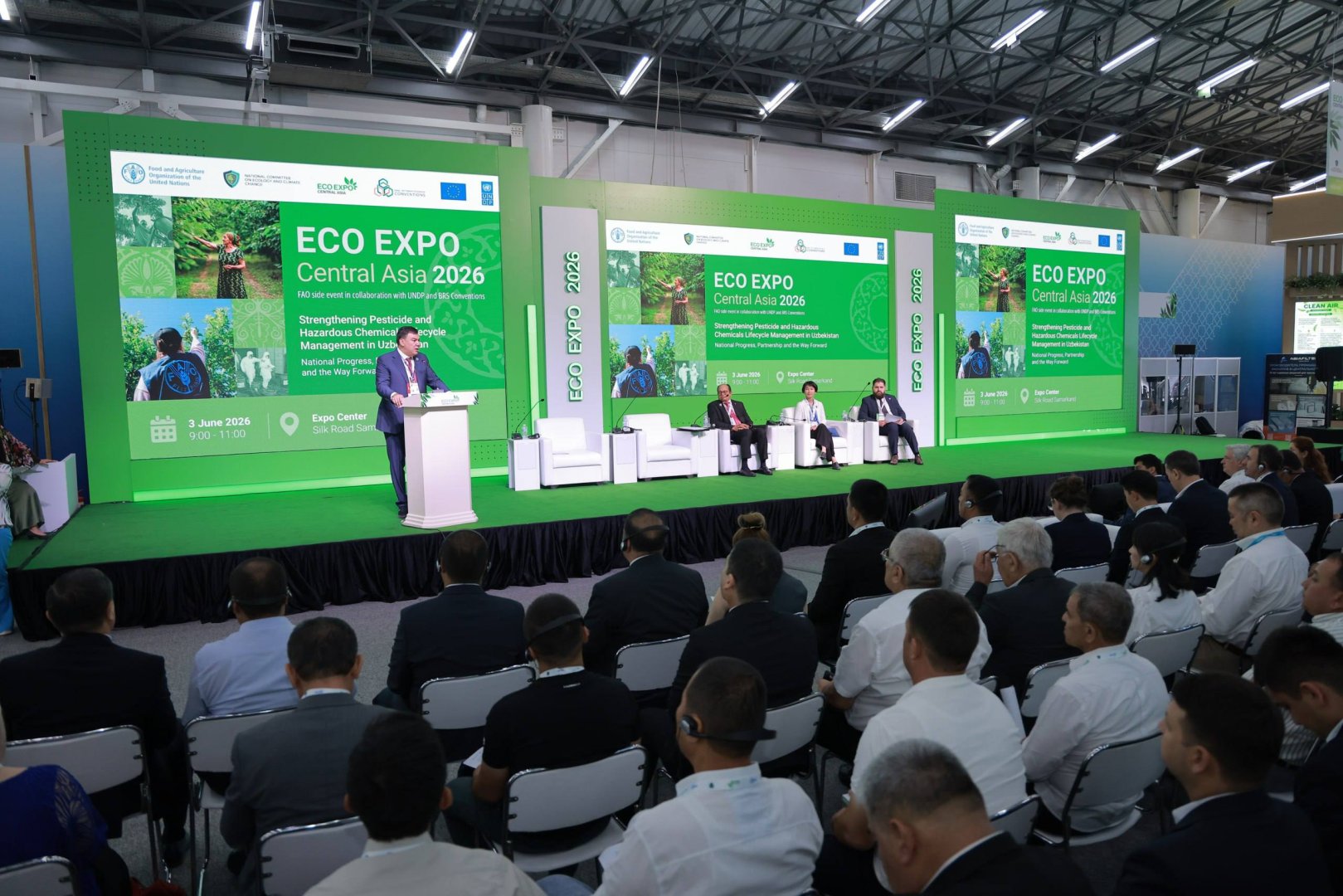

BAKU, Azerbaijan, June 4. Uzbekistan intends to establish a unified regional platform for the management of pesticides, hazardous chemicals, and waste to enhance coordination and knowledge sharing across Central Asia, Trend reports, citing the National Committee on Ecology and Climate Change.
The initiative was announced by Aziz Abdukhakimov, Adviser to the President of Uzbekistan on environmental issues, during Eco Expo Central Asia 2026.
“Today, Central Asia is gradually developing a new culture of environmental cooperation grounded in trust, scientific collaboration, shared responsibility, and the recognition that the region’s environmental security constitutes a collective responsibility,” Abdukhakimov stated.
Furthermore, the operational blueprint was discussed in Samarkand during a high-level event at Eco Expo Central Asia 2026.
The upcoming strategic roadmap prioritizes structural reforms to align Uzbekistan's domestic agricultural and chemical sectors with global environmental safety frameworks. Government agencies and international partners, including the Food and Agriculture Organization (FAO) and the United Nations Development Program (UNDP), plan to implement joint initiatives to address contaminated sites and systematically phase out highly hazardous pesticides.
The comprehensive technical program targets the disposal of obsolete persistent organic pollutants (POPs) and per- and polyfluoroalkyl substances (PFAS). Additionally, the United Nations Development Program (UNDP) outlined plans to launch a dedicated project under the Stockholm Convention framework to remediate contaminated sites and mitigate long-term environmental damage from hazardous residues.
The event brought together regional environmental officials, United Nations representatives, and international technical experts to address hazardous chemical lifecycles.



