


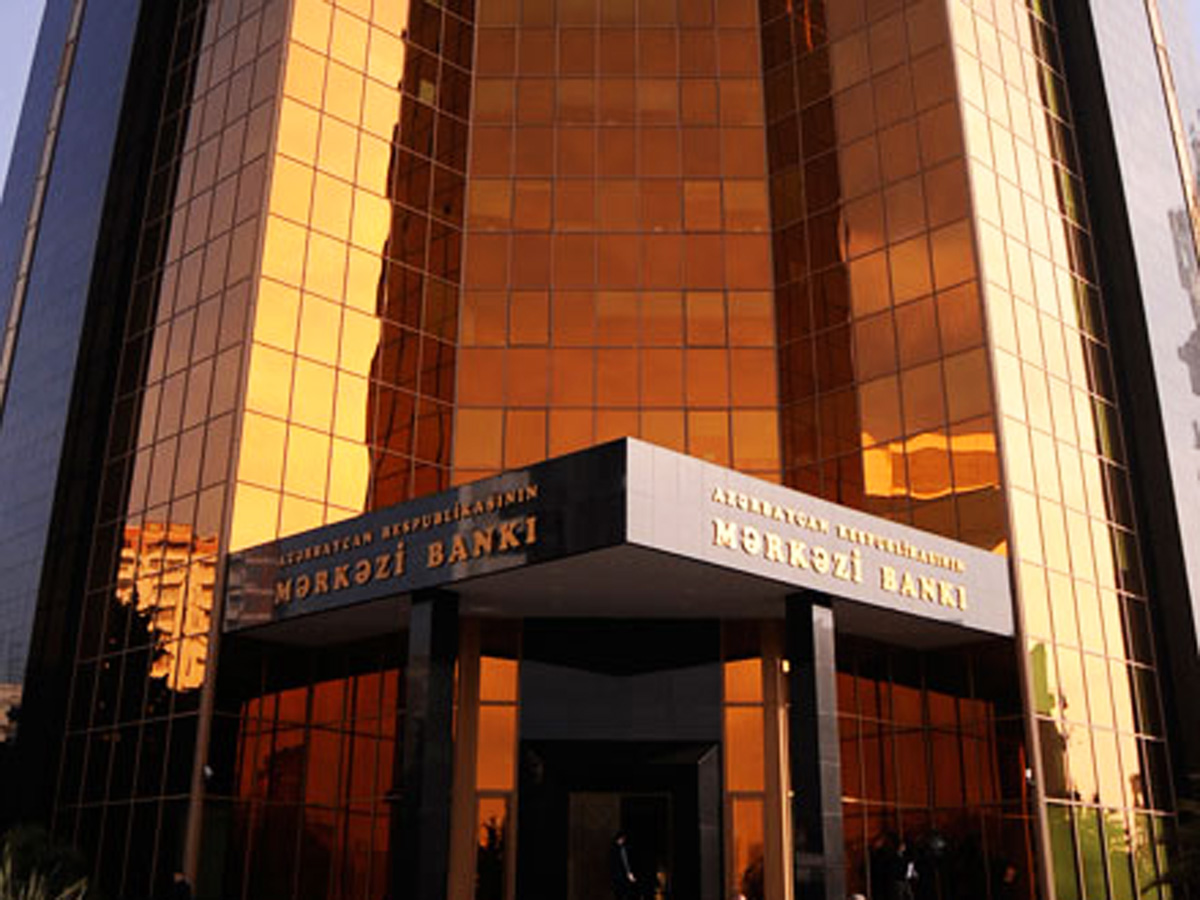

BAKU, Azerbaijan, June 5. The Central Bank of Azerbaijan (CBA) put its money where its mouth is, injecting over 5.73 billion manat ($3.37 billion) into circulation while pulling the rug out from under the market with a withdrawal of 5.86 billion manat ($3.44 billion) in 2024.
Data obtained by Trend from the CBA indicates that the total money supply in circulation grew by 0.76 percent compared to the beginning of the year, amounting to 17.4 billion manat ($10.2 billion) by the end of the year.
"Currently, the reserves of the national currency total 8.9 billion manat ($5.2 billion), which is sufficient to meet the economy's demand until the end of 2026. In the course of the year, the Central Bank also issued updated one- and three-kopik metal coins," the statement noted.
The updated coins, which follow the design changes made for other denominations like 5, 10, 20 , and 50 coins, now feature the State Emblem of the Republic of Azerbaijan and the year of production. The new one- and three-kopeck coins will circulate alongside the older versions of the same denomination.
In its efforts to combat counterfeiting, the Central Bank continued its close coordination with law enforcement agencies, with a focus on removing fraudulent banknotes from circulation.
"During the reporting period, a total of 379 counterfeit banknotes (worth 32,611 manat ($19,182)) and 503 foreign currency bills showing signs of counterfeiting were detected and removed from circulation. These were promptly handed over to law enforcement agencies for further action," the CBA added.
In order to facilitate the public's engagement in the
circulation of obsolete or compromised banknotes, the Central Bank
has operationalized cash offices in Baku alongside its regional
subsidiaries. Throughout the fiscal year, a total of approximately
6.7 million manat (equivalent to $3.9 million) was processed,
encompassing around 155,200 banknotes that were received from the
general populace and subsequently exchanged.
The Central Bank underscored its dedication to addressing the
national liquidity requirements, optimizing the management of
currency reserves, and guaranteeing the continuous circulation of
premium-grade banknotes.



