


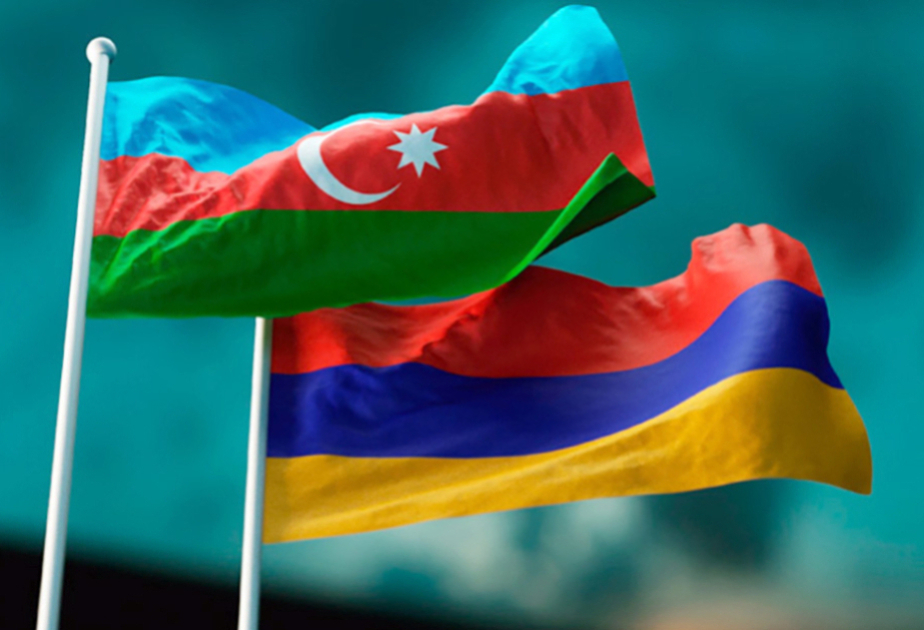

BAKU, Azerbaijan, August 8. Baku and Yerevan took another symbolically important step a year after the historic Washington summit, which marked a turning point in relations between Azerbaijan and Armenia: the two leaders held a phone conversation. The very fact that this conversation took place on the summit's anniversary has significance beyond protocol: the parties effectively outlined a shared understanding on how to transfer the achieved peace from a political agreement to a sustainable system of neighborly, economic, and transport links.
On August 8, 2025, with the support of U.S. President Donald Trump, a meeting took place in Washington between the President of Azerbaijan Ilham Aliyev and Armenian Prime Minister Nikol Pashinyan, opening a new stage in relations between the two countries. A year later, the very agenda of the phone conversation demonstrates how much the regional reality has changed.
The parties discussed the first anniversary of the Washington Summit and the initialing of the peace agreement, and emphasized the practical benefits of the new reality, the development of trade and economic ties, the export of Azerbaijani petroleum products to Armenia, the transit of goods through Azerbaijan, and the implementation of the TRIPP route.
This is an important transition from the diplomacy of peace to the economics of peace. While agreements create a political basis for ending conflict, trade, transit, infrastructure, and connectivity transform this basis into everyday reality, making cooperation more beneficial and a return to confrontation increasingly unfeasible.
It's in this context that the leaders' phone conversation, a year after Washington, can be seen as a kind of political "synchronization of watches." It is no longer about agreeing on the need for peace, but rather about synchronizing further steps to solidify it and give it practical substance.
As Peter Marco Tase, Distinguished Research Fellow at the National University of Pilar (FCAyDR, Paraguay) and Director of the Azerbaijan-U.S. Economic and Education Council in Wisconsin, noted in an interview with Trend, the leaders' phone conversation is a true demonstration of their willingness to establish good-neighborly relations between the two countries.

Speaking about the significance of last year's meeting in the White House, the analyst noted that the Washington Declaration was a huge step towards peace and prosperity for Armenia and Azerbaijan.
"President Trump's role in this regard is also crucial. August 8, 2025, forever changed the future of the South Caucasus. It's telling that today's agenda no longer focuses on the conflict itself, but on how to leverage peace. This is a fundamental shift. Peace is no longer the endpoint of the negotiation process, but a platform for developing transport routes, trade, energy ties, and new economic opportunities.
In this sense, the anniversary of the Washington summit and the leaders' phone call have broader political implications. A year ago, the main issue was achieving a historic turning point after decades of conflict. Today, the question is how consistently Baku and Yerevan can synchronize their actions and transform this turning point into a sustainable regional architecture," he said.
At the same time, the analyst noted, the region is currently under the influence of extremely intense and unpredictable geopolitical processes that have direct economic consequences. Against this backdrop, the peace agreement between Azerbaijan and Armenia, in his opinion, creates a new foundation for trust and good-neighborly relations.
Tase specifically emphasized the importance of TRIPP as a key element of bilateral cooperation. According to him, American mediation has created a new political environment in which Baku and Yerevan have the opportunity to build trust and consistently implement agreements on long-term peace.
The analyst also highlighted the potential for further cooperation in trade, agriculture, and joint economic projects. He believes that these areas are enabling the two countries to gradually transition from a relationship shaped by conflict to one based on mutual benefit.
"Energy, logistics, and land transport corridors, metallurgy, and agriculture are among the key areas of regional cooperation, the development of which Washington is paying close attention to in its interactions with Baku and Yerevan," Tase added.
Thus, if Washington marked the point at which the parties established a new political course, then the current contact between the leaders demonstrates the next stage, coordinating the pace and direction of progress. In this case, we are not simply talking about exchanging positions, but rather agreeing on a future course, in which the peace process develops synchronously and gradually acquires practical content.
That's why the significance of the current conversation extends beyond its immediate agenda. A year after Washington, Baku, and Yerevan are already in a different frame of reference; they are moving from conflict management to managing the peace process. And its sustainability will be determined not only by political statements, but also by how deeply peace permeates trade, transportation, the economy, and the daily relations between the two countries.



