


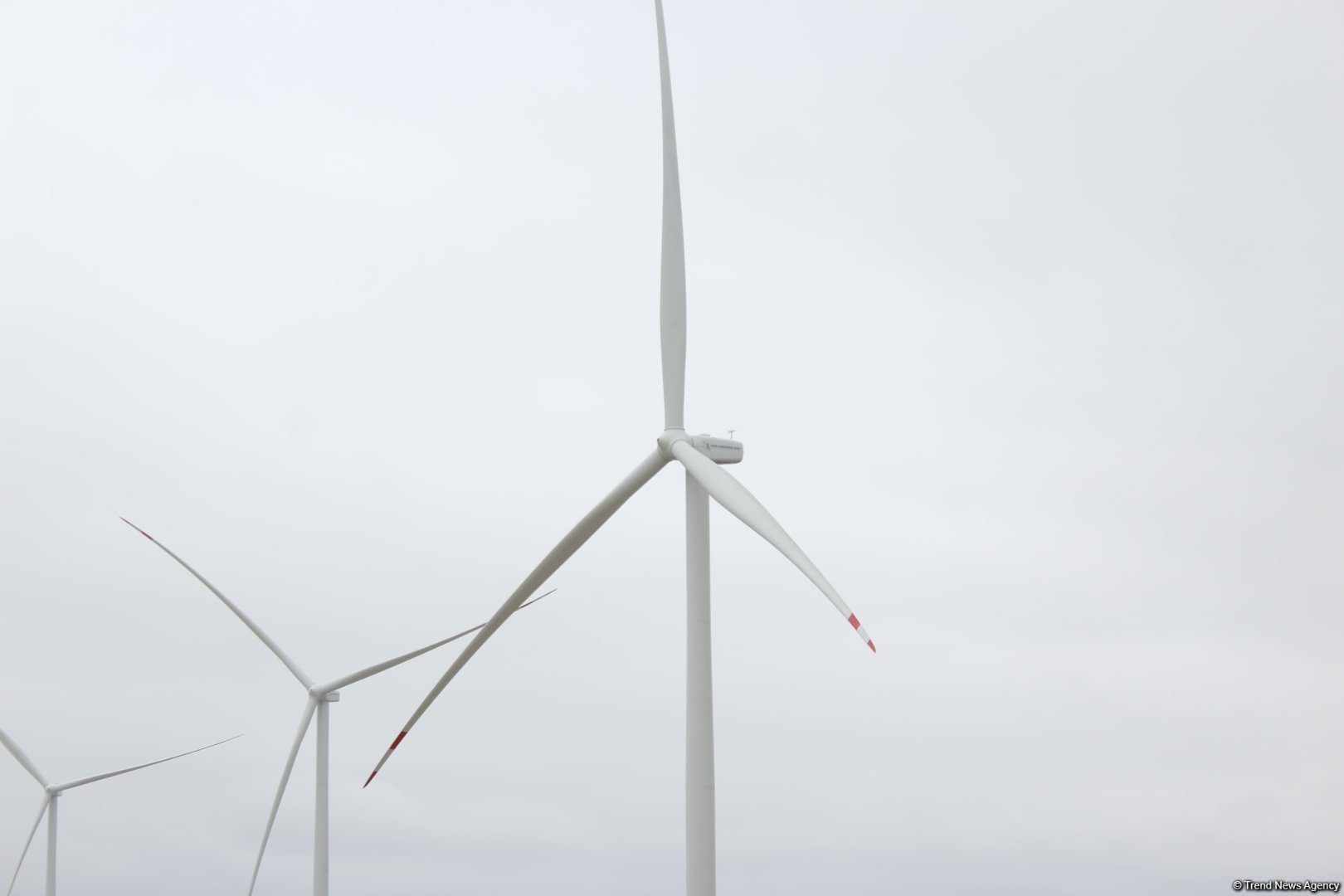

BAKU, Azerbaijan, November 6. Total installed onshore wind capacity worldwide is expected to increase 1.7 times by 2031, reaching 2,040 gigawatts, representing a 40% acceleration in the growth rate compared to the previous six-year period.
This was reflected in the "Renewables 2026" report by the International Energy Agency (IEA).
According to the report, the volume of global onshore wind energy generation is projected to grow rapidly, while offshore wind energy projects will not develop at the anticipated pace due to high costs and delays
The report noted that in 2025, the commissioning of new onshore wind capacity globally rose by 37%, reaching approximately 150 gigawatts. This growth was primarily driven by the rapid implementation of projects in China ahead of changes to existing support mechanisms. Despite a subsequent slowdown in the Chinese market, the volume of new annual capacity is projected to remain at approximately 140 gigawatts.
The report mentioned that the simplification of permitting procedures and strong government support in Europe, hybrid auction mechanisms in India, and new competitive tenders in ASEAN countries are key factors accelerating the development of onshore wind energy.
Meanwhile, the phase-out of tax incentives in the US is dampening growth in the wind energy sector. In countries such as Brazil and Chile, electricity generation exceeding grid transmission capacity, leading to curtailment, is negatively impacting the economic viability of projects and slowing expansion in Latin America.
Regarding offshore wind projects, the total volume of new capacity is expected to reach 117 gigawatts from 2026 through 2031. This is approximately double the figure for the 2020–2025 period.
However, according to IEA estimates, this forecast is 27% lower than last year’s projections. Uncertainties in policy and regulation, ongoing supply chain issues, and high financing costs are cited as the primary reasons for this.
According to forecasts, China will account for 48% of new offshore wind capacity by 2031. However, high project costs, compounded by reduced economic attractiveness following the transition to competitive auction mechanisms, have led to a downward revision of expectations for the country.
In Europe, the development of offshore wind projects is projected to accelerate, reaching an annual capacity of approximately 10 gigawatts by 2031. The UK is expected to play a leading role in this growth.
Outside of the UK, however, growth forecasts for offshore wind have been lowered due to the cancellation of major projects and the postponement of auctions in the Netherlands, Germany, and Belgium.


