


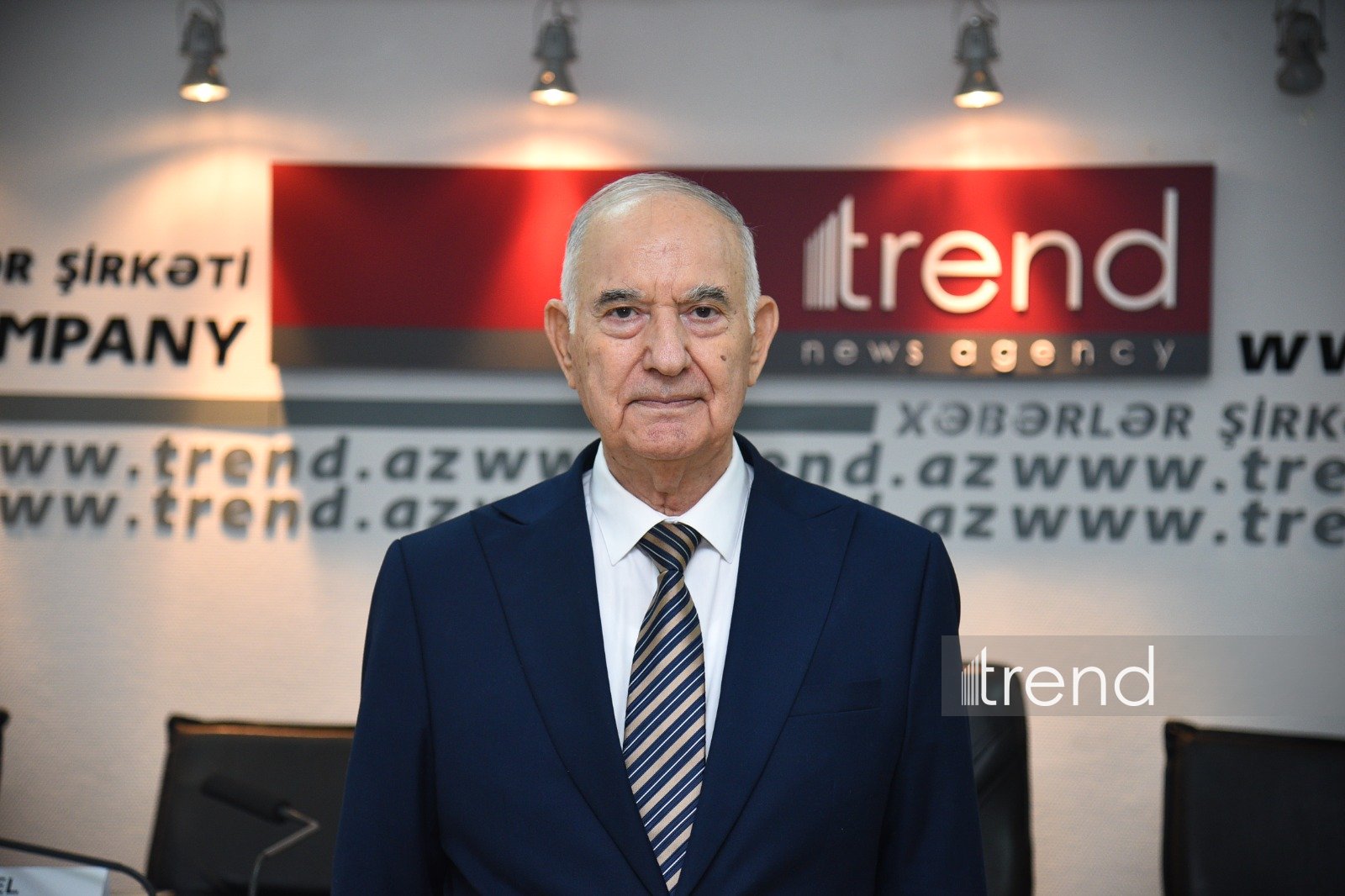

BAKU, Azerbaijan, November 5. November 8 is a day in the history of Azerbaijan that embodies the national will of the people, the strength of the army, and the state’s commitment to its strategic goals, political analyst Azer Garayev told Trend.
“The liberation of Shusha on November 8, 2020, marked a decisive turning point in the Patriotic War and rendered Armenia’s defeat inevitable. This historic event was the logical outcome of years of state-building, military reforms, consistent diplomatic efforts, and the unity between the people and the army. The significance of November 8 is linked to an entire era in Azerbaijan’s modern history. Having overcome the severe political, economic, and military challenges faced during the early years of its independence, the country eventually transformed into one of the region’s powerful states. At the foundation of this journey lies the statehood strategy of Heydar Aliyev, followed by the policy of development and strengthening implemented by President Ilham Aliyev,” the analyst said.
According to him, the origins of Azerbaijan's current successes are to be found in the state-building process carried out during the early years of independence.
“In the early 1990s, Azerbaijan found itself in an extremely complex situation. As a result of Armenia’s military aggression, 20 percent of our territories were occupied, and hundreds of thousands of our compatriots were displaced from their native lands. The country faced political instability, economic decline, and serious challenges within its defense system. Under these circumstances, safeguarding the state’s independence and ensuring its future development became the primary objective.
With the return of Heydar Aliyev to power in 1993, significant steps were taken to restore political stability and strengthen state institutions in Azerbaijan. Necessary conditions were established to develop the country’s economic and political potential, expand international relations, and build a national army. The development priorities defined during those years laid the foundation for Azerbaijan’s future strength.
Following the election of Ilham Aliyev as President in 2003, this strategy entered a new phase. The diversification of the economy, the development of the energy sector, the expansion of transport infrastructure, and the implementation of social projects became the key directions of state policy. The efficient management of oil revenues expanded the country's financial capabilities. These resources were directed toward strengthening defense capabilities, procuring modern weaponry, upgrading military infrastructure, and training professional military personnel.
President Ilham Aliyev repeatedly stated that Azerbaijan's territorial integrity must be restored and that the country would mobilize all its resources to achieve this goal. This stance defined the primary direction of the state's long-term strategy," the analyst noted.
Garayev pointed out that, in parallel with the enhancement of its military potential, Azerbaijan was also strengthening its international standing.
"By pursuing a balanced and pragmatic foreign policy, Azerbaijan developed cooperative relations with various power centers. Its strategic partnership with Turkey, energy and economic cooperation with European nations, and the maintenance of relations with Russia and other neighboring states expanded the country's regional and international reach.
Through active participation in the UN, the Non-Aligned Movement, the Council of Europe, and other international platforms, Azerbaijan brought the consequences of Armenia's policy of occupation to the attention of the global community. UN Security Council resolutions and the fundamental principles of international law supported Azerbaijan's territorial integrity. By sustaining a diplomatic struggle over many years, Baku established a legal and international foundation for future political decisions," he emphasized.
According to the analyst, the 2020 Patriotic War demonstrated the results of the policy Azerbaijan had pursued for many years. Following further military provocations by the Armenian armed forces on September 27, 2020, the Azerbaijani Army launched counter-offensive operations. Throughout the 44-day war, our Armed Forces demonstrated a high level of combat readiness, proficiency in utilizing modern technology, and great professionalism.
The operations conducted by the Azerbaijani Army highlighted the advantages of modern warfare tactics. The deployment of unmanned aerial vehicles, the integration of reconnaissance and strike capabilities, and seamless coordination between units dealt a severe blow to the enemy's defense system. The heroism of our soldiers and officers, the public's support for the army, and the resolute stance of the Supreme Commander-in-Chief were the key factors behind the victory.
The liberation of Shusha on November 8 proved to be the decisive turning point of the war. The city’s complex geographical terrain and strategic importance made the operation exceptionally challenging. Thanks to the valor and professionalism displayed by Azerbaijani military personnel in this mountainous region, Shusha was freed from enemy occupation. This news sparked a profound sense of joy and pride throughout the entire country.
The historic address in which President Ilham Aliyev announced the liberation of Shusha took a special place in the memory of the people. The loss of Shusha shook Armenia’s military-political positions, and the war concluded with the signing of a trilateral statement on November 10, 2020. Azerbaijan achieved a historic milestone toward the restoration of its territorial integrity," Garayev noted.
Garayev remarked that employees of the State Security Service (SSS) also made significant contributions to the achievement of this victory.
"During the Patriotic War, they played a significant role in preventing the enemy's acts of sabotage and subversion, ensuring information and cyber security, and providing the Azerbaijani Army with operational and counter-intelligence data. This service has also been highly valued by the state: according to official information from the State Security Service (SSS), for their bravery during military operations and subsequent activities, 7 members of the Service were awarded the 'Zafar' Order, and 14 were awarded the 'Karabakh' Order, while many others received various other orders and medals," he recalled.
He added that the victory of 2020 defined new tasks for Azerbaijan regarding the full restoration of its sovereignty and the future development of the liberated territories.
"Following the Patriotic War, Azerbaijan began to play a key role in shaping new political realities in the region. Nevertheless, the presence of separatist forces in Karabakh and the continued presence of Armenian armed units on Azerbaijani territory kept security issues at the forefront.
On September 19, 2023, the Azerbaijani Army launched localized anti-terror measures. As a result of the operation, which lasted less than 24 hours, separatist armed units were disarmed, and an agreement on their surrender was reached on September 20. Thus, state sovereignty was fully restored across the entire territory of Azerbaijan. The leaders of the separatist regime were detained and held accountable.
This event marks a significant milestone in the history of Azerbaijan's modern statehood. The country ensured the restoration of its constitutional order within its sovereign territory. The military victory achieved in 2020 was brought to completion in 2023 with the full restoration of sovereignty," the analyst emphasized.
According to Garayev, one of the main directions of state policy thereafter became the restoration of the liberated territories and ensuring the return of former internally displaced persons to their native lands.
"Today, large-scale construction and development projects are being carried out in Karabakh and East Zangezur. New highways, airports, energy infrastructure, residential complexes, schools, and medical facilities are being built. Within the framework of the Great Return program, the phased return of former internally displaced persons to their homes is being facilitated.
The work underway in Shusha, Fuzuli, Zangilan, Jabrayil, Lachin, and Aghdam constitutes an integral part of the state's long-term development plans. Modern urban planning principles, alternative energy sources, and smart infrastructure solutions are enhancing the future economic potential of these territories. Karabakh and East Zangezur also hold a significant place in Azerbaijan's green energy agenda.
Furthermore, Baku is promoting an agenda for regional peace and cooperation. Azerbaijan is engaged in negotiations, based on specific principles, aimed at normalizing relations with Armenia and securing long-term peace. According to Azerbaijan's position, a sustainable peace must be built upon respect for the sovereignty and territorial integrity of states, as well as the inviolability of international borders," he pointed out.
The analyst also characterized the meeting held in Washington in August 2025, attended by the leaders of Azerbaijan, Armenia, and the US, as a significant event for the future of the region.
"The agreements reached in Washington created new opportunities for advancing the peace process in the South Caucasus. During the meeting, which involved President of Azerbaijan Ilham Aliyev, Prime Minister of Armenia Nikol Pashinyan, and US President Donald Trump, the text of a peace treaty was initialed. This marked a crucial step toward a political and diplomatic resolution to a conflict that had persisted for many years.
As a result of Azerbaijan’s principled stance and consistent diplomatic efforts, new prospects for regional cooperation have emerged. The restoration of transport links, the expansion of economic relations, and the opening of communication channels are of vital importance for the future development of the South Caucasus. The Washington agreements represent a significant achievement in terms of garnering international support for Azerbaijan’s peace agenda," Garayev said.
According to the analyst, the historical significance of November 8 will hold a special place in the national memory of future generations.
"November 8 demonstrated that the Azerbaijani people stand tall in the face of adversity and possess the resolve to engage in a long-term struggle to achieve their national objectives. This victory showcased the strength of the state, the professionalism of the army, and the unity of society.
Today, Azerbaijan faces even greater development goals. The revitalization of Karabakh, the return of the population to their native lands, the expansion of economic opportunities, and the establishment of lasting peace in the region form the core of these objectives. Azerbaijan is now building its future as a victorious state and strengthening its proactive role in regional processes.
November 8 showed us that when national will, strong statehood, and well-defined strategic goals converge, it becomes possible to resolve even the most complex historical challenges. The fact that the Azerbaijani flag flies today in Shusha, Khankendi, and other towns and villages of Karabakh is the most significant outcome of that historic journey," the analyst concluded.


