


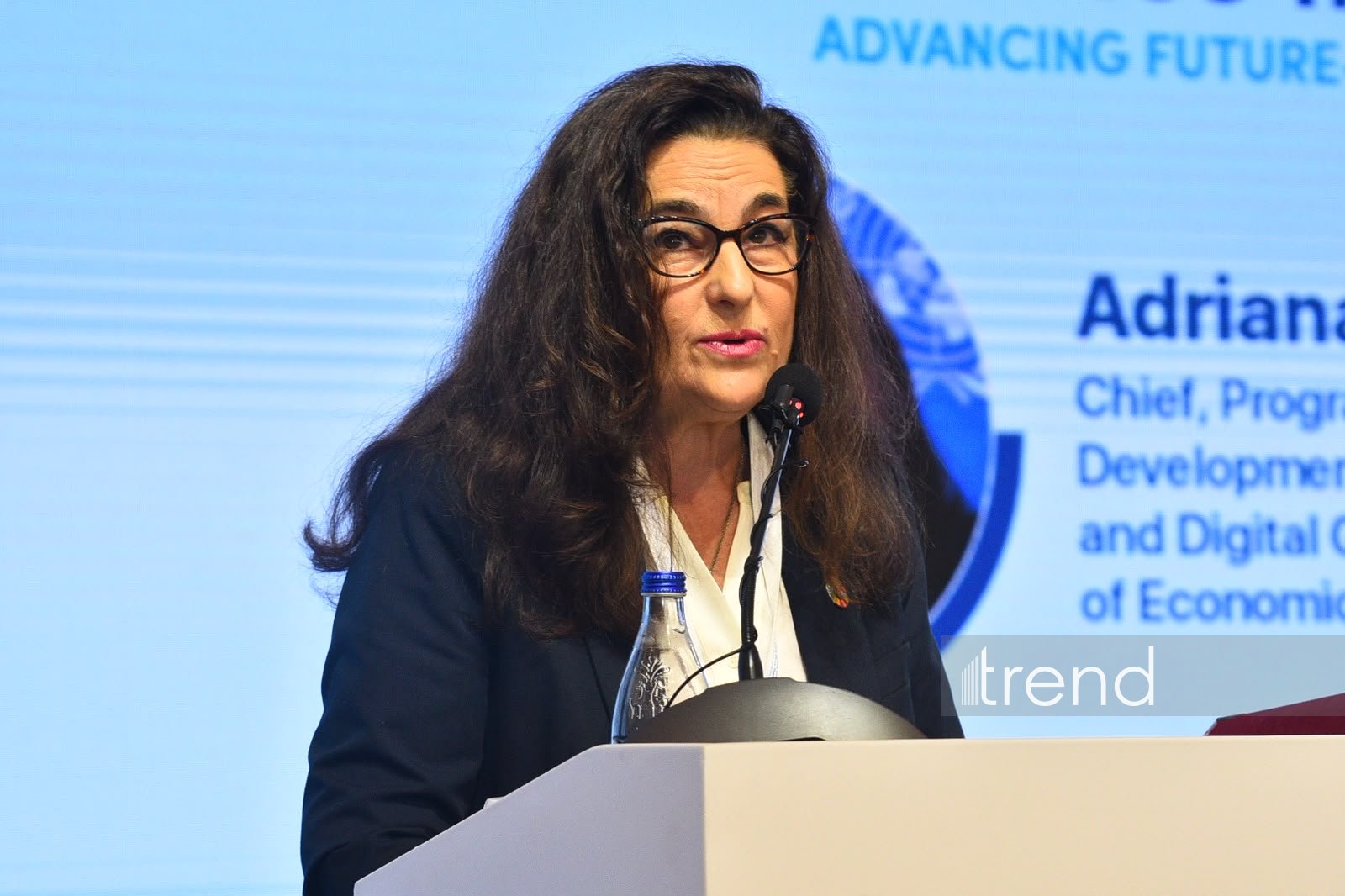

BAKU, Azerbaijan, November 5. Growing inequalities, ineffective governance and socioeconomic pressures have further eroded public trust in institutions, UN Department of Economic and Social Affairs (UN DESA) Chief of Programme Management and Capacity Development in the Division for Public Institutions and Digital Government Adriana Alberti said, as reported by Trend's correspondent on the scene.
She made the remarks while addressing the international summit titled "UN Governance Innovation Summit: Advancing Future-Ready Institutions" on Thursday.
She said institutions designed in the 20th century now face the challenges of speed, scale, and interconnectedness in the 21st century.
"Shifting centers of power, ongoing and emerging conflicts are undermining trust in institutions and their ability to respond decisively to multiple interconnected crises. This is happening at a time when strong collective action is most needed to tackle pandemics, address demographic shifts, eradicate poverty and promote dignity for all," the UN official added.
According to her, young people and women remain underrepresented in public institutions and are largely excluded from the most influential decision-making roles.
"Achieving the Sustainable Development Goals requires strong, coordinated action by local governments and non-state actors. Experts warn that, unless the current course changes, the world could face a fragmented reality in which public trust continues to erode," she said.
An international summit titled "UN Governance Innovation Summit: Advancing Future-Ready Institutions" is being held in Baku.
The summit is being held under a Contribution Agreement signed between the Government of the Republic of Azerbaijan and the United Nations in November 2024. It is jointly organized by the State Agency for Public Service and Social Innovations under the President of the Republic of Azerbaijan and the UN Department of Economic and Social Affairs.
Around 200 participants are attending the summit, including ministers and senior officials from UN member states, senior representatives of international and regional organizations, development partners, as well as representatives of the private sector and academia.


