


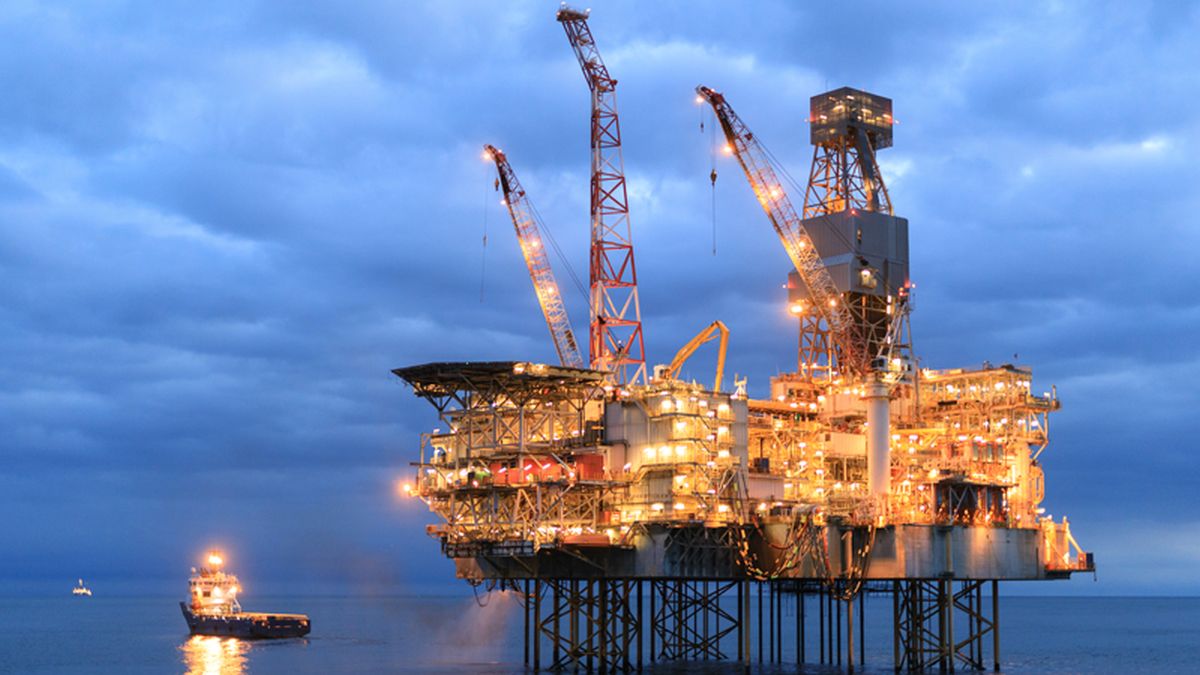

BAKU, Azerbaijan, November 5. Azerbaijan expects to receive 320 million manats ($188.24 million) in profit tax revenue from the Azeri-Chirag-Gunashli (ACG) project and 1.42 billion manats ($835.29 million) from the Shah Deniz project in 2027.
The projections are outlined in the draft state budget for 2027.
According to the document, profit tax revenues from ACG are expected to increase by 20 million manats ($11.76 million), or 6.7%, compared with the 2026 forecast, and by 28.3 million manats ($16.65 million), or 9.7%, compared with actual revenue in 2025.
Daily crude oil production at ACG is projected to average 316,400 barrels in 2027, down by 1,700 barrels, or 0.5%, from the 2026 forecast.
Despite the anticipated decline in production, higher profit tax revenues are attributed to the budget's oil price assumption of $75 per barrel, as well as a projected 16.3% decrease in operating expenses and a 3.3% reduction in capital expenditure.
Profit tax revenues from the Shah Deniz project, meanwhile, are forecast to decline by 180 million manats ($105.88 million), or 11.3%, compared with the 2026 estimate, and by 840.3 million manats ($494.29 million), or 37.2%, compared with actual revenue in 2025.
The projected decrease in tax revenues is attributed to lower condensate and natural gas production, as well as a lower forecast for European hub natural gas prices.
In particular, compared with the 2026 forecast, condensate production at Shah Deniz is expected to decrease by 500,000 barrels, or 1.7%, while natural gas output is projected to fall by 0.2 billion cubic metres, or 0.7%. The forecast European hub gas price has also been set $30 (51 manats), or 6.8%, lower.
Compared with actual figures for 2025, condensate production is projected to decline by 3.3 million barrels, or 10.4%, and natural gas production by 0.6 billion cubic metres, or 2.2%. The European hub gas price is expected to be $73.8 (125.46 manats), or 15.3%, lower.
On September 20, 1994, a 30-year production-sharing agreement (PSA) was signed for the joint development of the Azeri-Chirag-Gunashli (ACG) fields, involving 11 international oil companies from seven countries. The initial target was to produce 500 million tonnes of oil from the block.
On September 14, 2017, the ACG agreement was amended and restated, and a new production-sharing agreement was signed. The revised agreement extended the development period through the end of 2050. It also increased SOCAR's participating interest from 11.65% to 25% and set Azerbaijan's share of profit oil at 75%.
On April 19, 2019, a final investment decision (FID) was made on the Azeri-Central-East (ACE) project. First oil from the ACE platform was produced on April 16, 2024. The project is expected to produce 300 million barrels of oil over its operational lifetime.
The report also notes that an agreement on the production of non-associated natural gas from ACG was signed on September 20, 2024. Production of non-associated gas from the block began on June 1, 2026.
According to BP, approximately 4.7 billion barrels of oil had been produced from Azerbaijan's Azeri-Chirag-Gunashli block between the start of commercial development in November 1997 and the end of the third quarter of 2026.
During the same period, approximately 63 billion cubic metres of associated gas produced from the fields were also delivered to the Azerbaijani state.
Oil production at ACG totalled approximately 87 million barrels in the first nine months of 2026, compared with 89 million barrels in the same period of 2025, representing a year-on-year decline of 2.25%.
BP Exploration (Caspian Sea) Limited is the operator of the project on behalf of the ACG production-sharing agreement partners.
The participating interests in the ACG project are distributed as follows: BP (operator) – 30.37%; SOCAR – 35.30%; MOL – 9.57%; INPEX – 9.31%; ExxonMobil – 6.79%; TPAO – 5.73%; and ONGC Videsh – 2.92%.
The Shah Deniz field is located in the deepwater section of the Caspian Sea, approximately 70 kilometres southeast of Baku, and covers an area of more than 140 square kilometres. Discovered in 1999, the field was initially estimated to contain approximately 1 trillion cubic metres of natural gas and 2 billion barrels of condensate.
Development of the field has been carried out in several phases. A final investment decision on the first development phase was made in 2003, with commercial production beginning in 2006. In 2013, the Shah Deniz 2 project was approved, and production under the second phase commenced in 2018.
The project is currently advancing to its next stage through the Shah Deniz Compression project. Valued at $2.9 billion (4.93 billion manats), the project aims to increase production from the field's low-pressure gas reserves and is expected to unlock approximately 50 billion cubic metres of additional gas.
The Shah Deniz project has also made a significant contribution to developing Azerbaijan's domestic industrial capabilities and skilled workforce. Thousands of jobs have been created through the project, while local construction and service companies have become integrated into international energy projects.
According to BP, the existing infrastructure at the Shah Deniz field has a current production capacity of approximately 76.8 million standard cubic metres of gas per day, equivalent to around 28 billion cubic metres annually.
The participating interests in the Shah Deniz project are distributed as follows: BP (operator) – 29.99%; Lukoil – 19.99%; TPAO – 19%; Southern Gas Corridor (SGC) – 16.02%; NICO – 10%; and MVM – 5%.


