


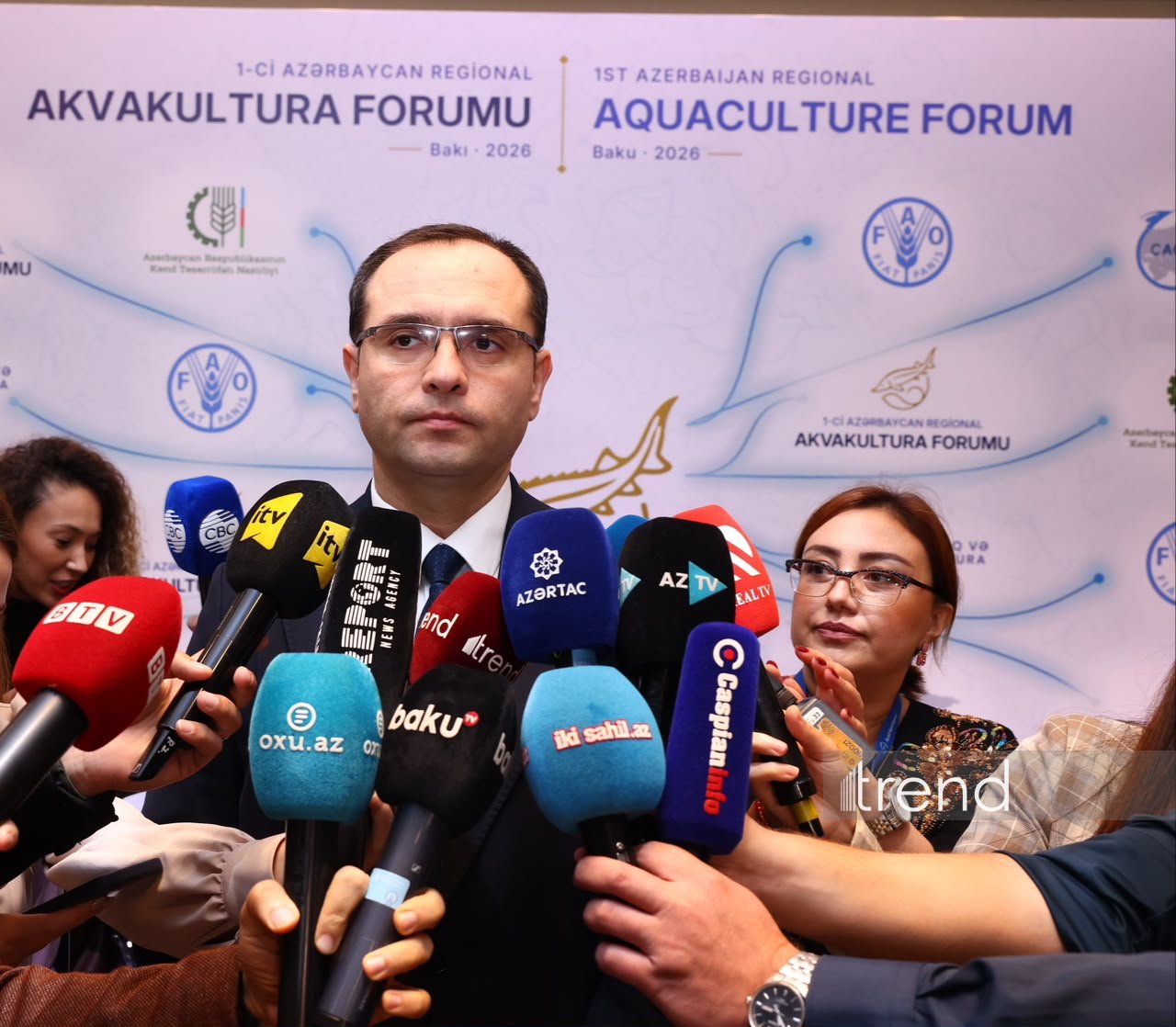

BAKU, Azerbaijan, November 5. On-site monitoring is conducted annually on around 10-12% of the crop areas declared in Azerbaijan, with discrepancies found in approximately 8-10% of the inspected areas, Minister of Agriculture Majnun Mammadov told reporters on the sidelines of the First Azerbaijan Regional Aquaculture Forum, Trend’s correspondent reports live from the event.
He said inspections reveal cases where no crops have been planted, as well as instances of incorrect declarations of crop locations or land area. Depending on the scale of the discrepancy, subsidies may be withheld and farmers may be disqualified from receiving them in subsequent periods.
According to the minister, this monitoring mechanism has been in place for several years, and the number of discrepancies detected has been declining.
"This year, we introduced satellite-based monitoring, which we will continue next year. This will help eliminate dependence on the human factor," Mammadov said.
The minister identified discrepancies in the coordinates of declared land plots as one of the main challenges. In some cases, farmers have actually cultivated the land, but the plot's coordinates do not fully match those indicated in the official land ownership documents.
"Each such case is examined individually on site. If there is no significant discrepancy, we pay subsidies while allowing for coordinate deviations of up to 10-20%. Where the discrepancy is greater, we ask farmers to update their land documents. Once the documents are updated, the subsidies are paid in full," he added.
Commenting on tax incentives, Mammadov said that under the proposed new rules, farmers and entrepreneurs operating in the agricultural sector would be eligible for a 90-percent tax exemption, provided they register with the Electronic Agricultural Information System.
According to him, the main goal is to encourage farms engaged in both primary production and primary processing to register in the system and declare their output, thereby building a more comprehensive database.
Touching on the seed sector, the minister said that oversight had been strengthened in recent years and products that fail to meet the required standards are no longer accepted as seeds.
He stressed that figures showing a decline in seed production actually reflect the volume of seeds that meet quality requirements.
According to Mammadov, starting with this year's autumn sowing season, farmers planting barley and wheat on more than five hectares are required to use certified seeds. The aim is to increase crop yields nationwide and create a market for producers of quality seeds.
"Every year, grain crops are planted on around 800,000 to 1 million hectares across the country, involving approximately 250,000-350,000 farmers. The use of certified seeds is one of the key ways to achieve higher-quality and more productive farming on these areas," Mammadov said.


