


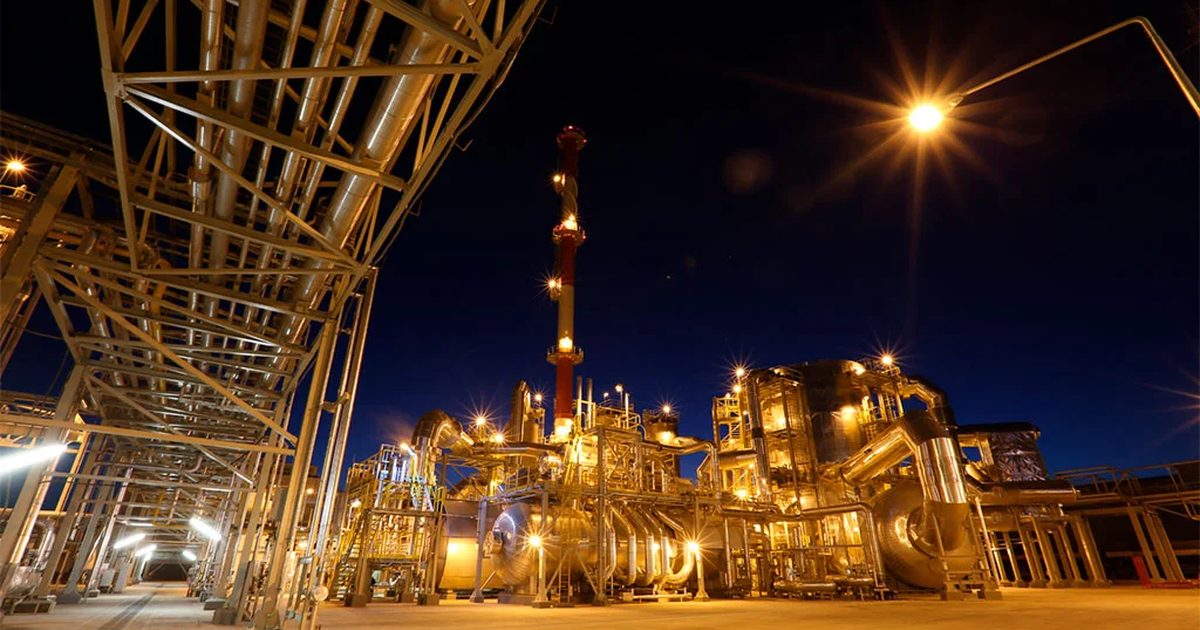
BAKU, Azerbaijan, November 5. Turkmenistan has launched construction of a nitrogen fertilizer production complex in its Dashoguz region, designed to produce 350,000 tons of urea and 350,000 tons of ammonium nitrate annually, the press service of the Turkmen government reported.
President Serdar Berdimuhamedov, speaking at the foundation-laying ceremony, stated that the project was part of efforts to modernize the national chemical industry and expand export-oriented production.
“The new chemical facility, whose foundation is being laid today in Dashoguz velayat, is also one of the major investment projects,” he said.
The complex will use advanced technological solutions from leading European and Asian companies, with production processes expected to comply with environmental standards, the president noted.
According to Berdimuhamedov, the facility's planned output will be sufficient to fully meet the needs of Turkmenistan's agricultural producers while also allowing fertilizers to be supplied to foreign markets.
The project is being implemented by Turkmenistan's GAP Inşaat, part of Çalık Holding, in cooperation with Germany's Thyssenkrupp Uhde GmbH. Speaking at the foundation-laying ceremony, Çalık Holding Chairman of the Board of Directors Ahmet Çalık said the company would carry out the construction in line with international standards, using innovative and environmentally friendly solutions.
Thyssenkrupp Uhde will provide technologies for the production of ammonia, urea and ammonium nitrate, as well as engineering expertise, the government says. The company's Chief Executive Officer, Nadja Håkansson, said the technological solutions would help improve energy and resource efficiency while reducing the facility's environmental impact.
The complex will use natural gas as its main feedstock, with annual consumption provisionally estimated at 630 million cubic meters. Its power supply will be provided by integrated turbogenerators.
According to the press release of the government, the German Eastern Business Association Executive Director Michael Harms described the project as another step in strengthening economic cooperation between Turkmenistan and Germany.
Addressing the ceremony, President Serdar Berdimuhamedov said that the project is expected to create more than 1,000 jobs. He added that many of the future employees had received training at foreign universities.
Meanwhile, Turkmenistan is expanding an established nitrogen fertilizer industry built around the processing of natural gas. The country already operates three urea production plants - Tejenkarbamid, Marykarbamid and Garabogazkarbamid - while the Maryazot production association manufactures ammonia and ammonium nitrate, with the latter plant having a design capacity of 450,000 tons per year.


