


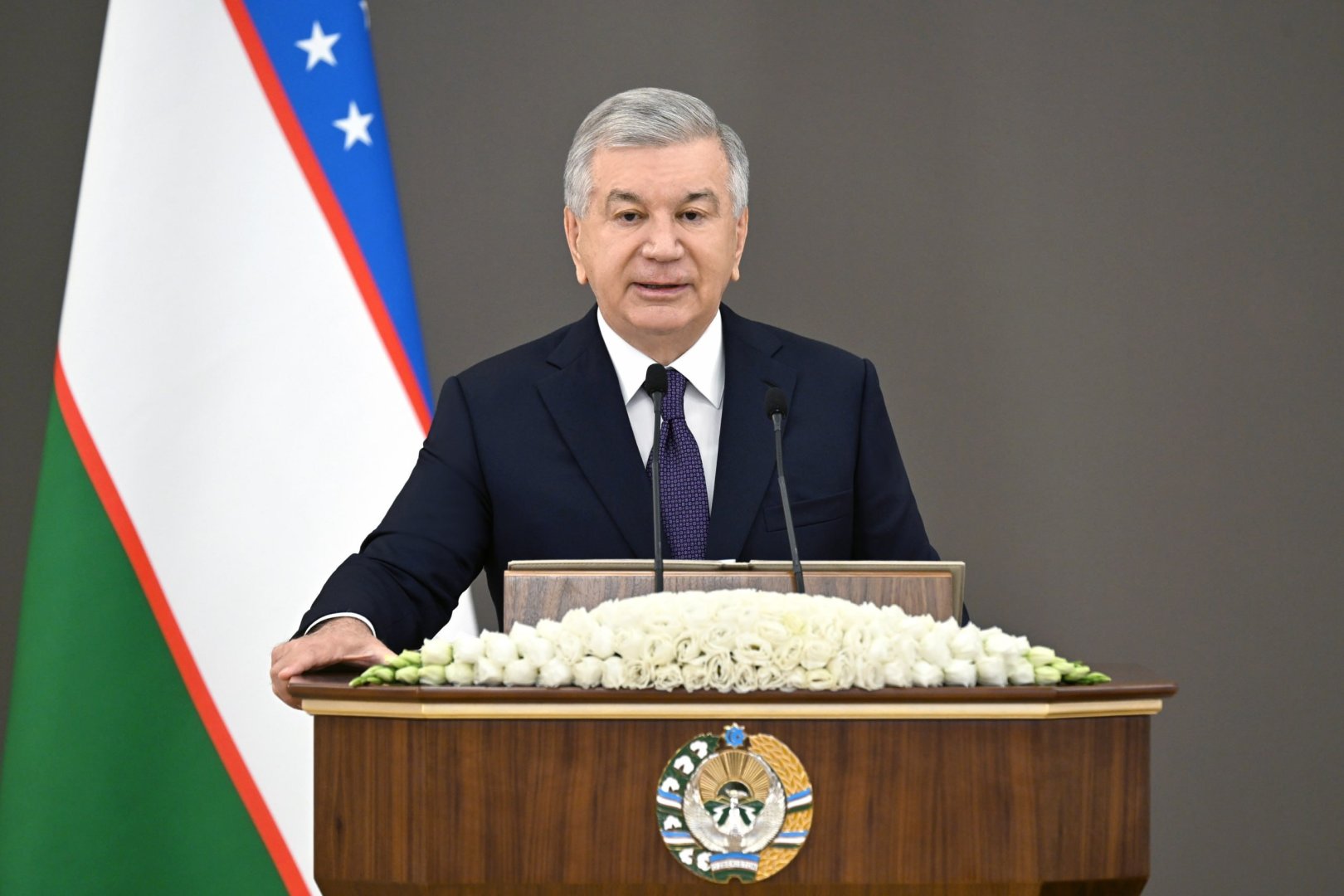

BAKU, Azerbaijan, November 5. Uzbekistan plans to increase annual uranium production to 15,000 metric tons by 2030, up from 7,500 tons in 2026, while targeting more than $2.7 billion in output from 16 types of critical raw materials, as President Shavkat Mirziyoyev reviewed plans to expand the country's mining and processing industries on Thursday.
According to the presidential press service, the targets were presented during a review of the 2026 priorities and longer-term development plans of state-owned uranium producer Navoiuran and the Uzbek Technological Metals Plant.
The presentation highlighted growing global demand for critical minerals and metals. While demand for traditional metals is increasing by an average of 1% annually, the market for critical minerals is expanding by approximately 10% per year, according to the information presented.
At the Uzbek Technological Metals Plant, the main priority is to establish a complete production chain covering geological exploration, mining, mineral processing, advanced refining and the manufacture of finished products.
The company plans to launch 12 investment projects by the end of 2026, expand its range of localized products and increase production of high-purity selenium and tellurium.
Mirziyoyev instructed officials to accelerate projects involving critical minerals and expand the range of products manufactured in the country. In addition to five types of products already being produced — tungsten, molybdenum, selenium, tellurium and rhenium — Uzbekistan plans to develop production of additional critical minerals, including nickel, cobalt, graphite, antimony, tin, manganese, platinum, vanadium, mercury and copper.
Under the country's plans, annual output across 16 types of critical raw materials is expected to exceed $2.7 billion by 2030.
Particular attention was given to tungsten processing projects, for which Uzbekistan plans to attract $1.1 billion in investment and increase production to nearly $2.2 billion by 2030. The presentation also covered the development of deposits containing rare and rare-earth elements, expanding the plant's resource base and accelerating investment projects.
Additionally, the president reviewed Navoiuran's production performance and development plans amid growing global demand for uranium. According to the presentation, demand for uranium raw materials has increased by 15%–20% in recent years and is expected to rise by a further 28% by 2030.
To increase production, the company plans to expand geological exploration and technological drilling, develop production infrastructure, commission additional sorption units and create 250 new jobs in 2026.
Moreover, the presentation addressed the supply of chemical reagents required for uranium production. Measures are being considered to strengthen cooperation with domestic industrial companies and increase supplies of technical sulfur, sulfuric acid and nitric acid.
Mirziyoyev emphasized the need to introduce alternative technologies into production. By 2030, the share of reagents that can replace sulfuric acid is expected to reach 40%.
Through these measures and the commissioning of additional production facilities, Navoiuran aims to increase annual uranium output from 7,500 tons in 2026 to 15,000 tons by 2030. The company also plans to expand its explored uranium reserves to 200,000 tons.
Following the presentation, Mirziyoyev instructed officials to ensure the timely implementation of investment projects, strengthen the companies' mineral resource bases, commission new technological facilities, increase the production of higher-value-added goods and expand exports.


