


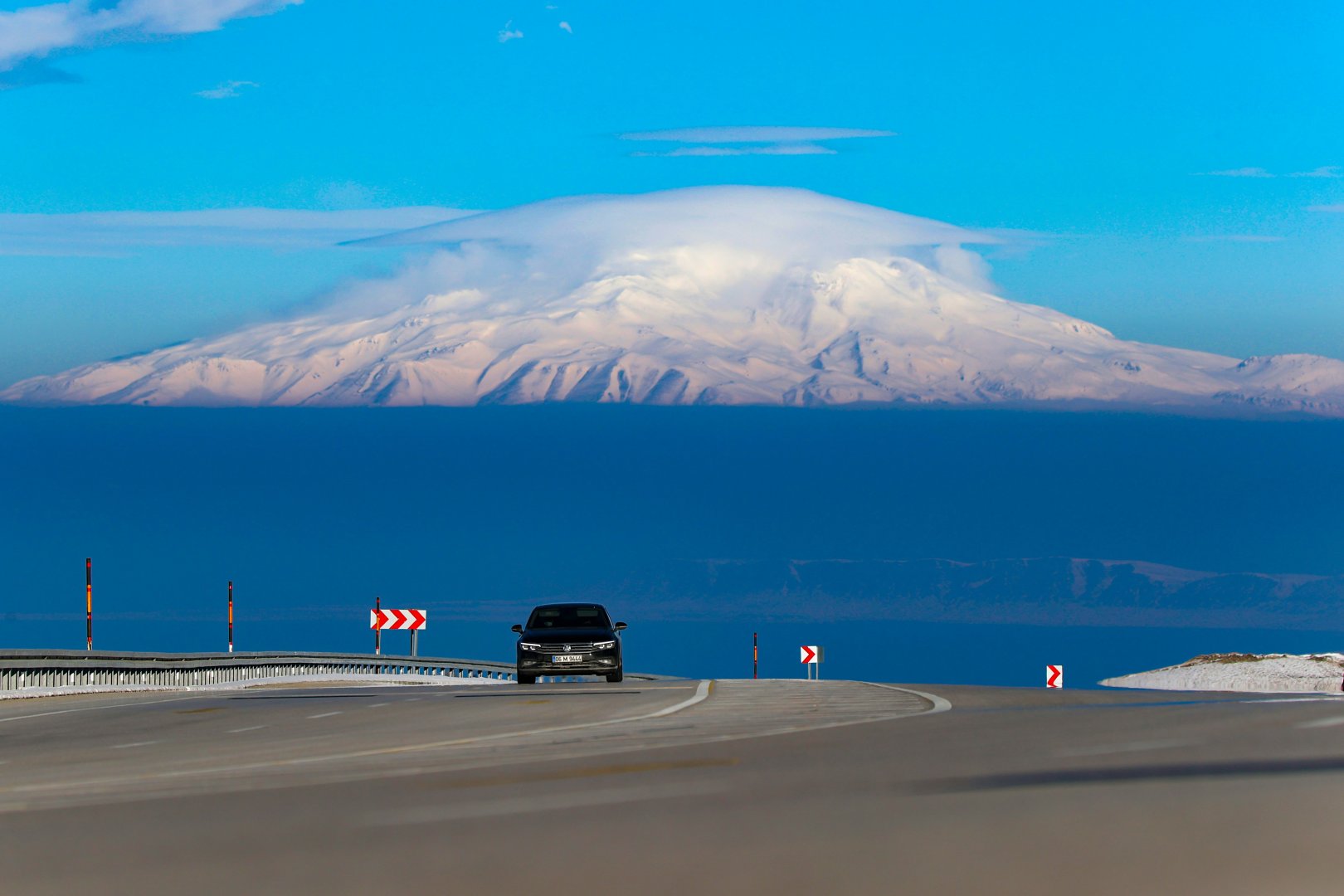

BAKU, Azerbaijan, November 6. Two important developments in regional transport infrastructure took place in Turkmenistan on November 4: President Serdar Berdimuhamedov opened a 44-kilometer section of the Turkmenbashi-Garabogaz-Kazakhstan border highway and approved the start of construction of the new Ashgabat-Dashoguz road, which will stretch for approximately 550 kilometers. The first project improves road links with western regions of Kazakhstan, while the second will strengthen transport connections between the capital and the northern part of Turkmenistan, which borders Uzbekistan. Both highways are intended to expand regional transport opportunities and strengthen the country’s position along the international North-South Transport Corridor.

In particular, the western route is important for expanding transport flows between Turkmenistan and Kazakhstan’s Mangystau Region, whose economy largely relies on the oil and gas sector. The region also has well-developed mechanical engineering, metallurgy and chemical industries. The ports of Aktau and Kuryk, located there, provide access to Caspian Sea shipping routes, creating additional opportunities for transporting industrial goods.
On the Uzbek direction, the new road will complement existing infrastructure for cross-border cooperation. In November 2025, Turkmenistan and Uzbekistan opened the Shavat-Dashoguz trade zone, equipped with customs, veterinary and phytosanitary facilities, warehouses and a trade pavilion. The application of the single-window principle is intended to simplify trade operations between the border regions of the two countries, while improved road connections could further support the development of the facility.
The development of these routes is part of the transport agenda that Turkmenistan actively promoted throughout 2026 during its chairmanship of the Commonwealth of Independent States (CIS). Ashgabat advocated the expansion of regional corridors and stronger logistical cooperation among CIS member states. In September, the 111th meeting of the CIS Economic Council was held in the Turkmen capital, where participants discussed the countries’ transport potential, the development of the North-South and East–West routes, and the use of opportunities offered by the Caspian region. At Turkmenistan’s initiative, 2029 was also declared the Year of CIS Transport Connectivity.

“The Caspian region is a key element of transport connectivity. Clearly, the eastern and western Caspian North-South transport corridors are of vital importance,” President Berdimuhamedov said, addressing a meeting of the CIS Council of Heads of State in October.
This policy is also reflected in the development of the country’s maritime infrastructure. In May, the vessel Gadamly, with a carrying capacity of 6,100 tons, arrived at the Baku International Sea Trade Port. It is the first dry cargo vessel built at the shipbuilding and ship repair yard in Turkmenbashi. The vessel is designed, among other things, to carry containers and will operate in the Caspian Sea, primarily on the Azerbaijan route. The development of its own fleet expands Turkmenistan’s maritime transport capabilities and complements efforts to strengthen overland transport links.
The regional dimension of this policy is becoming particularly evident against the backdrop of Central Asia’s growing geopolitical and economic importance. Speaking at the fourth Interparliamentary Forum of Central Asian States in Dushanbe, the Chairwoman of the Mejlis of Turkmenistan, Dunyagozel Gulmanova noted that the region is gradually becoming an important geopolitical center, opening up new opportunities for multilateral cooperation and strengthening stability. Her assessment reflects a broader trend: Central Asia’s location between major economic centers, its resource potential, and its growing role in international trade routes are increasing external partners’ interest in developing relations with countries in the region.
For Kazakhstan and Uzbekistan, deeper cooperation with Turkmenistan is driven by their respective economic and strategic interests. As Trend previously reported in its analytical article, “Astana talks: business opportunities and transport corridors shape Kazakhstan-Turkmenistan agenda”, Kazakhstan is interested in expanding the presence of its companies in the Turkmen market, including through energy and infrastructure projects. The development of transport routes through Turkmenistan toward Iran also occupies an important place on the bilateral agenda.
In its article “Where Turkmenistan fits in Uzbekistan's next export phase”, Trend, highlighted Tashkent’s interest in industrial cooperation, supplies of construction materials and the participation of Uzbek enterprises in projects in the Turkmen market. The signing in October of the Treaty on the Establishment of the Supreme Council of Strategic Partnership between Turkmenistan and Uzbekistan marked an important step in giving this cooperation an institutional framework.
For Kazakhstan, the Turkmen route offers an additional opportunity to develop transit shipments through Iran to the markets of the Persian Gulf and South Asia. Uzbekistan, a landlocked country, is interested in using Turkmenistan’s territory to access the Caspian Sea, the South Caucasus and, further on, European markets. Turkmenistan, for its part, stands to gain opportunities to increase transit flows and expand transport services. Each of the three countries therefore has its own reasons to strengthen connectivity with its neighbors, while the convergence of these interests provides a basis for deeper regional cooperation.
As Central Asia gains increasing importance in international trade and transport logistics, the development of links among its states is becoming an independent driver of regional growth. According to the World Bank, investment in the Trans-Caspian Transport Corridor and improved coordination among countries could more than triple freight volumes along the route by 2040. Against this backdrop, the development of Turkmenistan’s road and maritime infrastructure, alongside deeper ties with Kazakhstan and Uzbekistan, reflects the three countries’ intention to make greater use of the region’s geographical and economic advantages. Their ability to coordinate infrastructure projects, border procedures, and transit conditions will largely determine whether Central Asia’s growing importance can translate into sustainable trade and logistics links.


