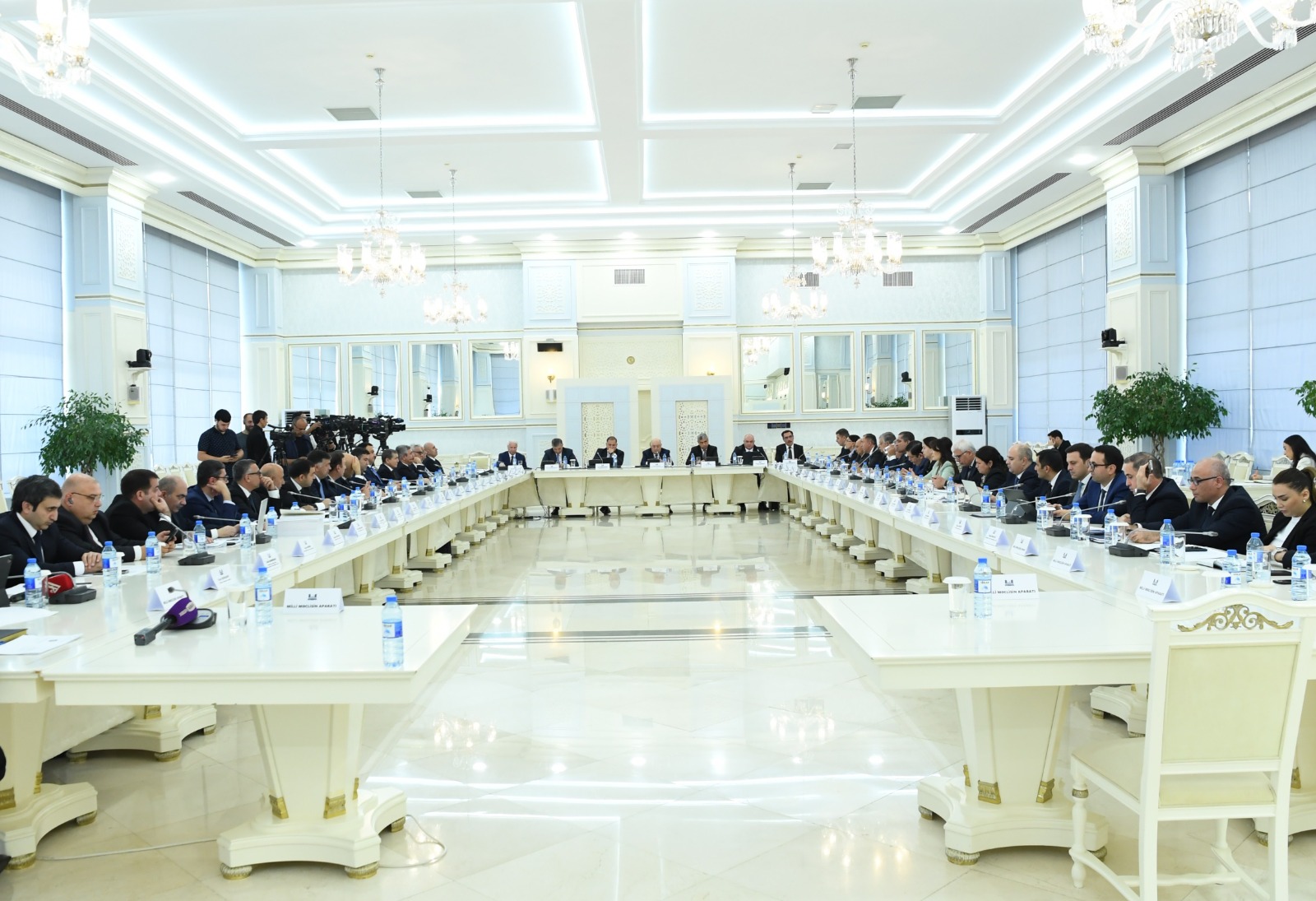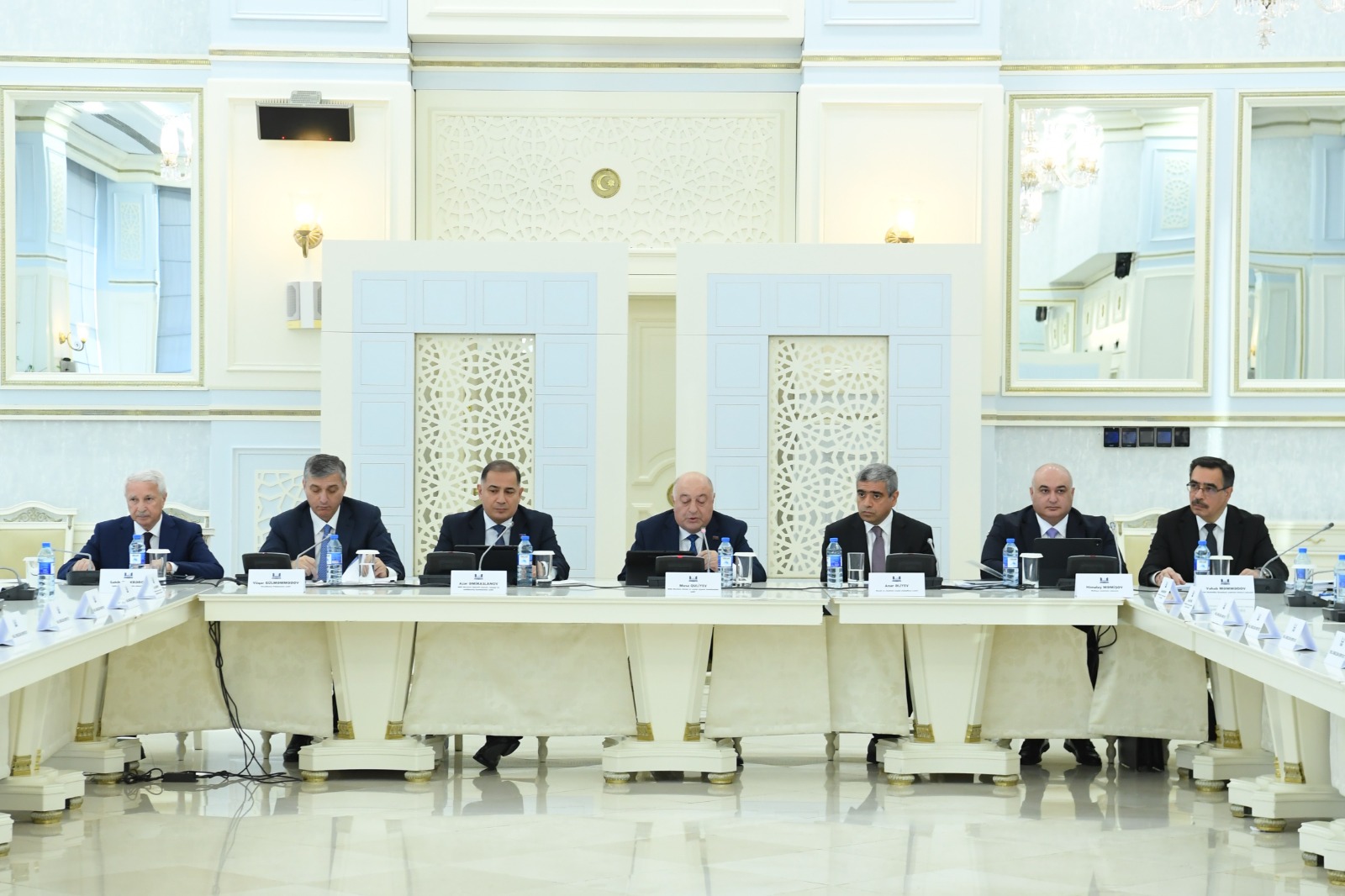
BAKU, Azerbaijan, November 5. Draft laws "On the 2027 budget of the State Social Protection Fund," "On the 2027 budget of the Unemployment Insurance Fund," "On the subsistence minimum in the Republic of Azerbaijan for 2027," and "On the need criterion in the Republic of Azerbaijan for 2027" were discussed in the first reading at a joint meeting of the Azerbaijani Parliament Committees on Labor and Social Policy and on Economic Policy, Industries and Enterprising Enterprises on November 5.
This was reported by the Press and Public Relations Department of the Milli Majlis (Azerbaijani Parliament).
According to the report, Musa Guliyev, Chairman of the Committee on Labor and Social Policy, presenting the draft laws regarding the 2027 budgets of the State Social Protection Fund (SSPF) and the Unemployment Insurance Fund (UIF) for discussion noted that social policy has consistently held a priority position within the domestic policy of the Azerbaijani state.
During the meeting, it was emphasized that the priorities established by President of Azerbaijan Ilham Aliyev at the 8th Congress of the New Azerbaijan Party, focused on expanding measures to improve the welfare of the population, have also been incorporated into the 2027 budget. These priorities are also reflected in the budgets of the SSPF and the UIF, establishing a reliable financial foundation for improving the social well-being of martyrs' families, veterans, recipients of pensions and allowances, and other vulnerable groups, as well as for ensuring the sustainability of social protection and insurance coverage. He said that the draft laws have been prepared in accordance with the requirements of national legislation and the principles of the budgetary system.
During the meeting, it was noted that SSPF’s revenues will amount to 9.22 billion manat ($5.42 billion) in 2027, up 897.4 million manat ($527.9 million), or 10.8%, from the current year's forecast. Meanwhile, SSPF’s expenditures are projected at 9.27 billion manat ($5.45 billion), an increase of 790 million manat ($464.7 million), or 9.3%.
Mandatory state social insurance contributions are expected to account for over 7.58 billion manat ($4.46 billion), or 82.3% of the fund's revenues. Of these contributions, 67.5% will come from the non-budget sector and 32.5% from budget-funded organizations.
Payments to the population will account for 96.5% of the fund's projected expenditures. The average monthly pension is forecasted to reach 640 manat ($376) in 2027. As in previous years, the replacement rate, defined as the ratio of the average monthly pension amount to the average monthly wage, will remain at the 50% level for the current and coming years, thereby meeting the requirements of the relevant International Labor Organization convention, which sets a 40% minimum standard for social security.
A total of 281 million manat ($165 million) is earmarked for 2027 to finance benefits for temporary disability, maternity, childbirth, childcare for children under three, and funeral expenses through mandatory state social insurance contributions.
Then, the committee chairperson provided information regarding the draft law "On the 2027 budget of the Unemployment Insurance Fund." He said the UIF’s revenues are projected at 269 million manat ($158 million) in 2027, while 50 million manat ($29.4 million) from the fund's unused balances from previous years is earmarked to finance next year's expenditures. Unemployment insurance contribution collections are forecasted to reach 267 million manat ($157 million) next year, up 31 million manat ($18.2 million), or 13%, from the approved 2026 figure.
The UIF's expenditures are projected at 319 million manat ($188 million) in 2027, an increase of 53 million manat ($31.2 million) year-on-year. Of this amount, 36 million manat ($21.2 million) is earmarked for unemployment insurance payments, up 28.6% from the current year. As many as 113 million manat ($66.5 million), or 35% of the fund's expenditures, is earmarked for self-employment programs. Around 14,500 people are expected to participate in these programs in 2027.
The committee chairperson outlined the planned allocations for vocational training, paid public works and other active employment measures under the UIF's 2027 budget.
Presenting the third and fourth items, Guliyev said the draft law on the 2027 living wage sets the nationwide figure at 314 manat ($185). The minimum will stand at 334 manat ($196) for the working-age population, 258 manat ($152) for pensioners and 274 manat ($161) for children, maintaining the annual growth rate.
The draft law "On the need criterion threshold for 2027 in the Republic of Azerbaijan" sets the threshold at 314 manat ($185).
Then, at the meeting, Minister of Labor and Social Protection of Population Anar Aliyev noted that, in line with the reform program of President Ilham Aliyev, consistent and targeted measures aimed at ensuring social protection and employment for the population will continue in the coming year.
During the meeting, it was emphasized that, in accordance with the directive issued by President Ilham Aliyev at the 8th Congress of the New Azerbaijan Party, the necessary financial provision has been made in the 2027 state and consolidated budgets for the next, the 6th, social reform package, aimed at increasing wages and social payments. The meeting highlighted that over the past 8 years, 5 major social reform packages benefiting 4 million citizens have been implemented, with an additional annual financial burden of 8 billion manat ($4.7 billion).
As a result of measures implemented this year, the average monthly pension increased by 10.4% year-on-year to 596 manat ($350.59), while the average old-age pension rose by 10% to 634 manat ($372.94), the average monthly salary grew by 7.2% to 1,173 manat ($690), payments in the form of benefits, scholarships and targeted state social assistance rose by 8.4% to 1.9 billion manat ($1.12 billion).
The minister stressed that the state and consolidated budgets would retain their social focus in 2027. Social expenditures in the state budget are projected at 13 billion manat ($7.65 billion), up 222.7 million manat ($131 million), or 1.7%, while social-oriented expenditures are expected to reach 18.7 billion manat ($11 billion), an increase of 1.6 billion manat ($941 million), or 9.2%. Their share of total state budget expenditures is expected to rise to 44.2%, while their share of GDP is projected at 13.3%.
In his speech, Anar Aliyev also outlined the volume and structure of state budget allocations for the Ministry of Labor and Social Protection's areas of activity next year. The speech noted that the 2027 state budget draft earmarks 5.5 billion manat ($3.24 billion) to finance public payments under the ministry's programs, medical insurance expenses for vulnerable groups and paid public works.
The minister remarked that mandatory state social insurance contributions are expected to account for 82.3%, or 7.58 billion manat ($4.46 billion) of the SSPF's 2027 revenues. This is an increase of 995.4 million manat ($585.5 million), or 15.1%, compared with the current year's figure. Contributions from budget-funded organizations are projected at 2.5 billion manat ($1.47 billion), while non-budget organizations are expected to contribute 5.1 billion manat ($3 billion). Compared with the approved 2026 figures, revenues from budget-funded organizations are expected to increase by 17%, or 357.9 million manat ($210.5 million), while contributions from the non-budget sector will rise by 14.2%, or 637.5 million manat ($375 million).
State budget transfers to finance government obligations under the insurance and pension system are projected at 1.6 billion manat ($941 million), down 100 million manat ($58.8 million), or 5.9%, from the approved 2026 figure.
Public payments account for 96.5% of the fund's total expenditures for 2027, or 8.95 billion manat ($5.26 billion). This figure is 753.6 million manat ($443.3 million) higher than in 2026. Of this amount, about 8.67 billion manat ($5.1 billion) accounts for labor pension expenditures, while 280.6 million manat ($165 million) accounts for benefits paid through social insurance. At the meeting, it was noted that, according to current forecast, 575.5 million manat ($338.5 million) is earmarked for the indexation of labor pensions by approximately 7.5% in 2027.
Anar Aliyev said the UIF's 2027 revenues are projected to increase by 30.6 million manat ($18 million), or 12.9%, compared with the approved 2026 figure. The non-budget sector will account for 77.7% of insurance contribution collections.
The fund's expenditures are expected to rise by 52.8 million manat ($31.06 million), or 19.8%, year-on-year.
In 2027, approximately 444,000 people are expected to participate in active employment programs financed by the UIF. Additionally, unemployment insurance payments are projected to be assigned to 15,600 people during the year. A total of 61%, or 194.2 million manat ($114 million), of the fund's expenditures, is earmarked for employment measures.
During the meeting, it was noted that the ministry will also continue programs providing housing, vehicles, and rehabilitation equipment to eligible individuals. At the meeting, it was pointed out that 40 million manat ($23.5 million) is earmarked for purchasing 600 apartments in 2027 to improve the living conditions of families of martyrs and people with war-related disabilities.
Then, at the meeting, Azer Amiraslanov, Chairperson of the Parliamentary Committee on Economic Policy, Industries and Enterprising Enterprises, shared his views on the items on the agenda.
He noted that the harmonization and coordination of economic and social policies constitute one of the fundamental principles of state policy in Azerbaijan. The committee chairperson said that ensuring financial stability, maintaining a high level of economic activity, and sustaining economic growth are of vital importance for improving the living standards of citizens. In this context, he emphasized the significance of the view expressed by the President of Azerbaijan Ilham Aliyev who stated that it’s impossible to ensure prosperity merely by increasing social expenditures and other budgetary outlays without economic growth.
Amiraslanov highlighted that significant results have been achieved in reducing unemployment in the country, that ensuring effective employment is a key objective for the new phase, and that a social package has been incorporated into the state budget for 2027 to further enhance the well-being of citizens. He noted that the sustainability of the SSPF and the UIF can be ensured through stable inflows, economic growth, and economic activity. It was stated that the execution of the 2027 state budget will both support economic development and establish the necessary financial foundation for further improving the well-being of citizens and strengthening their social protection.
Speaking at the meeting, Vugar Gulmammadov, Chairperson of the Chamber of Accounts, presented the Chamber’s assessments regarding the 2027 draft budgets for the State Social Protection Fund and the Unemployment Insurance Fund. The Chairman noted that the draft budgets for these funds have been prepared in accordance with the requirements of relevant legislation. He highlighted the Chamber’s analyses and observations concerning the funds' revenue and expenditure components, as well as the sustainability of the pension provision system.
Himalay Mamishov, Deputy Minister of Finance of Azerbaijan, also spoke at the event, discussing the ongoing trend of decreasing reliance on oil within the state budget and the objectives established in this regard. Speaking about budget expenditures, the deputy minister said that the spending has been structured in alignment with socio-economic needs. Highlighting the parameters and indicators across various expenditure categories, he characterized the upcoming year’s state budget as the most investment-oriented budget in the region.
Subsequently, Sahib Alakbarov, Deputy Minister of Economy, addressed the event. He noted that the Azerbaijani economy has experienced dynamic growth in recent years, with sustained development projected for the period ahead. Emphasizing the vital role of investment activity in driving economic growth and expanding employment, the deputy minister pointed out that positive trends, such as the improvement of the investment climate and increased investment in the non-oil and gas sector, have contributed to the diversification of the economy, the development of new production and service sectors, and an upsurge in economic activity within the regions. It was emphasized that the primary tasks for the coming period include the full implementation of established support mechanisms and the ongoing assessment of their economic impact; the long-term financing of industrial and production projects; the expansion of the volume and geographical reach of non-oil and gas exports; the acceleration of strategic investment projects; and the promotion of economic activity along transport corridors.
During the meeting, Vahab Mammadov, First Deputy Chairperson of the State Statistical Committee, stated that the draft laws presented for discussion were prepared based on analyses derived from official statistical data. He noted that the demographic burden and the current state of the labor market were taken into account during the drafting process, and that relevant assessments were conducted.
The Deputy Chairperson of the Committee for Economic Policy, Industries and Enterprising Enterprises, as well as several MPs, took part in the discussion of these issues, offering their views and proposals, and raising various questions. Minister of Labor and Social Protection of Population Anar Aliyev and Chairperson of the Chamber of Accounts Vugar Gulmammadov provided clarifications regarding the issues raised during the discussions.
At the meeting, the draft laws on the agenda were recommended for submission to the plenary session of the parliament for a first reading.
The event was attended by Elshad Musayev, Deputy Chairperson of the Committee on Labor and Social Policy, as well as MPs and other official persons.