


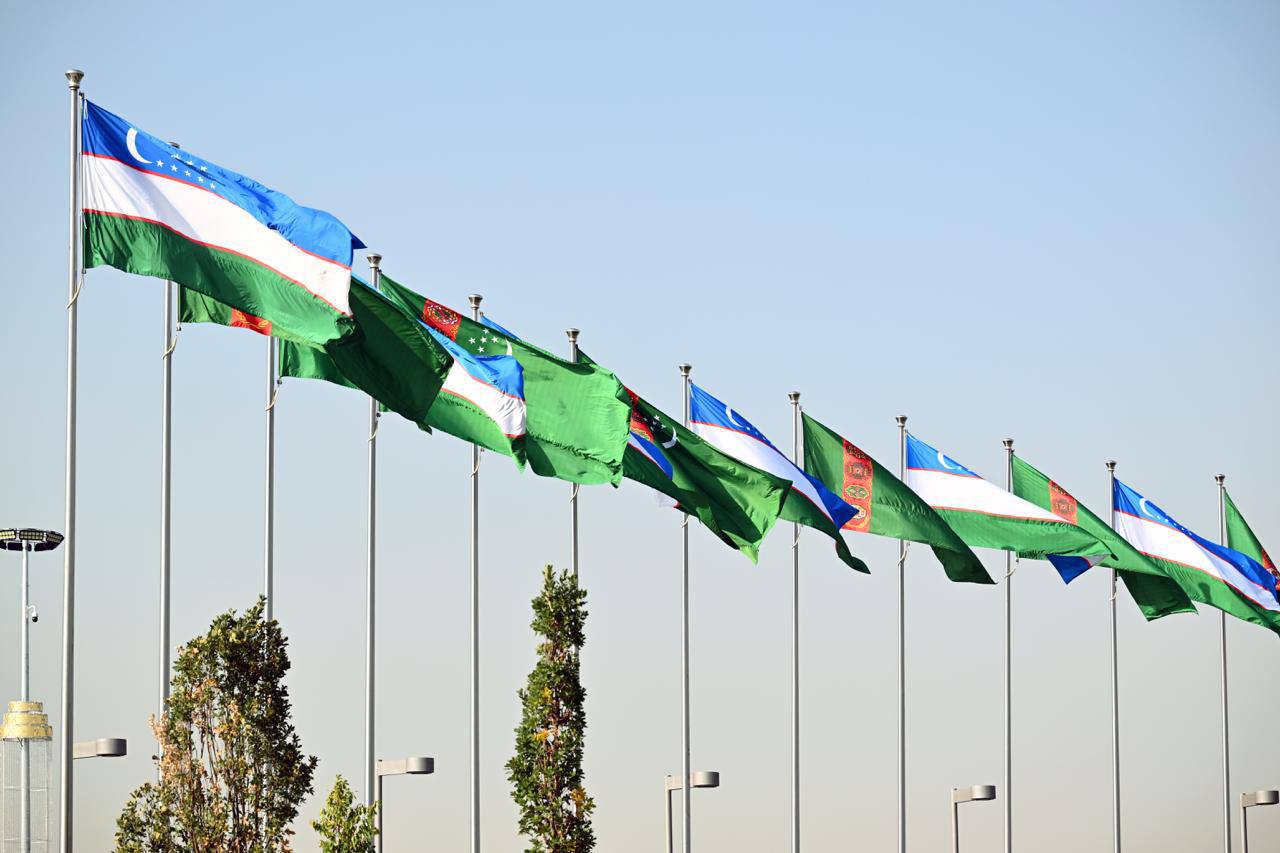

BAKU, Azerbaijan, July 31. On July 27-28, Ashgabat hosted the Turkmen-Uzbek Business Forum, bringing together government officials and business representatives from both countries. Rather than focusing primarily on increasing bilateral trade, the discussions centered on industrial cooperation, joint manufacturing projects, the construction sector, supplies of construction materials, and expanding the participation of Uzbek companies in major projects in Turkmenistan. Following the forum, the sides agreed to intensify contacts between enterprises, promote joint investment projects, and broaden cooperation in industry and construction.
Particular attention was drawn to the tone of the Uzbek side's statements. Uzbekistan's Ambassador to Turkmenistan, Ravshanbek Alimov, said Tashkent is interested in expanding industrial cooperation with Ashgabat, while representatives of Uzbek businesses expressed their readiness to participate in construction projects in Turkmenistan, supply construction materials and industrial products, and establish joint manufacturing facilities. Nearly all of the initiatives discussed were linked to manufacturing, construction and industry, making this forum noticeably different from traditional business events, which have largely focused on trade.
To understand why industrial cooperation and construction dominated the agenda in Ashgabat, it is necessary to look at developments within Uzbekistan's own economy. In recent years, Tashkent has been steadily reshaping its growth model, placing emphasis not only on expanding production volumes but also on increasing the output of higher value-added goods and strengthening the export capacity of its industrial sector. Export-oriented manufacturing is now viewed by the authorities as one of the key drivers of the country's future economic growth.
This strategy is largely driven by the need to maintain strong economic momentum. In 2025, Uzbekistan's industrial output grew by 6.8%, exports increased by 24%, and total foreign trade exceeded $81 billion. At the same time, the government continues to encourage the establishment of new manufacturing facilities, deeper processing of raw materials, and the expansion of domestic producers into foreign markets. These priorities are consistently reflected both in the country's industrial development programs and in support measures for export-oriented enterprises.
The construction materials industry illustrates this trend particularly well. The sector has become one of the fastest-growing branches of Uzbekistan's industry. In 2025, exports of construction materials reached $1.2 billion, increasing by more than 40% compared to the previous year, while the government simultaneously launched hundreds of new investment projects aimed at further expanding production capacity. In other words, the objective is no longer limited to satisfying domestic demand but increasingly focuses on building a production base designed to serve external markets.
While domestic priorities are encouraging Uzbekistan to accelerate industrial production, the external environment makes this strategy particularly timely. Several neighboring markets are simultaneously entering a stage in which demand for construction materials, industrial equipment and engineering products could increase substantially. This largely explains why Tashkent has been actively promoting industrial cooperation with neighboring countries in recent months.
Afghanistan remains the most obvious destination. Despite continuing political and social instability, the country has gradually moved toward implementing major infrastructure projects in recent years, including the construction of the Turkmenistan-Afghanistan-Pakistan-India (TAPI) gas pipeline section and the development of the Lapis Lazuli international transport corridor. At the same time, Uzbekistan continues to promote the Trans-Afghan Railway, expand trade with Kabul, and view the Afghan market as one of the key export destinations for its industrial sector. The structure of Uzbek exports is already evolving, with metal structures, pipes, aluminum products, construction equipment and other industrial goods playing an increasingly important role alongside food products.
Iran presents another noteworthy case. Despite continuing uncertainty, the country is likely to face significant demand for the restoration and modernization of parts of its infrastructure once the ongoing military conflict involving the United States and Israel comes to an end. Even though Iran possesses a substantial domestic industrial base, reconstruction processes of this scale are traditionally accompanied by increased imports of certain categories of construction materials and engineering solutions. For Uzbekistan, this represents a potential expansion of demand for exactly the types of products whose production it is now actively increasing. Significantly, Tashkent has also continued to simplify transport links with Iran, gradually removing selected transit barriers and strengthening trade ties.
Against this backdrop, Turkmenistan occupies a special place. If Afghanistan is viewed by Uzbekistan as a market where demand for industrial products may increase as major infrastructure projects progress, and Iran as a potential destination where reconstruction efforts could generate substantial demand for construction materials and engineering solutions after the current military crisis subsides, Turkmenistan is already developing according to a different logic. As Trend noted in its earlier analytical article, "Inside Turkmenistan’s investment cycle: How Turkish contractors anchor a new phase of economic expansion", the country has effectively entered a new investment cycle, triggered by the launch of the fourth phase of development at its giant Galkynysh gas field.
However, the key significance lies not in the gas project itself but in its multiplier effect. Such large-scale investment inevitably stimulates the construction of new facilities, the expansion of transport and energy infrastructure, increased government spending and higher investment activity, creating sustained demand for construction materials, industrial products and contractor services over the coming years. This likely explains the growing interest of Uzbek manufacturers in industrial cooperation with Turkmenistan. The objective is no longer simply to access a neighboring market, but to become part of an economic cycle capable of generating long-term demand for jointly produced goods.
For this reason, the business forum in Ashgabat goes beyond the scope of a routine business gathering. It suggests that Uzbekistan increasingly views Turkmenistan not merely as a neighboring market, but as one of the key partners for expanding its own industrial capacity and reaching new export destinations. If this approach continues to develop in practice, bilateral cooperation is likely to rely less on one-off trade transactions and increasingly on joint investment projects, industrial cooperation and the development of export-oriented manufacturing. In this sense, the forum in Ashgabat can be viewed as one of the first signs of the emergence of a new model of Turkmen-Uzbek economic partnership.



