



BAKU, Azerbaijan, August 7. Uzbekistan and Japan have discussed expanding cooperation on climate resilience, air quality monitoring, and environmental education, with a particular focus on deploying Japanese technologies and strengthening academic partnerships.
This was reflected in the statement by the National Committee on Climate Change and Ecology of Uzbekistan.
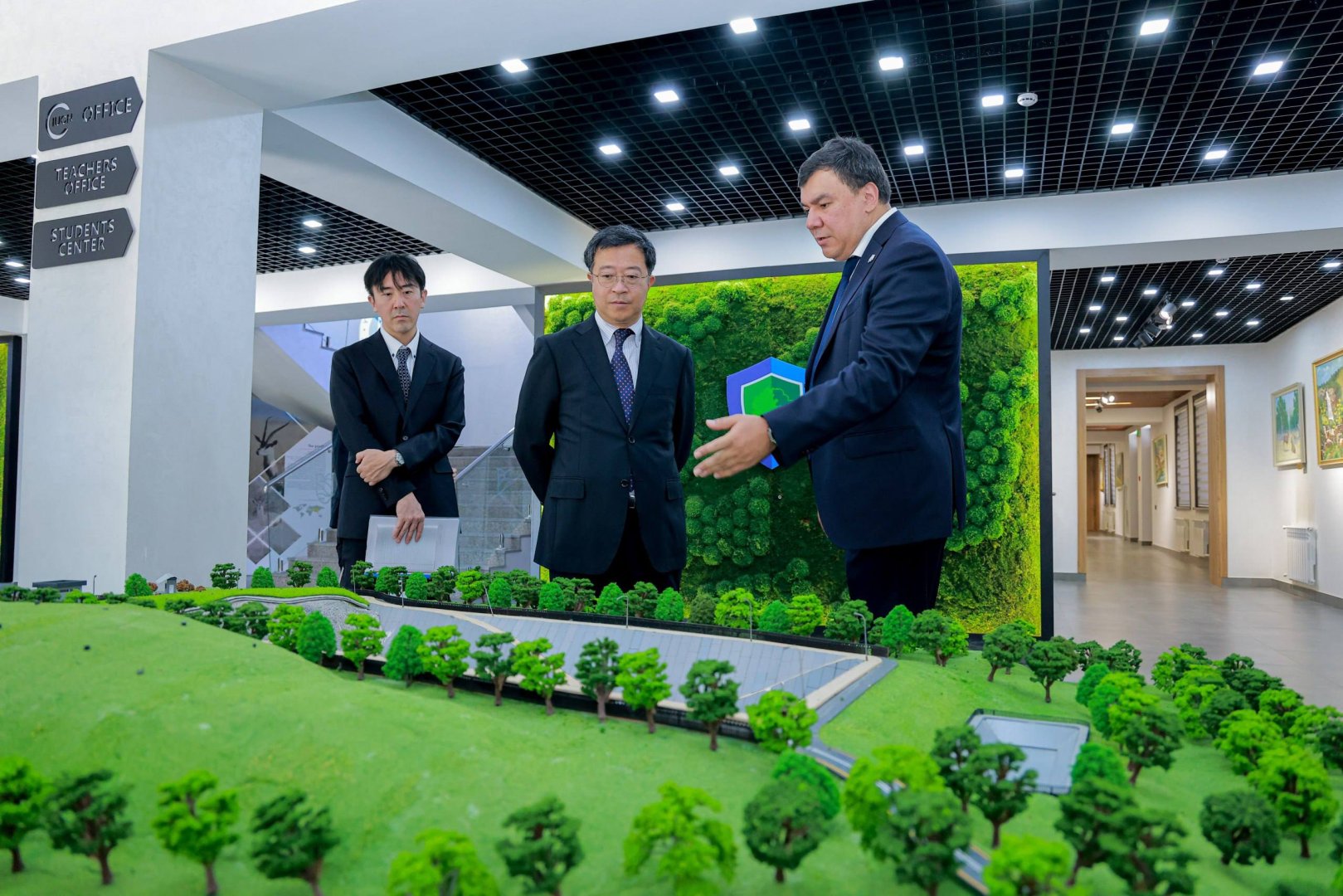
The discussions took place at the Central Asian University for Environmental and Climate Change Studies (Green University) during a meeting between Aziz Abdukhakimov, adviser to the President of Uzbekistan on environmental issues and chairman of the National Committee on Ecology and Climate Change, and Japan's Ambassador to Uzbekistan, Kenji Hirata.
A key topic of the meeting was the implementation of the joint UN Environment Programme (UNEP)-Government of Japan project aimed at increasing resilience to sand and dust storms in Uzbekistan's Surkhandarya region through enhanced air quality monitoring and nature-based solutions. The initiative is scheduled to run from 2026 through March 2027.
The sides also explored opportunities to introduce Japanese air quality monitoring technologies, advanced forecasting systems, and early warning mechanisms as part of Uzbekistan's "Clean Air" state program for the period from 2026 through 2030.
"Particular attention was paid to the introduction of Japanese air quality monitoring technologies, modern forecasting systems, and early warning mechanisms, as well as expanding cooperation within the framework of Uzbekistan's 'Clean Air' program," the Uzbek side said following the meeting.
The parties also discussed strengthening Uzbekistan's air quality monitoring system through the possible establishment of a service center for Japanese analytical instruments manufacturer HORIBA in the country. They reviewed the implementation of a joint HORIBA-Sumitomo grant application submitted under the Japanese government's Economic and Social Development Program.
Academic cooperation featured prominently on the agenda. The parties discussed establishing partnerships between Green University and leading Japanese institutions, including the University of Tokyo, Kyoto University, and Osaka University. Proposed initiatives include joint bachelor's and master's degree programs, collaborative research on ecology, climate change, and green technologies, as well as expanded academic exchanges involving students, researchers, and faculty.
The meeting also covered plans to invite Japanese professors to deliver short-term lectures and specialized courses at Green University, broaden internship and scholarship opportunities for Uzbek students, and deepen cooperation with the Japan International Cooperation Agency (JICA) on laboratory modernization, technical assistance, and professional training.
In addition, the officials reviewed a proposal to establish a Japanese Language and Culture Center at Green University to promote language studies, business practices, innovation, and advanced technologies while fostering closer academic and cultural ties between Uzbekistan and Japan.
The Uzbek side also invited Japan to participate in Eco Expo Central Asia 2027, which is expected to become one of the region's largest platforms for discussing sustainable development, climate policy, and environmental innovation.



