


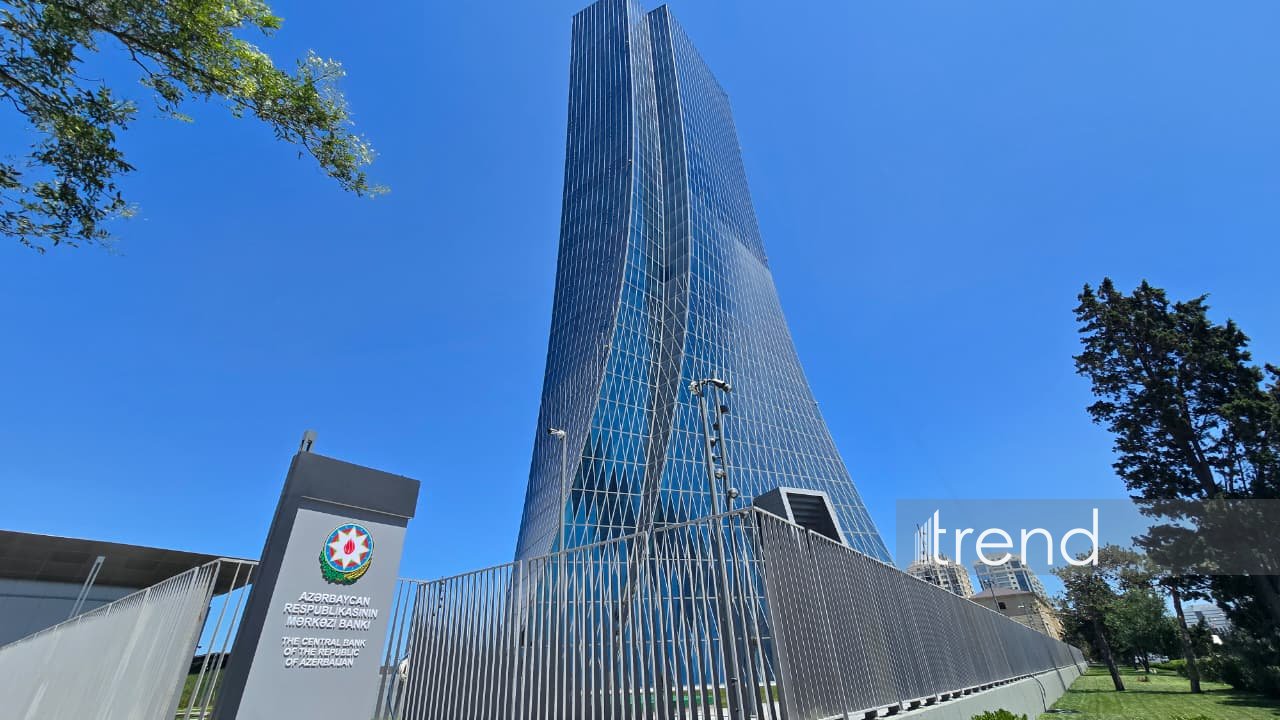

BAKU, Azerbaijan, November 16. The Central Bank of Azerbaijan (CBA) increased note auctions, and its portfolio reached 1.7 billion manat ($1 billion).
According to CBA’s data on monetary indicators, from January through September 2026, the CBA actively continued note auctions and deposit operations to manage excess liquidity in the banking sector. As a result, the total volume of the CBA's note portfolio reached 1.7 billion manat at the end of September, up 1.4 billion manat ($823.5 million) compared to the end of last year.
During the reporting period, the CBA's monetary operations were aimed at regulating liquidity in the banking system and ensuring that short-term interest rates in the money market remained within the target range.
To this end, open market operations and standing facilities were actively used, taking into account changes in liquidity conditions. The parameters of monetary operations were adjusted in line with liquidity dynamics in the banking sector.
Banking sector liquidity surplus rises to 6.2 billion manat ($3.65 billion)
According to the CBA, the banking sector operated under excess liquidity conditions during the reporting period. Specifically, the structural liquidity surplus, calculated excluding required reserves, reached 6.2 billion manat at the end of September 2026.
This figure was 2.2 times higher than in December last year.
The structural liquidity surplus represents the difference between the CBA's liabilities to the banking system and its claims on the banking system.
The report notes that the existing liquidity conditions not only support banks in meeting their current obligations on time but also indicate their strong lending capacity.
146 note auctions held in nine months
To manage excess liquidity, the CBA continued auctions for the placement of notes with various maturities as part of its open market operations.
A total of 146 note auctions were held from January through September 2026. Of these, 37 involved 28-day notes, 36 involved 84-day notes, 37 involved 168-day notes, and 36 involved 252-day notes.
Taking into account the maturity structure of excess liquidity, the CBA increased the offered amounts at note auctions starting in July this year. As a result, by the end of September, the total volume of the institution's note portfolio had risen to 1.7 billion manat.
For comparison, this figure stood at around 300 million manat ($176.5 million) at the end of last year. Thus, the note portfolio increased by 1.4 billion manat ($823.5 million) over the nine-month period.
Note yields decline across all maturities
During the reporting period, yields on the Central Bank's notes also declined. Yields recorded at the latest auctions held in September 2026 were lower across all maturities compared to the end of last year.
Specifically, the yield on 28-day notes fell from 6.75% to 6.50%, while that on 84-day notes declined from 6.68% to 6.56%.
Yields on 168-day notes decreased from 6.80% to 6.60%, while those on 252-day notes fell from 6.85% to 6.67%.
Thus, note yields declined across all maturities, with the largest decrease recorded in 28-day notes.
Average deposit auction volume reaches 2 billion manat ($1.2 billion)
The CBA also actively used seven-day deposit operations to manage excess liquidity in the banking system during the reporting period.
According to the institution, 62 deposit auctions were held during the first nine months of this year, with the average transaction volume amounting to 2 billion manat.
These operations helped effectively manage excess liquidity, neutralize the impact of autonomous factors on monetary conditions, and keep the AZIR index on a trajectory close to the policy rate.
Banks were also observed to have primarily used sterilization-oriented instruments among the standing facilities. While the overnight deposit standing facility was used on every business day, the overnight reverse repo standing facility was used on only 2% of business days.
Required reserve requirements exceeded
During the reporting period, the continued application of the averaging regime for required reserves enabled banks to manage their liquidity more flexibly.
According to the results of the CBA's monitoring, the average balances held by banks in their correspondent accounts with the institution, in both national and foreign currencies, exceeded the amounts required to be maintained as mandatory reserves over the respective periods.
These indicators confirm that the banking sector has sufficient liquid funds.
Overall, during the first nine months of 2026, the Central Bank's monetary operations primarily focused on managing excess liquidity in the banking system, keeping short-term interest rates within the target range, and supporting stability in the money market. The increase in the note portfolio to 1.7 billion manat, the holding of 146 note auctions, and the active use of deposit operations were among the key indicators of the measures implemented in this regard.


