


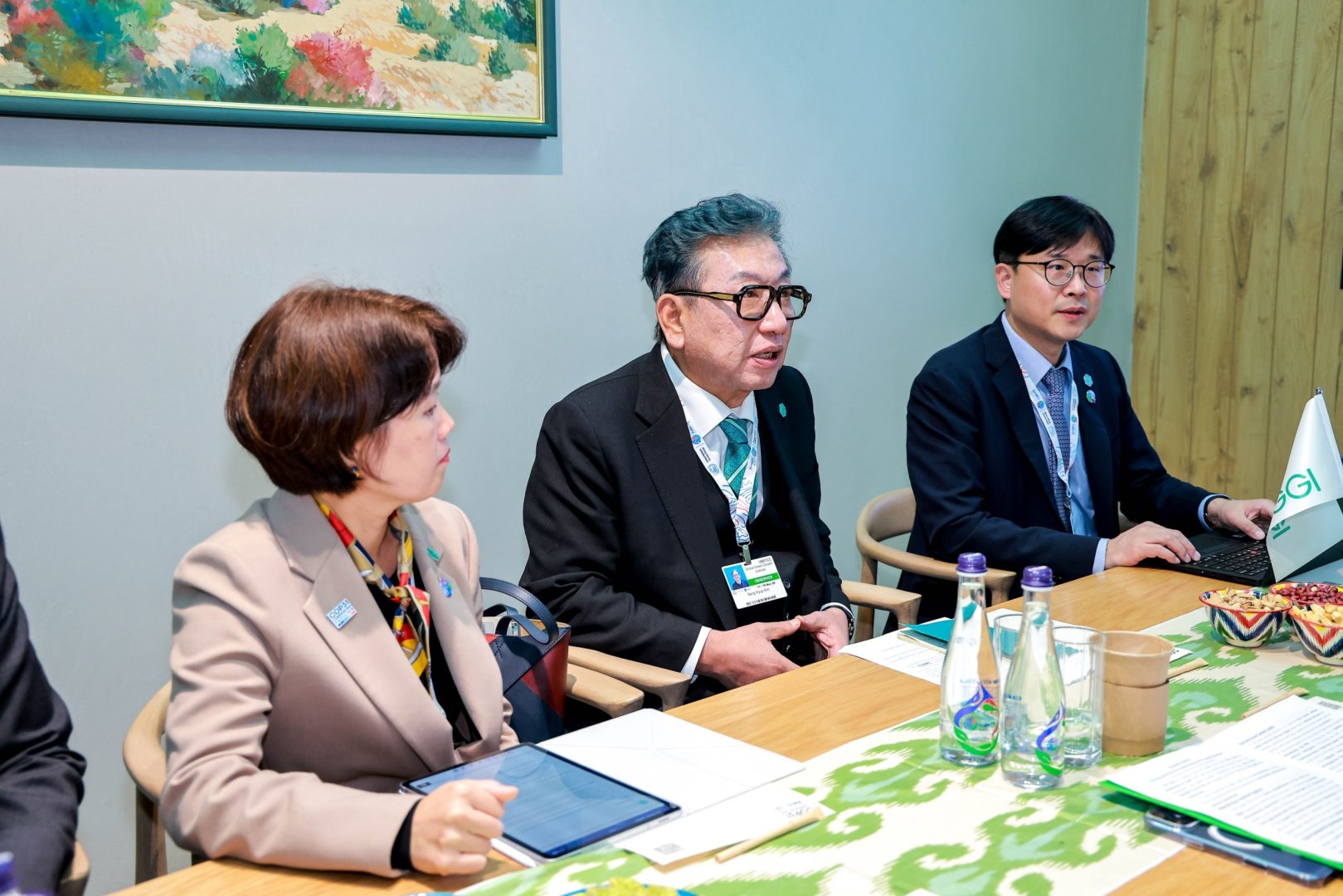

BAKU, Azerbaijan, November 14. Uzbekistan and the Global Green Growth Institute (GGGI) have discussed preparing the country's first forestry carbon credit transaction, focusing on carbon sequestration projects in the dried seabed of the Aral Sea and attracting South Korean buyers at a meeting on the sidelines of the 31st UN Climate Change Conference (COP31) in Antalya, Türkiye on November 13.
According to Uzbekistan's National Committee on Ecology and Climate Change, the discussions took place between Aziz Abdukhakimov, Adviser to the President of Uzbekistan on Environmental Issues and Chairman of the National Committee on Ecology and Climate Change, and Sang-Hyup Kim, Director-General of GGGI.
The parties reviewed opportunities to expand cooperation in mobilizing green investment, preparing climate projects for financing and facilitating the first carbon transactions under Article 6 of the Paris Agreement.
Uzbekistan was the first Commonwealth of Independent States (CIS) country to join GGGI, while the institute established its first Central Asian representative office in Tashkent. The Uzbek side acknowledged GGGI's support for restoring ecosystems in the Aral Sea region, introducing Strategic Environmental Assessment (SEA) and implementing the Clean Hydrogen for Uzbekistan project.
The meeting also addressed a new 2026–2030 program supported by the Korea International Cooperation Agency (KOICA), which aims to help Uzbekistan implement the Paris Agreement and apply its Article 6 mechanisms.
Within the Uzbekistan–GGGI Country Programme for 2024–2028, the sides explored the development of a joint investment project portfolio in three priority areas: sustainable forestry, climate-smart agriculture and green construction. The initiatives are expected to align with Uzbekistan's national investment program and the Yashil Makon and Bio Meros projects.
Particular attention was given to generating carbon credits from forestry projects in the Aral Sea region. More than 2 million hectares of protective forest plantations have already been established on the dried seabed, and their carbon sequestration potential could be used to attract additional financing through Article 6 mechanisms.
The parties discussed developing a monitoring, reporting and verification (MRV) methodology using satellite data and artificial intelligence, structuring the first carbon transaction under Uzbekistan-South Korea cooperation and attracting Korean buyers through the Carbon Transaction Facility.
Following the meeting, the sides proposed identifying priority investment projects and agreeing on an action plan to prepare the first forestry carbon credit transaction by the end of the first quarter of 2027.
Both parties reaffirmed their commitment to strengthening cooperation and advancing joint initiatives to support Uzbekistan's climate and environmental objectives.


