


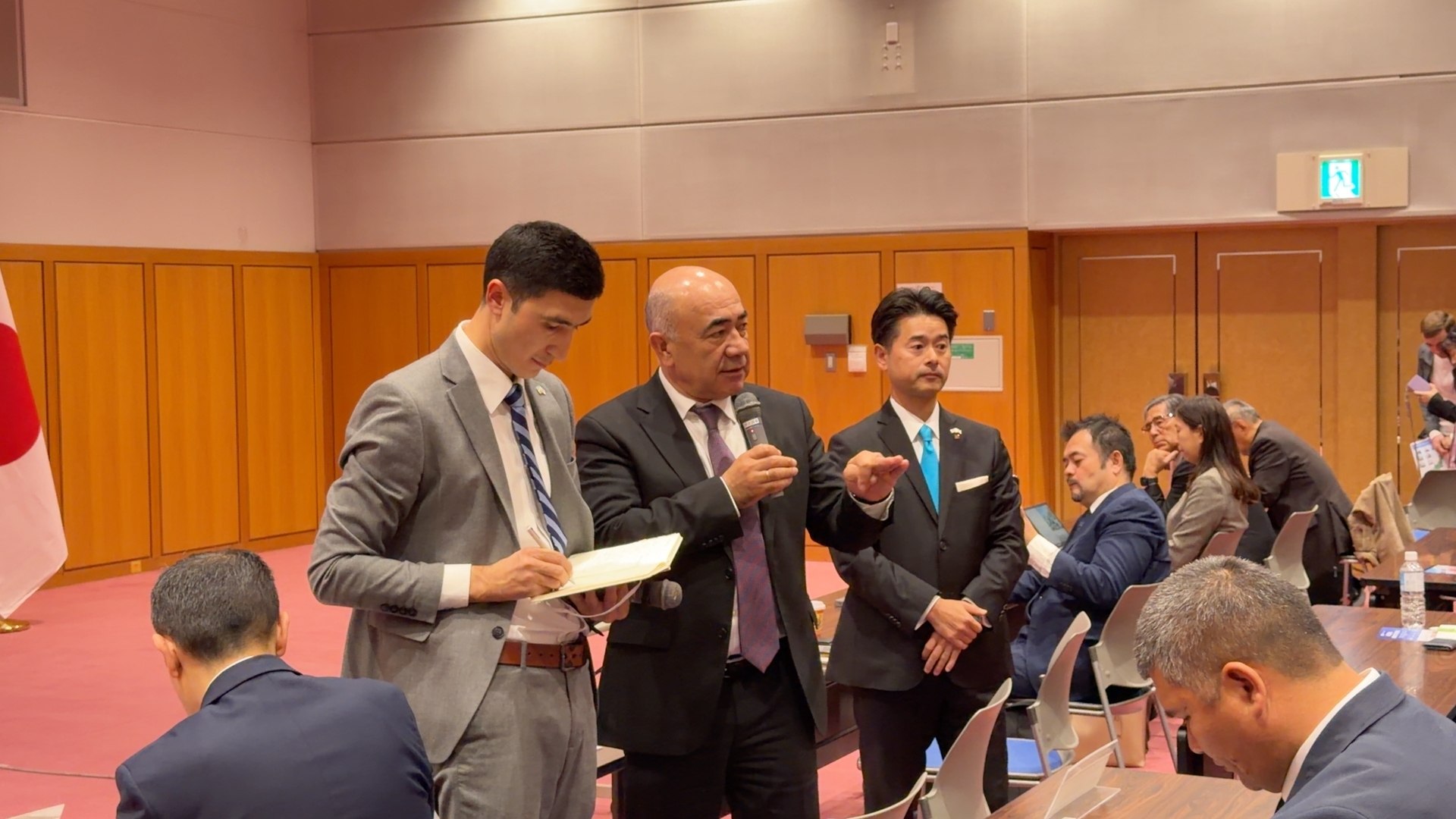

BAKU, Azerbaijan, November 13. Uzbekistan's Tashkent region has reached preliminary agreements worth $63 million with Japanese companies on export contracts and investment projects following a business forum in Tokyo on Friday, November 13.
According to Tashkent regional administration, the agreements include six export deals worth a combined $11 million covering fruit, dried fruit, IT, agricultural and textile products, as well as cooperation with seven Japanese companies on investment projects worth $52 million in Tashkent region.
The forum brought together 30 entrepreneurs from Tashkent region and more than 200 representatives of leading Japanese companies and business associations. It was organized to promote the region's economic potential, expand bilateral trade and attract Japanese investment.
During the event, Tashkent Region Governor Zoyir Mirzayev, Uzbekistan's ambassador to Japan and other delegation members presented investment opportunities in the region's industrial, agricultural and tourism sectors.
Particular attention was paid to existing production infrastructure, projects open to foreign investment, export potential and opportunities for mutually beneficial partnerships with Japanese businesses.
Moreover, participants received information about Uzbekistan's ongoing economic reforms, macroeconomic stability, measures to protect foreign investors' rights and interests, and the incentives and guarantees available to international businesses.
More than 50 meetings were held between the Uzbek delegation and Japanese business representatives in business-to-business (B2B) and business-to-government (B2G) formats. Discussions covered specific projects, trade contracts and practical mechanisms for investment cooperation.
Following the talks, 34 Japanese investors and entrepreneurs expressed interest in visiting Uzbekistan to assess potential investment opportunities and explore projects in Tashkent region.
The business forum is expected to help expand Tashkent region's international economic partnerships, attract Japanese capital and advanced technologies, and increase exports of locally produced goods.


