


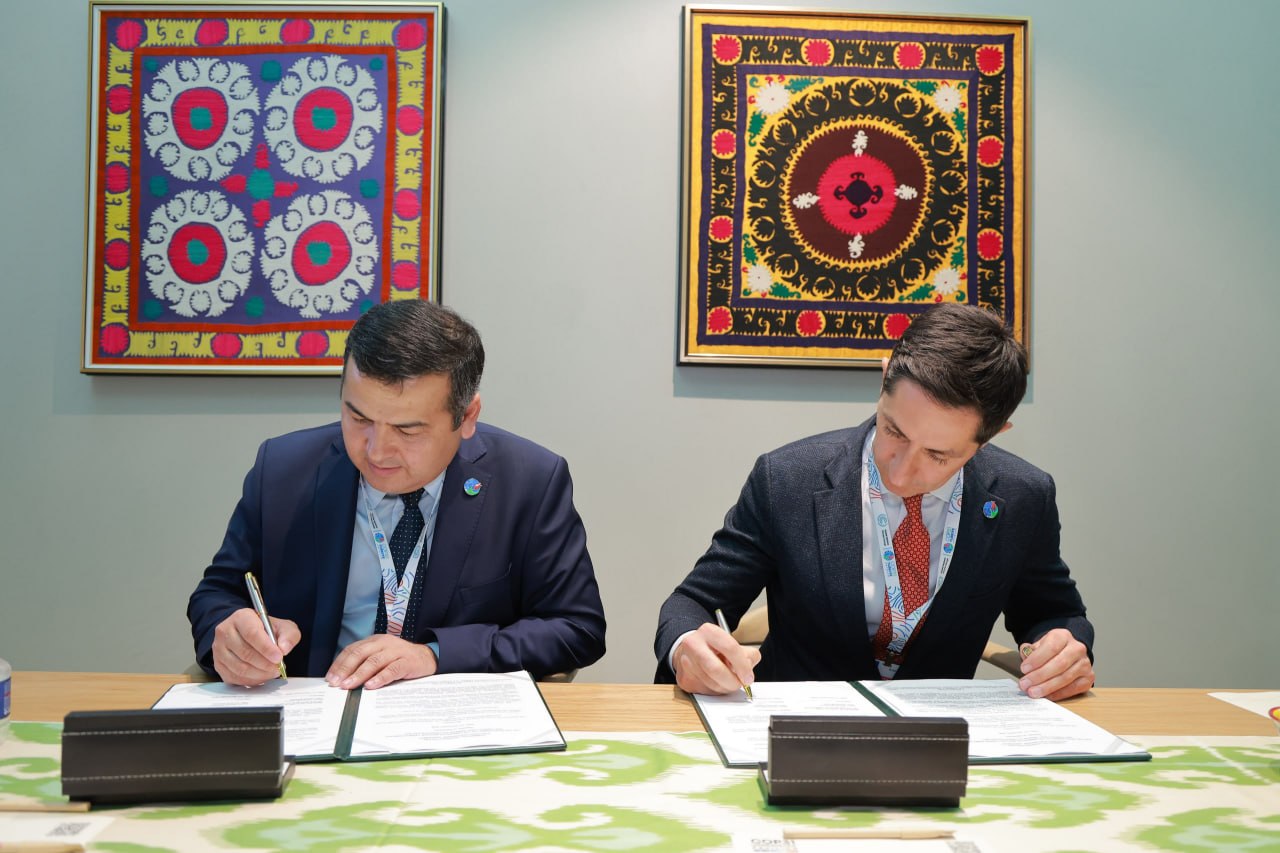

BAKU, Azerbaijan, November 13. Uzbekistan has signed cooperation agreements with Smart Carbon and BIZPANDO to develop biochar production from agricultural waste and advance carbon credit projects on the sidelines of the 31st UN Climate Change Conference (COP31) in Antalya, Türkiye on November 12.
According to Uzbekistan's Ministry of Agriculture, under the agreement with Smart Carbon, the sides plan to implement a project to produce biochar from cotton stalks. A separate agreement with BIZPANDO focuses on processing various types of agricultural residues and developing mechanisms for generating carbon credits.
The initiatives envisage using pyrolysis technology to convert agricultural plant residues into biochar, which can then be applied to soil to improve its quality and support long-term carbon storage.
The projects are also intended to reduce greenhouse gas emissions by turning agricultural waste into useful raw materials rather than leaving it in fields or disposing of it through conventional methods.
The ministry noted that the initiatives would help transform agricultural residues into economically valuable products, create additional income opportunities for farmers and reduce the environmental impact of agricultural production.
The agreements are expected to support the wider adoption of circular economy principles in Uzbekistan's agricultural sector, promote environmentally sustainable production and create opportunities for the country to participate in international carbon credit markets.
Swiss-based Bizpando AG operates in the field of agricultural sustainability and carbon markets. The company has previously cooperated with Uzbekistan's Republican Agro-Services Center (AKIS) and the International Cotton Advisory Committee (ICAC) on a project involving biochar and compost production, with the aim of helping cotton farmers generate carbon credits through more sustainable agricultural practices. Under that initiative, Bizpando was responsible for coordinating the generation and sale of carbon credits.


