


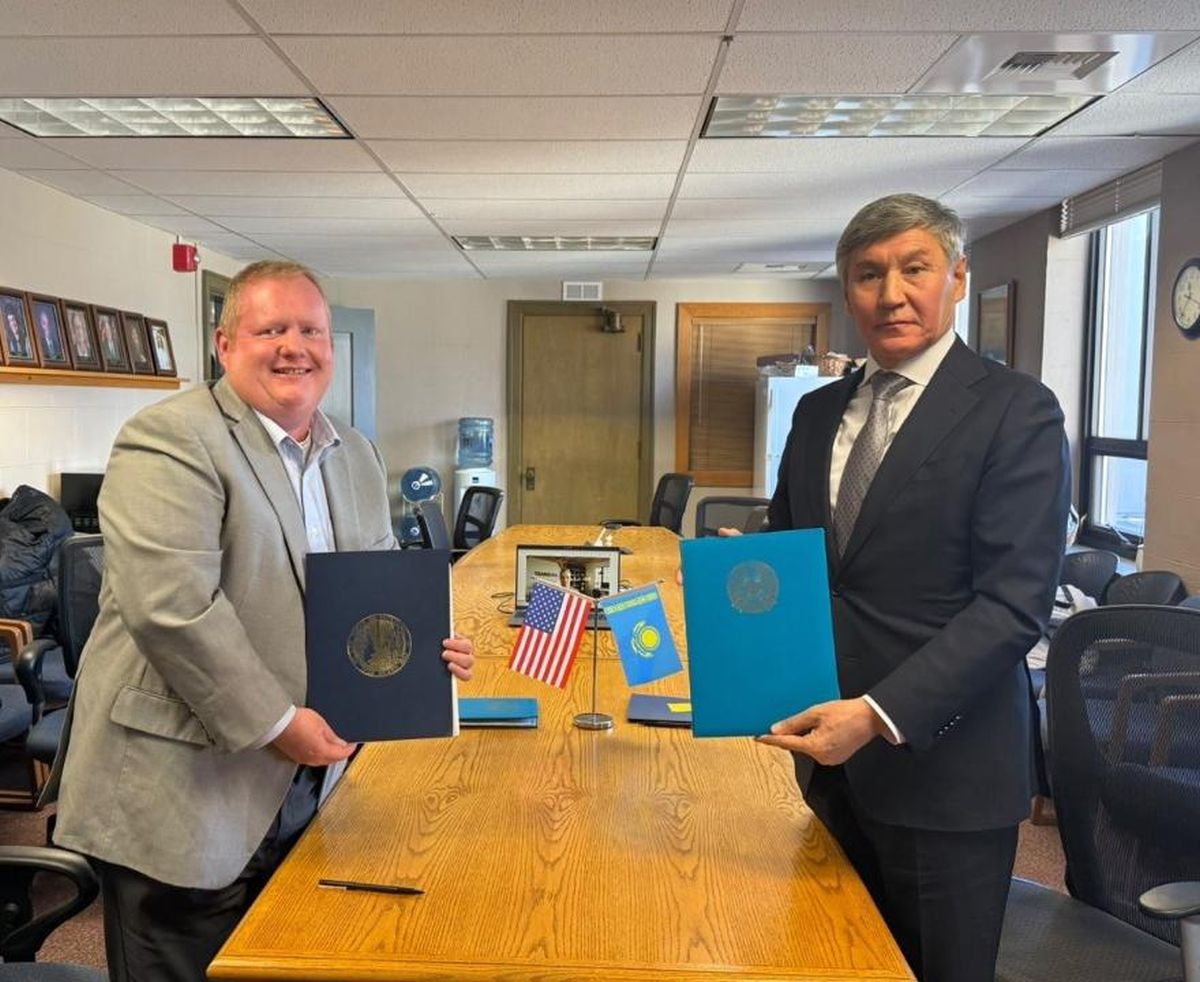

BAKU, Azerbaijan, November 13. Kazakhstan's Ministry of Agriculture and US-based Trans Ova Genetics, LC have signed a memorandum of cooperation to establish a specialized cattle embryo laboratory in Kazakhstan and train local specialists with the involvement of international experts, according to the ministry.
The agreement was signed during a working visit to the United States by Kazakhstan's Vice Minister of Agriculture Amangaliy Berdalin.
The planned laboratory will specialize in the collection, evaluation, cryopreservation and transplantation of cattle embryos. The agreement also provides for training Kazakh specialists with the assistance of international experts.
During the visit, the Kazakh delegation met with representatives of the agriculture departments of Idaho and Montana, as well as US agribusiness companies. The parties discussed supplies of high-productivity breeding livestock and the introduction of advanced American genetics into Kazakhstan's livestock sector.
Berdalin noted that Kazakhstan, which ranks fifth globally in terms of pasture area, with approximately 180 million hectares, has significant potential to increase beef, mutton and dairy production.
He said that in 2026, Kazakhstan approved and began implementing a Comprehensive Livestock Development Plan for 2026-2030. The plan provides for measures to improve livestock genetics, strengthen the feed base, expand financing, introduce new technologies, and develop processing. As part of the plan, the parties also discussed technological cooperation in livestock reproduction.
It was noted that Kazakhstan is currently implementing six full-cycle red meat production projects, while the country's first specialized livestock exchange is under construction in the south. The parties agreed to cooperate in training Kazakh specialists to conduct livestock auctions in line with US standards for transparent pricing.
Dairy farming was identified as another promising area of cooperation. Kazakhstan is increasing milk production and developing modern production infrastructure. More than 100 modern dairy farms have been built in the country in recent years, with an average cost of approximately $9 million each.
US companies have been invited to participate in equipping these facilities and localizing equipment assembly in Kazakhstan, with the potential to supply markets across Central Asia.
Following the meetings, the parties agreed to develop specific investment and trade projects, drawing on Montana's expertise in beef cattle farming and Idaho's experience in industrial dairy production and processing.
To support joint initiatives, Kazakhstan's Ministry of Agriculture will establish a permanent working platform involving government agencies, businesses, and research organizations.
"I am confident that combining Kazakhstan's resource potential with the technologies and experience of our American partners will help us achieve mutually beneficial results," Berdalin said following the visit.


