


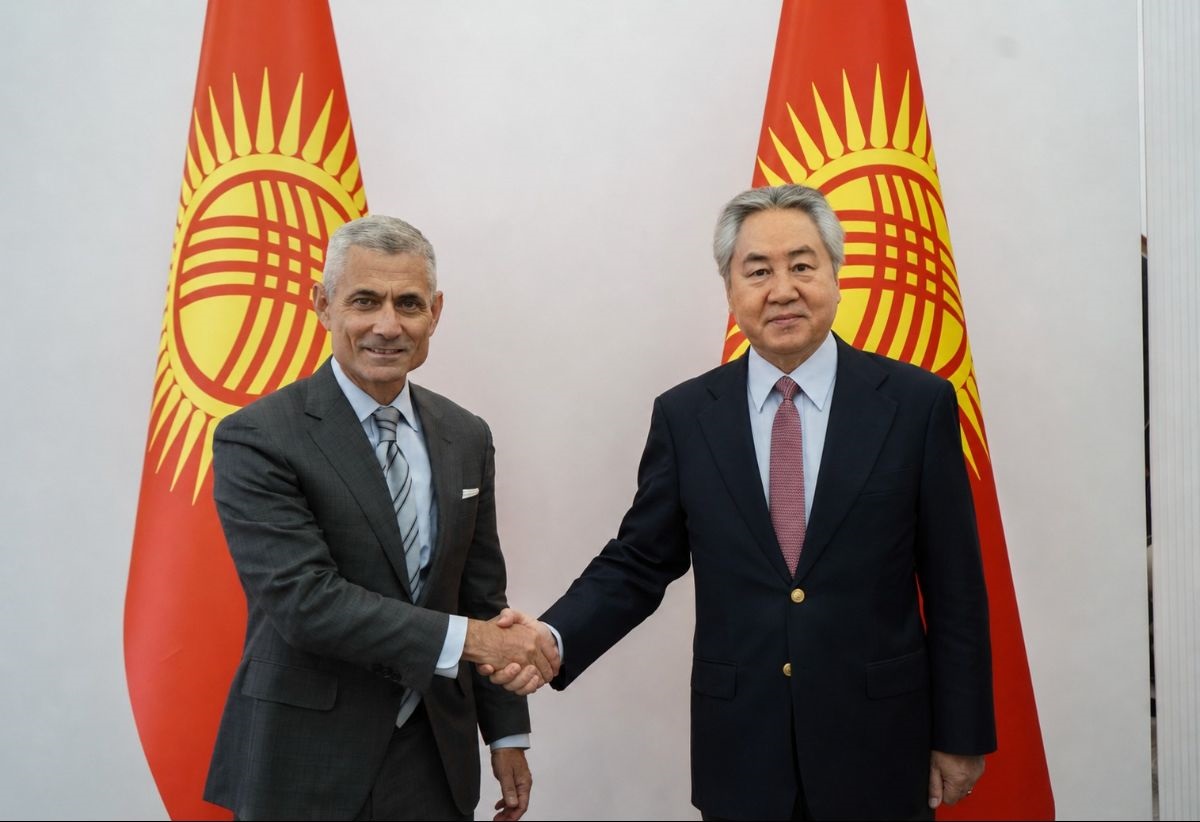

BAKU, Azerbaijan, August 10. Kyrgyz Foreign Minister Jeenbek Kulubaev received U.S. Assistant Secretary of State for South and Central Asian Affairs Paul Kapur in Bishkek on August 10.
This was reported in a press release issued by the Kyrgyz Foreign Ministry on August 10.
"During the meeting, the parties discussed current issues in Kyrgyz-American relations," the report noted.
Particular attention was paid to sanctions-related issues, as well as visa procedures and the introduction of visa bonds.
The officials also discussed multilateral cooperation and interaction within international organizations. The U.S. side congratulated Kyrgyzstan on its election as a non-permanent member of the UN Security Council for 2027-2028 and expressed readiness for close cooperation on international and regional issues.
According to the press release, the sides also reviewed upcoming contacts and the schedule of bilateral events, confirming their interest in maintaining regular political dialogue and steadily strengthening Kyrgyz-U.S. relations.
Meanwhile, the United States and Kyrgyzstan have maintained regular political consultations as part of broader U.S. engagement with Central Asia. The two countries have sought to expand cooperation beyond political dialogue into trade, investment, regional connectivity and multilateral issues. In April 2026, Kyrgyz and US officials held political consultations in Washington, where they discussed bilateral cooperation, trade and economic ties, visa requirements and cooperation through the C5+1 format. The sides also agreed to hold the next round of annual consultations in Bishkek.
At the same time, visa policy has become a more prominent issue in bilateral relations. Since January 21, 2026, Kyrgyz nationals applying for certain US visitor visas have been subject to a visa-bond requirement, with bonds ranging from $5,000 to $15,000. Kyrgyz officials have subsequently held consultations with the U.S. side on easing the requirements.
The sanctions issue also reflects the wider challenge for Kyrgyzstan of maintaining economic ties with Russia while complying with international sanctions. For Washington, engagement with Bishkek therefore combines efforts to strengthen bilateral and regional cooperation with discussions on financial and trade practices, migration and visa compliance.



