


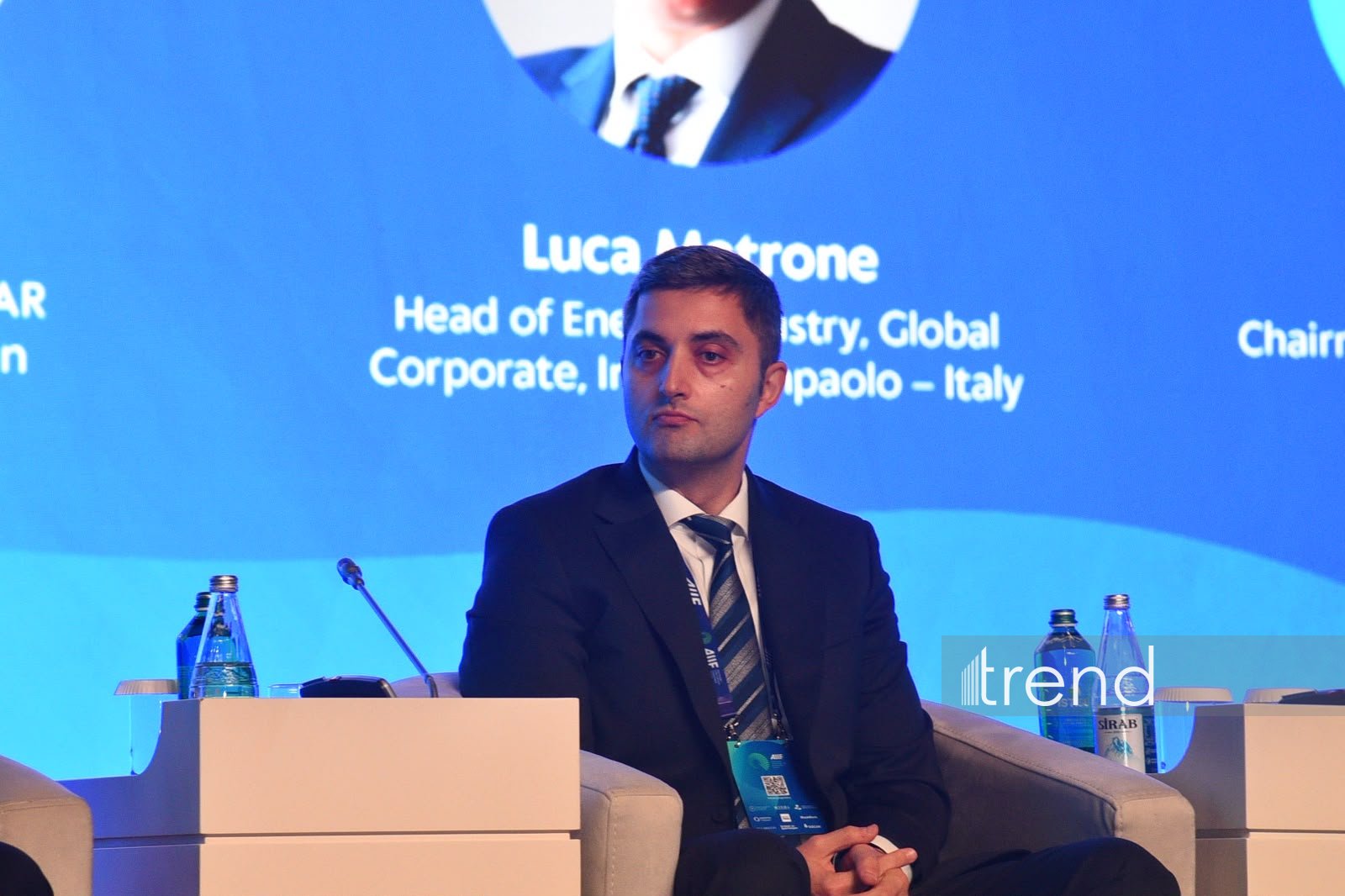

BAKU, Azerbaijan, September 25. Azerbaijan has attracted strong interest from foreign companies in renewable energy projects, SOCAR Green CEO Elmir Musayev said on Friday at the 2nd Azerbaijan International Investment Forum in Baku, Trend's correspondent reports from the event.
He said experts had assessed more than 200 gigawatts of solar energy potential and 157 gigawatts of offshore wind technical potential, of which around 35 gigawatts is considered economically viable.
“This is the significant renewable energy potential that Azerbaijan has. As SOCAR Green, we are also among the parties interested in developing renewable energy projects in Azerbaijan. This shows that Azerbaijan has already taken important steps. I think the starting point was the regulatory and legal environment in Azerbaijan,” he noted.
Musayev also said the first phase of renewable energy development amounted to around 2 gigawatts and was supported by a 250-megawatt/2-hour battery energy storage system.
“Because this intermittent energy puts pressure on the grid. It is easier to integrate the first projects, but the more renewable energy there is in the system, the greater the load on the grid and the more additional measures are required. In this regard, the Ministry of Energy and Azerenerji, together with foreign consultants, are conducting grid studies.
“We are working on various innovative solutions, such as modules that can minimize the pressure or impact on the grid, so that these new additional projects can be easily integrated into the system. Battery energy storage solutions can play a key role in this regard,” he said.
The CEO noted that the cost of capital had increased after the US Federal Reserve raised interest rates. He said it was important to understand that the cost of financing was one of the key factors directly affecting project profitability.
“Cooperation with international financial institutions (IFIs) is important for us not only because of attractive financing, but also because of their oversight of governments and their expertise in environmental and social impacts. However, when the cost of capital increases for objective reasons, it also becomes more difficult for companies like ours. It is not difficult to imagine the impact this has on other private companies that depend on capital.
“Currently, financing in Azerbaijan mainly comes from IFIs because such projects require long-term financing, typically 15–20 years. Unfortunately, commercial banks, particularly local commercial banks, are currently not in a position to provide such financing. However, we believe it is very important for local banks to play a more active role, particularly in providing long-term financing in local currency,” he said.



