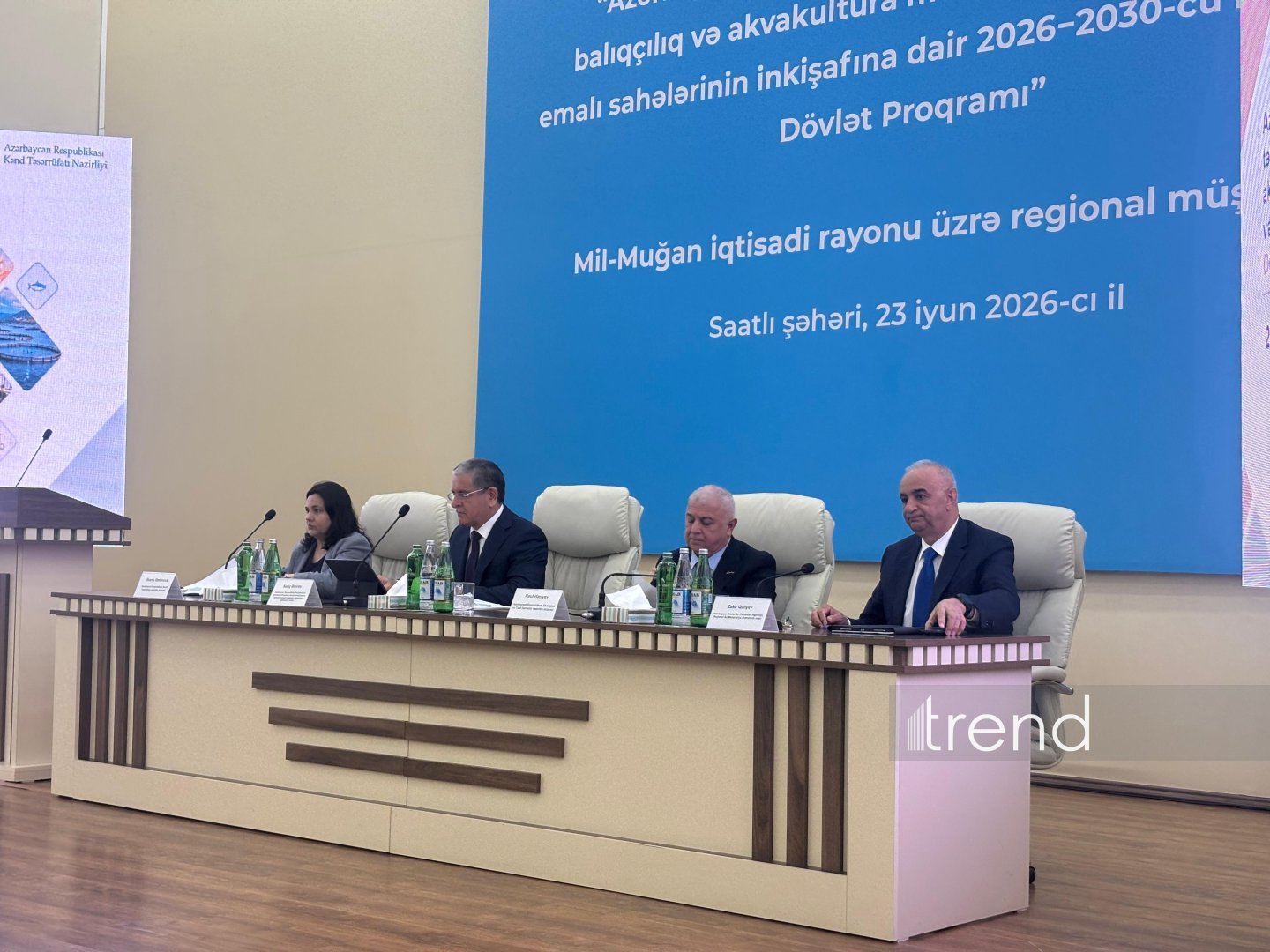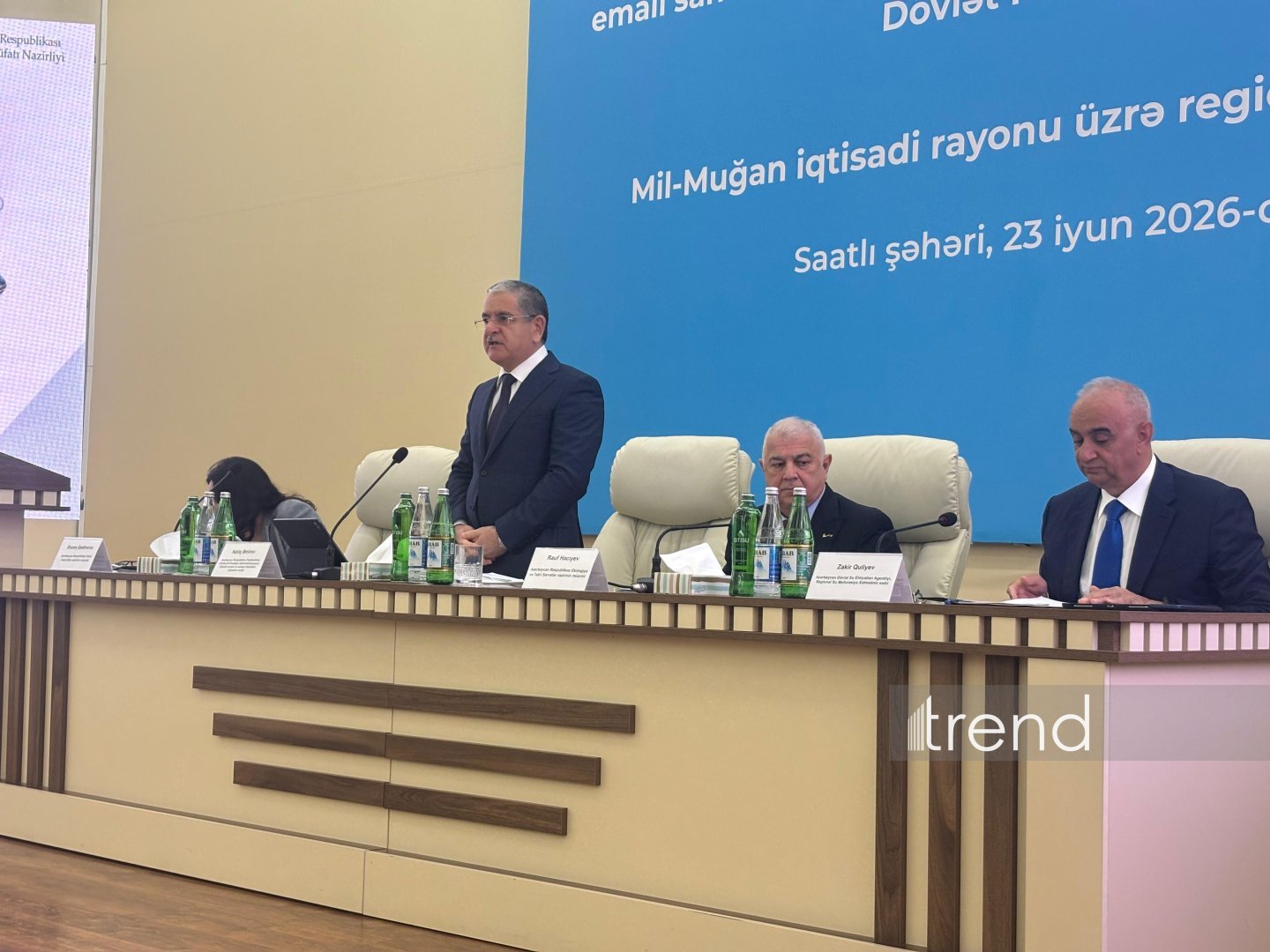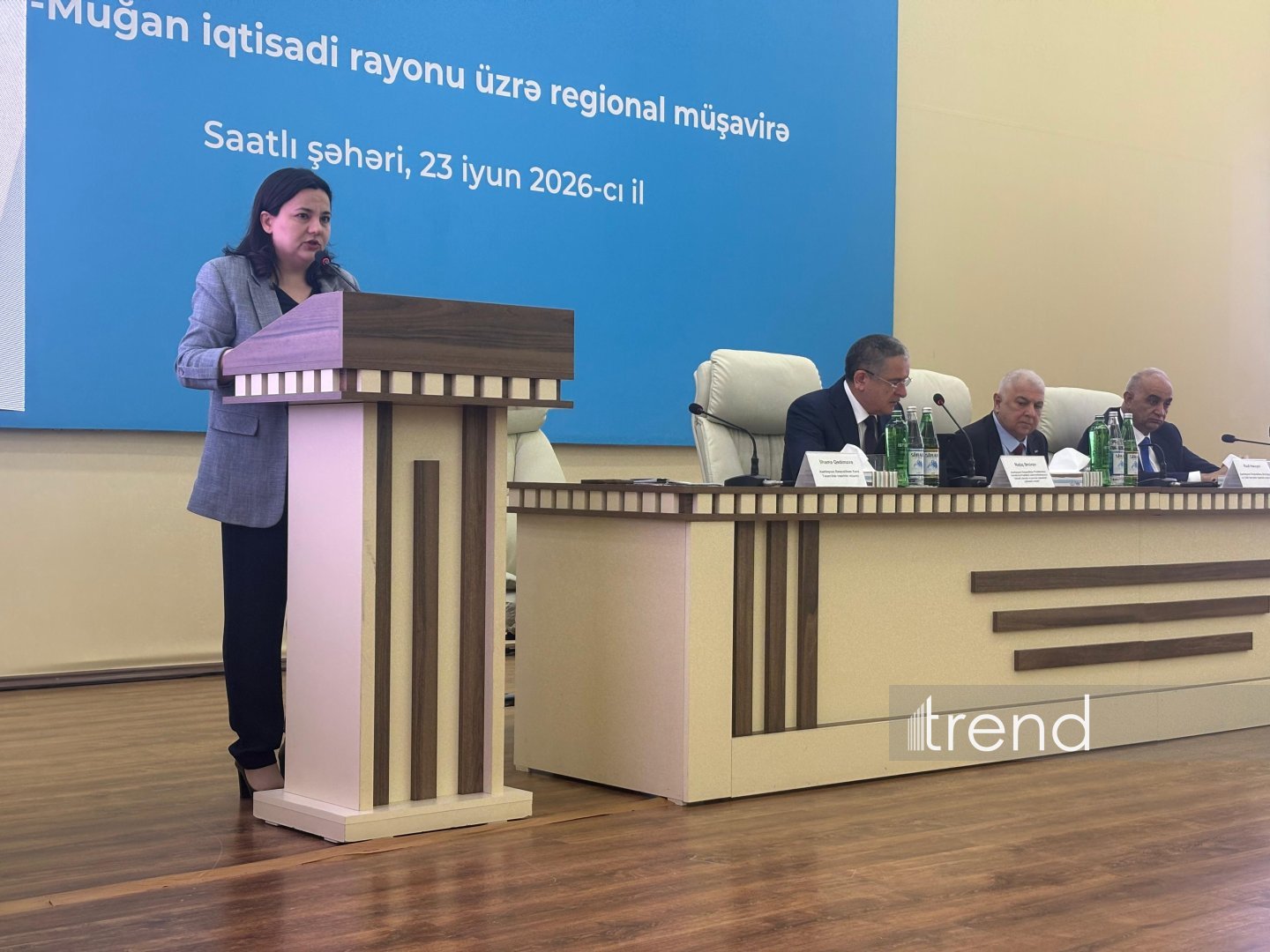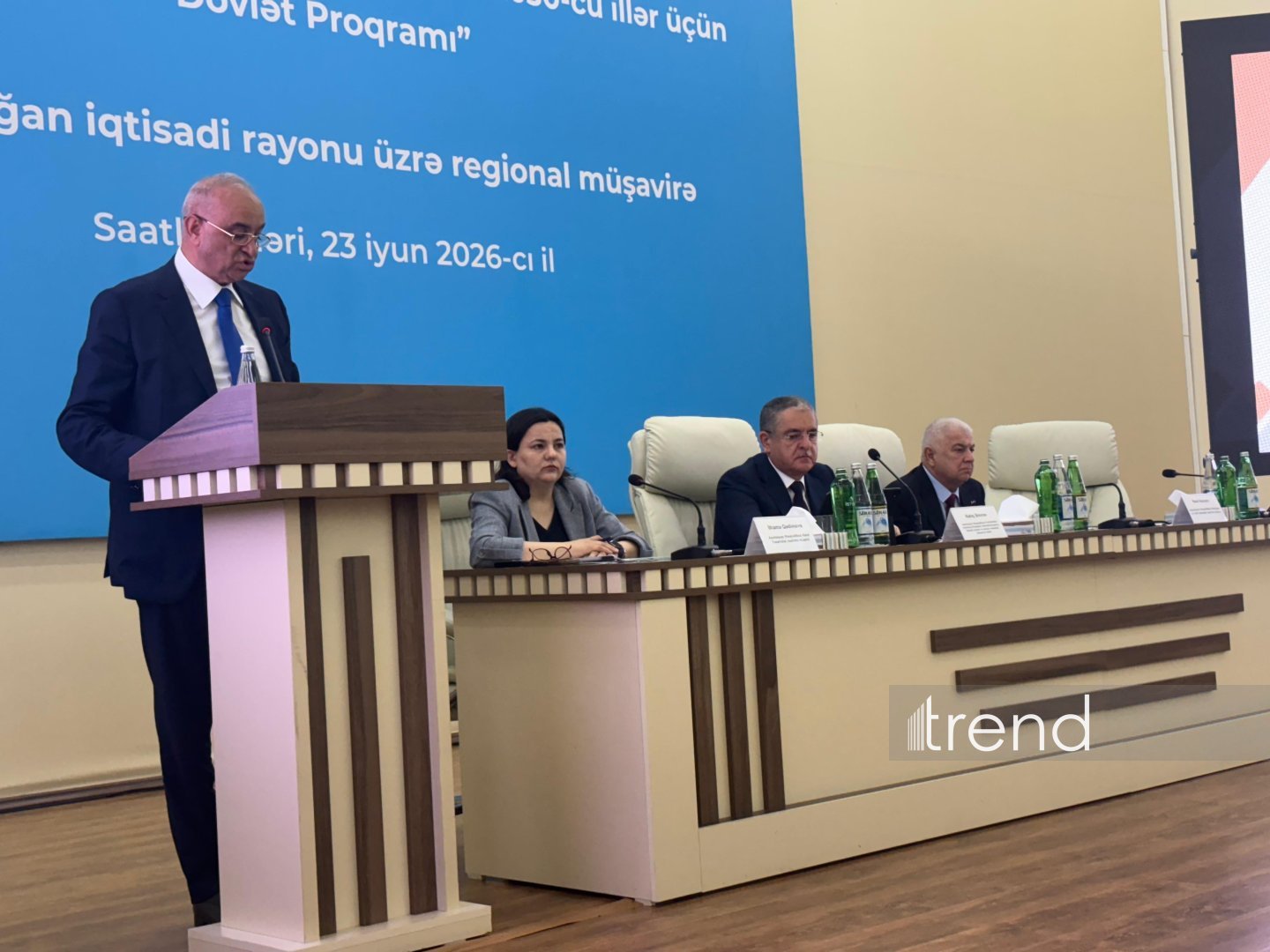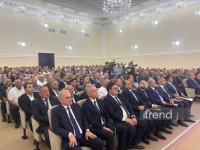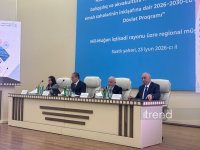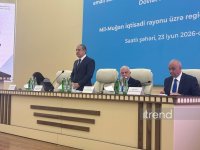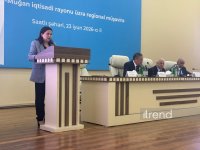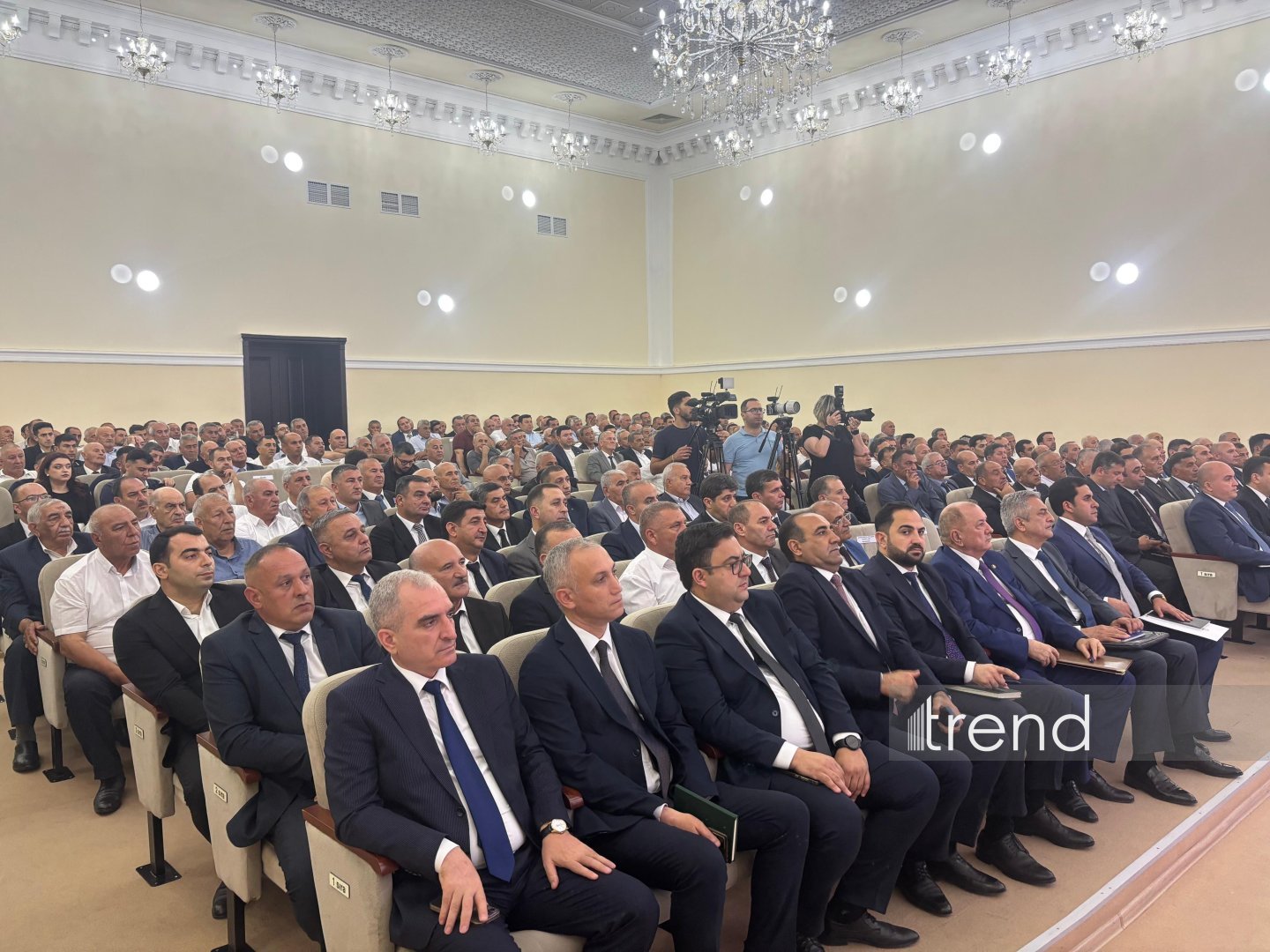

SAATLI, Azerbaijan, June 23. A regional consultation on Azerbaijan's Mil-Mughan economic region has concluded in the Saatli district, conducted within the framework of the State Program for the Development of Agricultural Production and Processing, Fisheries, and Aquaculture in Azerbaijan for 2026–2030, Trend's correspondent reports from the event.
The consultation brought together representatives of relevant state agencies, heads of agricultural enterprises, and farmers.
The event discussed priority areas envisaged in the state program, the development of the agricultural and fisheries sectors, the expansion of modern production and processing capabilities, as well as issues related to the sustainable development of the agricultural sector in the regions.
Speaking at the event Assistant to the President of Azerbaijan - Head of the Department of Economic Policy and Industrial Affairs of the Presidential Administration, Natig Amirov said that State Program for the Development of Agricultural Production and Processing, Fisheries, and Aquaculture in Azerbaijan for 2026–2030 is a strategic document defining a new development model for the agricultural sector for the coming period.
"This program is a strategic document that defines a new development model for the agricultural sector for the coming period and acts as an important roadmap in terms of increasing agricultural production, efficient use of resources, expansion of processing and export opportunities, and transitioning the development of value chains, as well as fisheries and aquaculture, to a new stage," Amirov said.
According him, the main goal is not just to increase production volumes, but to obtain higher and higher quality products from each hectare, that is, to ensure the transition from an extensive approach to intensive development in the agricultural sector.
"The state program envisages ensuring sustainable development in the field of agricultural production in 2026-2030, strengthening food security, increasing domestic production potential, productivity, added value and export orientation, accelerating the transition to an intensive and competitive production model, developing value chains in the agricultural sector, expanding farmers' access to modern agricultural services, as well as developing the fisheries and aquaculture sectors. There is no doubt that the discussions to be held will contribute to clarifying the implementation mechanisms of the State Program and achieving stronger results in the agricultural sector in the coming years," the official pointed out.
Deputy Minister of Agriculture Ilhama Gadimova revealed that advance payment of a portion of the subsidy for agrotechnical maintenance in horticulture will also be an important support mechanism in Azerbaijan.
"Pre-payment of a part of the subsidy intended for agrotechnical maintenance in horticulture will also be an important support mechanism. Because pruning, fertilization, disease and pest control, irrigation, and other maintenance measures in horticulture must be carried out on time. The farmer's financial ability at the beginning of the season directly affects the quality of these measures," the deputy minister explained.
According to her, it's envisaged to apply the certification subsidy.
"Global G.A.P. and organic certificates are an important condition for access to export markets. We should not only produce products, but also present them in accordance with the standards required by international markets. The application of product subsidies for apples and pomegranates is also important in terms of encouraging producers in horticulture. This will serve both to increase productivity and to develop export-oriented horticulture.
Livestock breeding is also one of the main directions of the state program. In particular, in the cattle breeding sector, increasing milk and beef production, increasing the share of pedigree animals in the herd, reducing dependence on imports, and increasing the level of self-sufficiency have been identified as the main goals.
It's planned to increase milk production by 10% and beef production by 20% by 2030. It's planned to increase the share of pedigree animals in the herd to 10%. The goal is to reduce milk imports by 49.6% and beef imports by 40.2%. An increase of 8.5 % in milk and 11.5% in beef is also planned for the level of self-sufficiency. To achieve these goals, it is planned to create dairy and beef clusters, form about 1,000 new farms with various capacities within the cluster, and support the provision of these farms with pedigree animals. In addition, the establishment of 90 milk collection points and 15 skin collection points will be supported. This serves not only to establish production in livestock, but also to establish a supply, processing, and sales chain, " Gadimova noted.
Chairman of the Regional Water Reclamation Service of the Azerbaijan State Water Resources Agency, Zakir Guliyev added that transition to intensive farming is a main element of the State Program for the Development of Agricultural Production and Processing, Fisheries, and Aquaculture in Azerbaijan for 2026–2030.
He noted that the favorable climate and fertile soil conditions of the Beylagan, Imishli, Saatli, and Sabirabad districts included in the Mil-Mughan region, their location on the banks of the Kura and Araz rivers, which are the country's main water arteries, as well as their provision with irrigation and collector-drainage networks, are the main factors that play an important role in the formation of these regions as the main cotton-growing region of the country.
"As many as 240,434 hectares (17%) of the country's total 1.43 million hectares of irrigated areas, as well as 40,174 hectares (37%) of the 107,298 hectares of cotton fields sown in the country, and 61,729 hectares (13%) of the 466,835 hectares of grain fields are located in the Mil-Mughan economic region," he explained.
According to Guliyev, currently in the areas served by the agency, there are 51,356 hectares of irrigated land in Beylagan district, 58,714 hectares in Imishli district, 59,124 hectares in Saatli district, and 71,240 hectares in Sabirabad district.
"To provide water to these areas, 6,704 km of irrigation network, 213 pumping stations, more than 100 subartesian wells, 19,500 hydrotechnical facilities, and other facilities are operated. Last year, 2.26 billion cubic meters of water were taken from sources to provide these areas with irrigation water, and 1.4 billion cubic meters of water were provided to farms.
Approximately 77,500 agricultural producers in these districts were provided with water for irrigation and other purposes, and water supply is currently ongoing," he said.
The official also spoke about projects to ensure the efficient use of water resources within the framework of the activities of the Commission established by the decree No. 1986 of the President of Azerbaijan dated April 15, 2020.
"On projects whose reconstruction work has been started:
- Reconstruction of the Lower Mughan Canal has been started in order to improve the water supply of a total of 28,744 hectares of land in Saatli (26,975 ha) and Sabirabad (1,769 ha) districts.
On projects whose design work has been completed and whose reconstruction work is planned to begin:
- In order to improve the water supply of a total of 45,263 hectares in the territories of Saatli (24,253 ha) and Sabirabad (21,010 ha) regions, as well as approximately 75,000 hectares in the territories of Imishli, Saatli and Sabirabad districts, as well as approximately 10,000 hectares in the territory of Beylagan district, feasibility studies and project estimate documents have been prepared, expert opinions have been obtained and tender processes have been carried out for the reconstruction of the Sabir irrigation canal, Bash Mughan canal, as well as the Old Khangizi and P-0 canals, respectively. It is planned to start construction and installation works.
- Preparatory work on the reconstruction of the Rasularkh Canal to improve water supply to about 18,700 hectares of land in the Imishli and Saatli districts has been completed, and it is planned to start the implementation of the project next year," he added.