


BAKU, Azerbaijan, August 7. New agreements within the Eurasian Economic Union (EAEU) are aimed at expanding domestic market opportunities, developing e-commerce, and creating a common financial space.
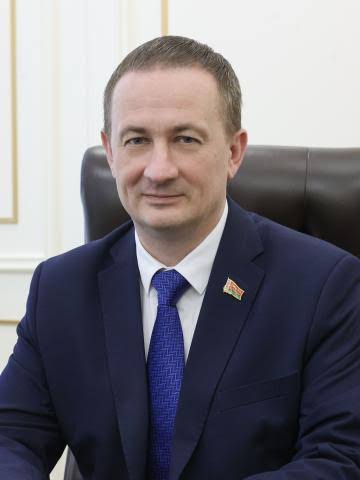
This was announced by Belarusian Prime Minister Alexander Turchin at an expanded meeting of the Eurasian Intergovernmental Council.
According to Turchin, the launch of clear regulations for mutual e-commerce within the EAEU internal market will ensure the legitimate interests of all participants and create a more transparent environment for business.
"Clear regulations for mutual e-commerce within the EAEU internal market are being launched. The legitimate interests of all participants are being ensured," he noted.
The prime minister also emphasized the importance of the agreement on the mutual recognition of academic degrees, which, he said, will simplify the professional activities of holders of such degrees in the context of labor migration.
"This resolves the issue of recognizing academic degrees in the context of labor migration, making it easier for holders of such degrees to conduct their professional activities," Turchin said.
He specifically highlighted the agreement on mutual admission of brokers and dealers to participate in organized exchange trading, calling it the foundation for the further development of the EAEU's common financial market.
"A framework agreement on mutual admission of brokers and dealers to participate in exchange trading creates real preconditions for the formation of a common financial market and an influx of additional cross-border liquidity," the prime minister said.
According to Turchin, the development of integration mechanisms allows the EAEU to strengthen cooperation between member states despite external challenges.
"The digitized results of our integration efforts demonstrate that the union remains a factor of stability in the Eurasian region," he pointed out.
At the same time, the prime minister emphasized that the positive economic dynamics of the Union countries should not lead to a slowdown in the pace of integration. He noted the need to further develop cooperation in industry, the agricultural sector, science and technology, and interaction with external partners.



