


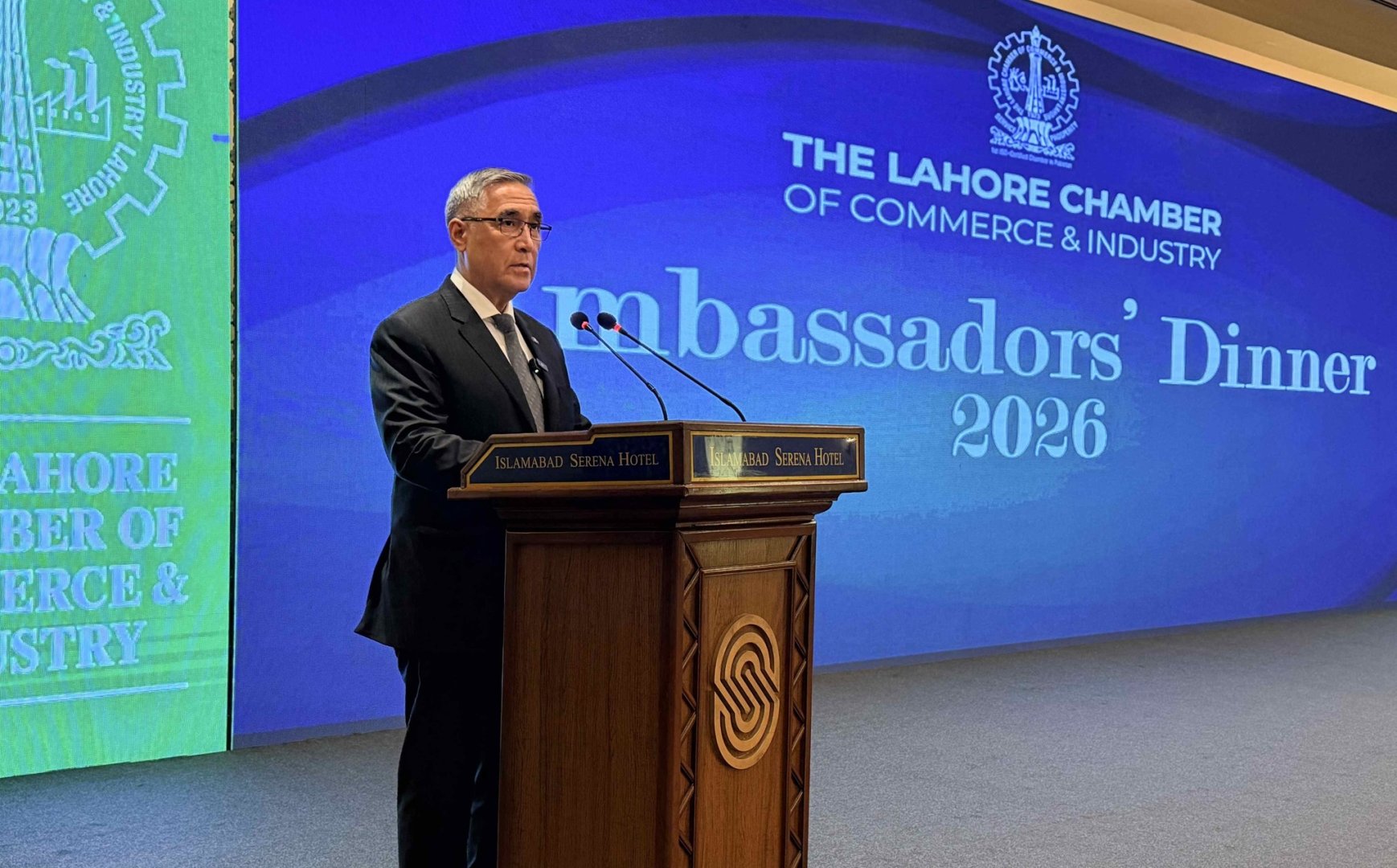

BAKU, Azerbaijan, September 21. Turkmenistan expects to create conditions for the start of natural gas supplies to Pakistan through the Turkmenistan-Afghanistan-Pakistan-India (TAPI) pipeline in 2027.
This was stated in a statement issued by the Embassy of Turkmenistan in Pakistan, citing remarks by Ambassador Atajan Movlamov during his address at the Ambassadors’ Dinner 2026, hosted by the Lahore Chamber of Commerce and Industry (LCCI) at the Serena Hotel in Islamabad.
According to the information, the ambassador stated that construction of the strategically important Serhetabat-Herat section of the TAPI gas pipeline is expected to be completed this year.
"Completion of the strategically important Serhetabat-Herat section of the TAPI gas pipeline this year is expected to create the necessary conditions for the commencement of natural gas supplies to Afghanistan in 2027," the embassy quoted Movlamov's words.
According to the ambassador, implementation of TAPI and other regional energy projects could contribute to reliable energy supplies and create opportunities for Pakistan's industrial development and economic growth.
Meanwhile, the Turkmenistan-Afghanistan-Pakistan-India (TAPI) pipeline is a planned 1,800-kilometer natural gas pipeline designed to transport up to 33 billion cubic meters of gas annually from Turkmenistan’s giant Galkynysh field to Afghanistan, Pakistan, and India. Ashgabat views the project as one of the main routes for diversifying gas exports and strengthening regional economic integration.
The gas resource base for TAPI is the Galkynysh field, one of the world's largest gas deposits with estimated reserves exceeding 27 trillion cubic meters. In April 2026, Turkmengaz and China's CNPC launched the fourth phase of the field's development. The project involves the construction of new production facilities and the drilling of wells, which will enable the additional production of up to 10 billion cubic meters of commercial gas per year.
In early June, the Belfer Center for Science and International Affairs at Harvard’s Kennedy School noted in its analysis that the TAPI gas pipeline is being re-anchored in regional energy discussions as a structured mechanism for regional energy flows, connecting Turkmenistan’s gas resources with demand centers in South Asia.



