


BAKU, Azerbaijan, August 7. The member states of the Eurasian Economic Union (EAEU) are adopting new measures to develop a common financial space, expand e-commerce, and facilitate the free movement of professionals within the Union.
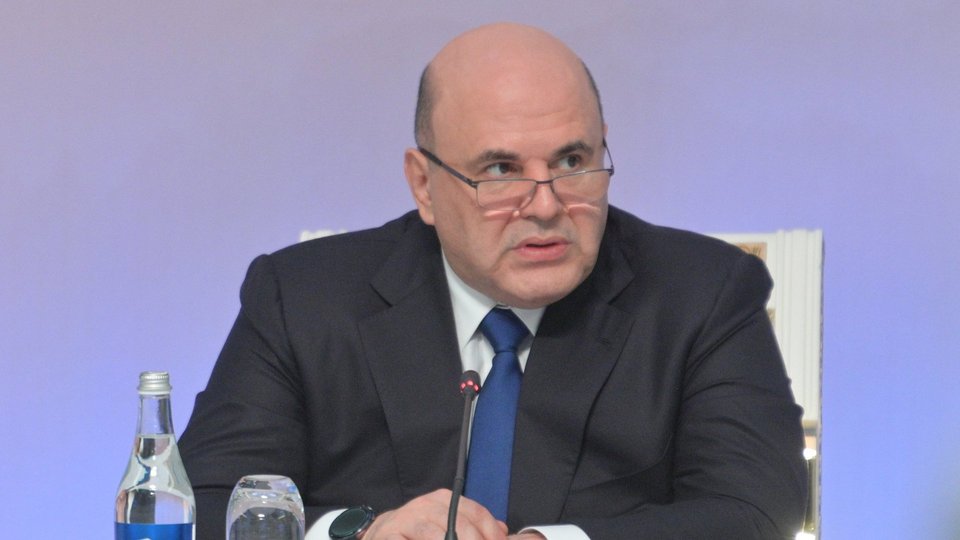
This was stated by Russian Prime Minister Mikhail Mishustin at an expanded meeting of the Eurasian Intergovernmental Council.
According to Mishustin, one of the key decisions will be an agreement on the mutual recognition of academic qualification documents, which will eliminate additional administrative procedures for specialists from EAEU member states. “Citizens of the five member states who hold such qualifications will no longer need to undergo additional procedures to confirm their credentials or deal with various bureaucratic requirements in order to work across the Union,” he said.
The Russian prime minister emphasized that the implementation of the agreement will expand opportunities for scientists, researchers, and innovators. “Researchers, innovators, and scientists will have more opportunities to realize their potential, regardless of the country where they obtained their diplomas,” Mishustin said.
In addition, as part of efforts to create a common EAEU financial market, brokers from member states will gain mutual access to participate in exchange trading.
According to Mishustin, this mechanism will provide an additional boost to investment cooperation among the Union’s countries. “As part of the creation of a common financial market, we will provide brokers from our countries with the opportunity to participate in trading on exchanges across all five member states, which will help expand investment cooperation,” he said.
Another area of focus will be the regulation of e-commerce in goods within the EAEU internal market. Mishustin said that the member states will approve a relevant agreement aimed at establishing unified rules for participants in digital trade. “The agreement is designed to protect the interests of both sellers and buyers. Businesses will operate under clear and unified rules,” the Russian prime minister noted.
According to him, the development of e-commerce will allow consumers to access a wider range of goods through marketplaces and online trading platforms. Mishustin also highlighted the need to synchronize digital mechanisms for monitoring product quality. He stressed the importance of updating data on the conformity assessment of goods with EAEU technical regulations in order to ensure their free circulation through digital trading platforms.
Speaking about the development of the platform economy, the Russian prime minister said that a new law regulating the operation of digital platforms will come into force in Russia on October 1, 2026. “It will establish transparent rules in this area,” Mishustin said.
He also paid special attention to the digitalization of logistics. According to him, almost all rail freight transportation between Russia and Belarus is already carried out using electronic documents, while the figure for routes with Kazakhstan stands at around 81 percent. “This approach significantly simplifies business operations and accelerates administrative procedures,” he said.
Mishustin emphasized that the further development of digital solutions will contribute to expanding trade and economic cooperation both within the EAEU and with external partners, including China, Iran, and other countries.



