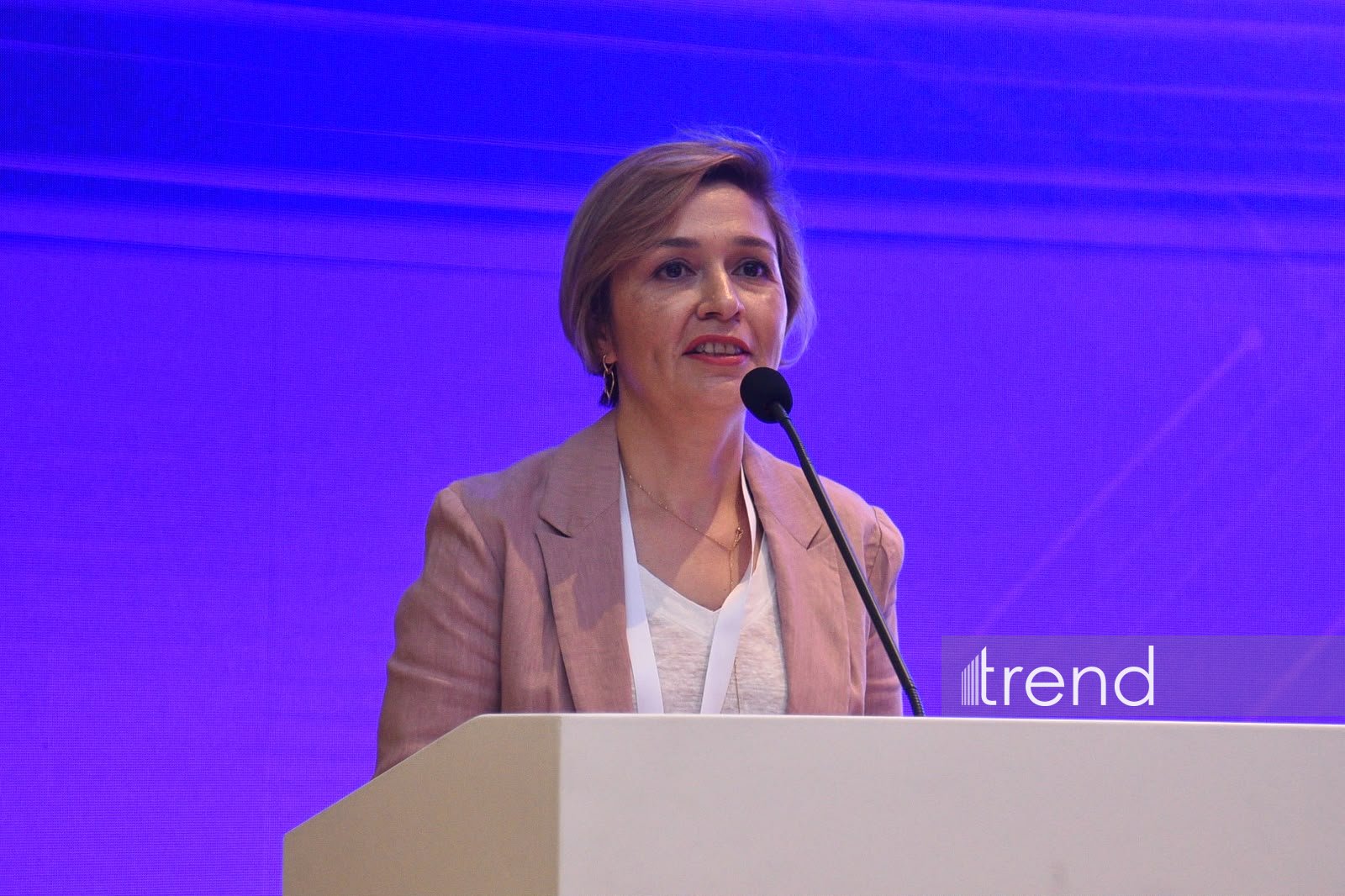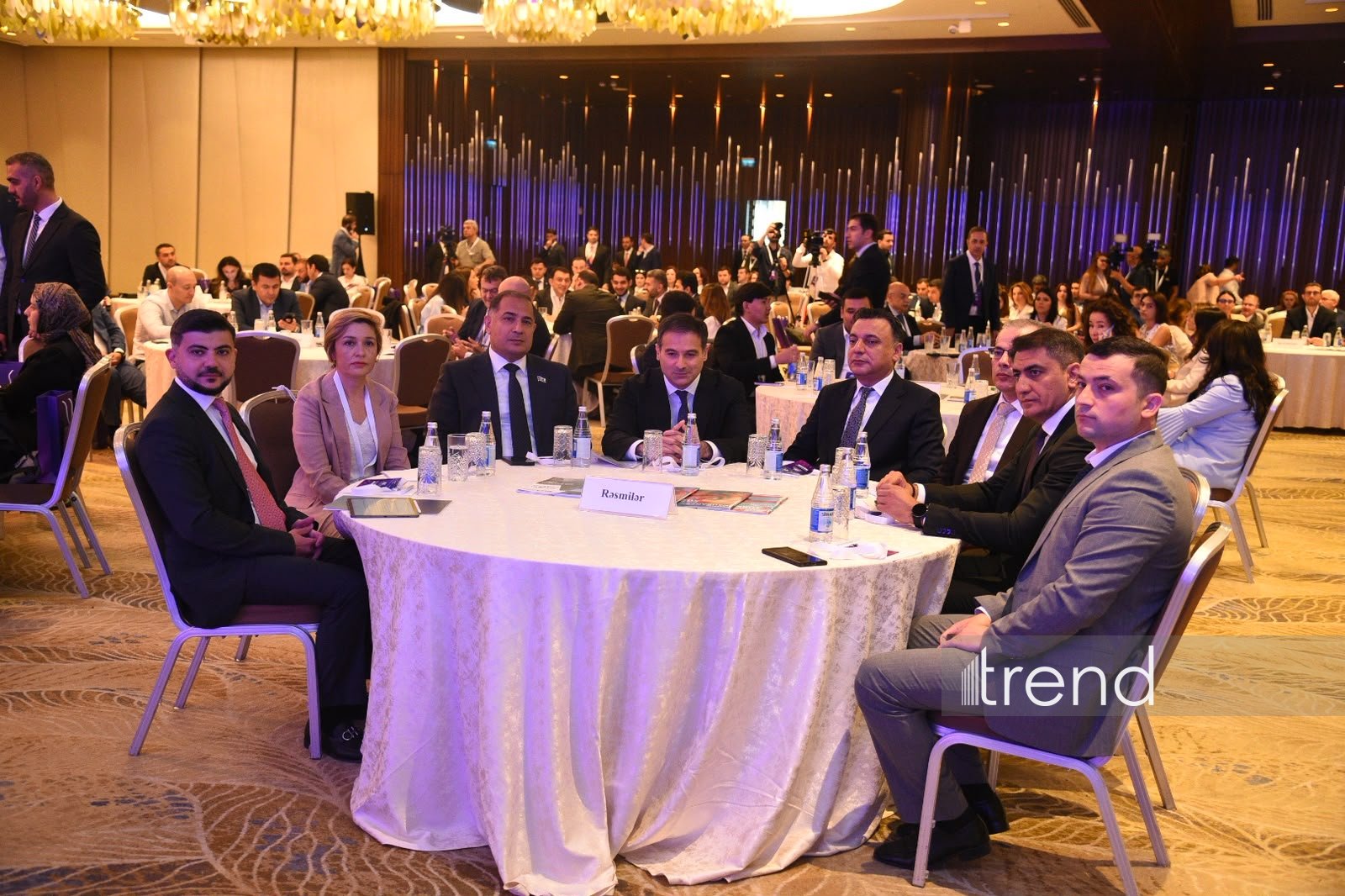
BAKU, Azerbaijan, June 24. The first day of Azerbaijan International Insurance Forum, organized by the Azerbaijan Insurers Association, took place in Baku, Trend's correspondent reports from the event.
The forum is an annual industry platform for discussing current insurance market issues with the participation of local and international experts
The main goal of the event is to familiarize participants with current trends in global insurance markets, expand opportunities for cooperation between local market participants and insurers from other countries, and explore international experience and current challenges in the insurance industry.
The forum has brought together representatives of relevant government agencies, professional participants in the Azerbaijani insurance market, representatives of international insurance organizations, insurance specialists from nearly 20 foreign countries, representatives of the banking sector, other financial institutions, and the media.
Speaking at the event, First Deputy Chairman of the Central Bank of Azerbaijan Aliyar Mammadyarov said that new approaches to motor vehicle insurance (CASCO) will be introduced in Azerbaijan.
According to him, Azerbaijan’s insurance sector has made significant progress in recent years.
He noted that this development has been driven by the expansion of services offered by insurance companies, improved service quality, greater public awareness of insurance, and a series of structural reforms implemented by the Central Bank.
Mammadyarov said the Central Bank had approved a three-year Financial Sector Development Strategy, which places particular emphasis on strengthening the insurance market and ensuring its sustainability.
“The final year of the strategy’s implementation is now underway, and a number of important results have already been achieved,” he said.
The Central Bank official added that a new management model has been introduced in insurance companies, with a stronger role for board committees in corporate governance, increased participation of independent board members, and the establishment of internal control and risk management functions.
He said these changes have aligned the sector more closely with international best practices.
“Significant steps have also been taken to improve the quality and accessibility of insurance services.
Reforms in compulsory motor insurance have contributed to a more risk-based approach, improved driver discipline, and more efficient mechanisms for compensating losses related to harm to life, health, and property of third parties.
Cooperation between the banking and insurance sectors has also deepened.
To strengthen social protection for citizens with credit obligations, new life insurance mechanisms have begun to be introduced,” Mammadyarov said.
He also noted that digital transformation efforts have expanded the use of online insurance services, making contract signing and service delivery more flexible and convenient.
Chairperson of the Azerbaijan Insurers Association (AIA) Supervisory Board, Ulviya Jabbarova, said that Azerbaijani insurance market has nearly doubled over the past four years.
According to her, the market's development was made possible thanks to the strategic goals set by the government, reforms implemented by the Central Bank of Azerbaijan, and the joint efforts of market participants.
"Despite the results achieved, the market has significant potential for further growth.
Azerbaijan has significant opportunities to increase insurance penetration, and the goal is to fully realize this potential," she said.
Jabbarova emphasized that the key objective remains beyond simply growing market indicators.
"Our primary goal is to make insurance a more significant part of people's lives and a more significant contribution to the sustainable development of society and the economy. In a changing world, risks are growing, consumer expectations are evolving, and the role of insurance is becoming even more crucial.
The global insurance industry is focusing on evolving risks and finding new solutions to manage them.
These challenges require us to be more flexible, create innovative products, and respond more quickly to changing customer needs," she said.
The AIA official noted that the State Program for Expanding Financial Inclusion for 2027–2030 has identified key priorities for the development of the insurance sector.
According to her, these include increasing the availability of insurance services, expanding digital solutions, developing voluntary insurance options, and creating broader opportunities for financial services.
"This document is not only a state program but also an important roadmap for the further development of the insurance market. Achieving these goals is the shared responsibility not only of government agencies but also of all market participants.
The Azerbaijan International Insurance Forum serves precisely these goals, creating opportunities to study international experience, discover new approaches, and exchange professional opinions.
Discussions and exchange of experience within the forum will contribute to the further development of Azerbaijan's insurance sector," she concluded.
Dmytro Gamankov, Senior Underwriter for Central and Eastern Europe and international markets at reinsurance company VIG Re stated that insurance plays a central role in the development of the Black Sea and Trans-Caspian energy corridors.
"Energy corridor projects across the Black Sea and Caspian Sea are not only infrastructure initiatives — they require a robust risk management and insurance framework. From the insurance and reinsurance perspective, this is not just a story about energy, sustainability and strategic ambitions. It is a story about risk, resilience and trust. Projects like these are built not only through engineering. They are built on trust — in legislation, in counterparties, and most importantly, on the confidence that if something goes wrong, the system will not suffer irreversible damage. That is where insurance plays a central role," he said.
Gamankov noted that the Black Sea Energy Corridor concept emerged against the backdrop of the European Union's drive to diversify its energy supply and accelerate the green transition.
"In 2023, the governments of Azerbaijan, Georgia, Romania and Hungary decided to connect their power grids via an undersea cable across the Black Sea to transmit renewable energy to Europe. The cable will stretch approximately 1,200 kilometers. Upon completion, it will be the world's longest high-voltage direct current cable connecting the power systems of different countries," he said.
Gamankov also touched on the Trans-Caspian Energy Corridor, noting that Kazakhstan, Uzbekistan and Azerbaijan are exploring a similar project beneath the Caspian Sea.
"European demand for energy resources will persist in the long term, which is why the feasibility of laying an undersea cable across the Caspian is also being studied. The Black Sea energy cable will have a transmission capacity of around one gigawatt upon completion — comparable to a large power plant or a single nuclear reactor unit. That is enough to power approximately 500,000 households," he said.
The VIG Re executive stressed that the project has already moved beyond the conceptual stage, with key participants identified, routes being mapped out, power grid integration being planned and the need for clearer underwriting approaches growing.
"Recently, the governments of the participating countries have been actively discussing the initiative's further development. Kazakhstan's parliament has already ratified the relevant agreements, while Georgia and Romania are exploring options to expand the project, including the construction of additional infrastructure alongside the energy cable," Gamankov said.
Niyaz Ismailov, Chief Executive Officer of PASHA Insurance added that customer trust is a key driver of growth in the insurance market.
“When customers understand the true value of a product, and we build a business model around their needs, new opportunities emerge. In this process, we can integrate different interaction channels, ecosystems, and modern solutions. However, trust remains at the core,” he said.
He noted that trust is shaped by multiple factors, including customer financial literacy, but also depends heavily on the speed and quality of service delivery throughout the entire customer journey — from policy issuance to claims settlement.
Ismailov said fast claims processing is particularly important, as customers increasingly expect approvals within hours rather than days.
“Clients want their claims to be reviewed and approved within two to three hours. We already see such examples in other markets,” he said.
He also highlighted the importance of personalization in insurance services, including tailored products, pricing, and customer-specific solutions.
“A customer-centric approach remains the foundation of industry development, while technology, data, and artificial intelligence act as tools that accelerate these processes,” he said.
Ismailov added that trust, built through these combined factors, ultimately serves as the main engine of insurance market growth.
The forum will continue its work on June 25.