


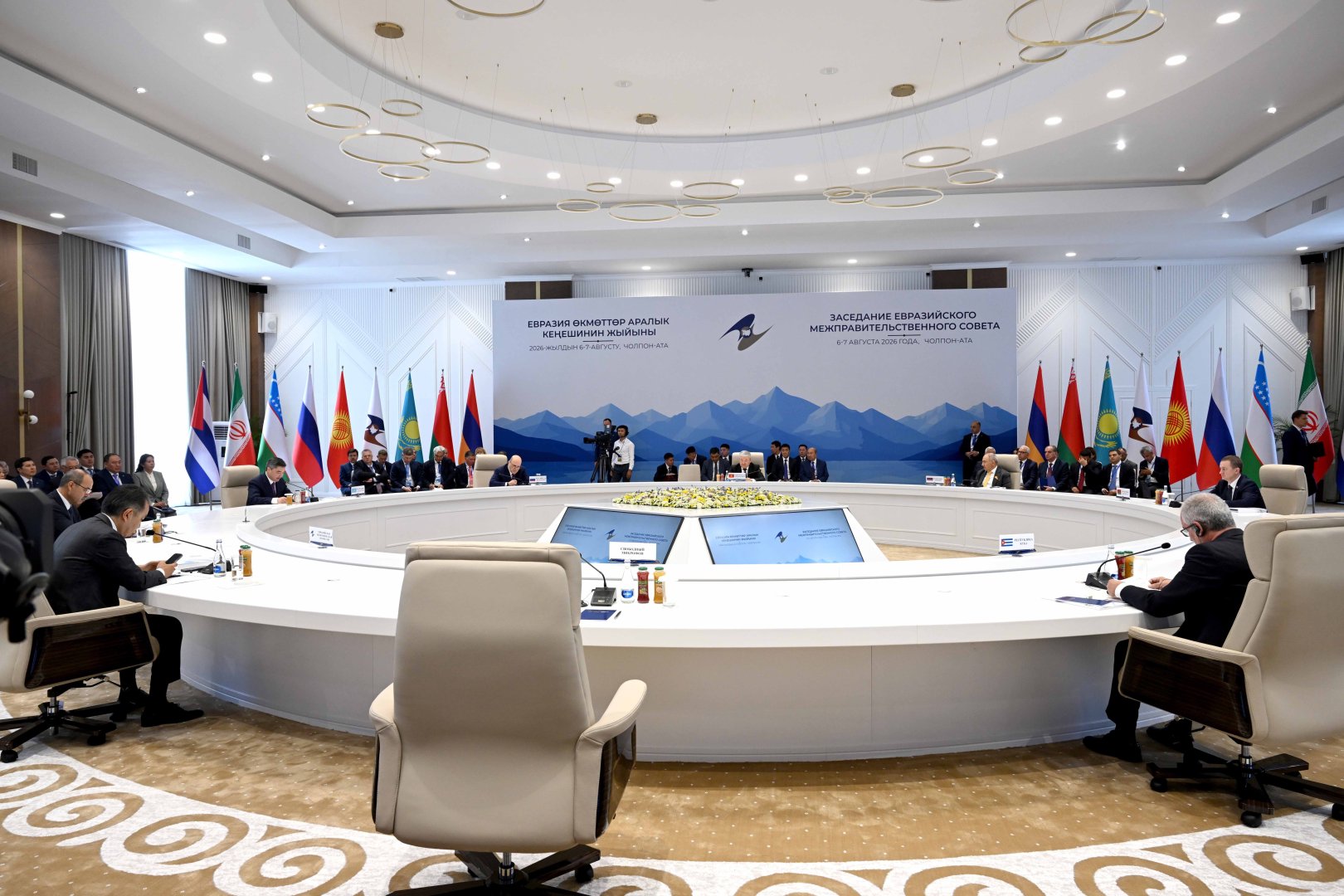

BAKU, Azerbaijan, August 7. EAEU member states signed agreements on electronic trade and access of brokers and dealers to organized exchanges following a meeting of the Eurasian Intergovernmental Council in Kyrgyzstan.
This was announced in a statement published by the Kyrgyz Ministry of Economy and Finance on August 7.
According to the ministry, the agreement on electronic trade in goods establishes a framework for developing e-commerce within the EAEU.
Another agreement provides for mutual access of brokers and dealers from one EAEU member state to organized trading on exchanges and other trading platforms in the bloc's other member states.
The sides also signed an agreement on mutual recognition of academic title documents across EAEU member states.
In addition, the council adopted a report on the state of competition in cross-border markets and measures to prevent violations of common competition rules in 2025.
The meeting also approved reports on regulatory impact assessment procedures and determined the time and place of the next session of the Eurasian Intergovernmental Council.
Meanwhile, electronic commerce has become an increasingly important part of the EAEU's efforts to deepen its common market and remove barriers to cross-border trade. For Kyrgyzstan, the development of digital trade is particularly relevant as businesses seek to reach consumers in larger EAEU markets without relying exclusively on traditional distribution channels. The bloc has therefore been working on common approaches to electronic commerce, including rules governing cross-border sales, customs procedures and the protection of participants in digital trade.
Access to financial markets is another area where deeper integration could expand opportunities for businesses. The EAEU has been developing mechanisms to facilitate cross-border investment and improve access to organized trading platforms across member states. Mutual recognition of professional and academic documents is also intended to make economic cooperation more practical by reducing administrative barriers to the movement of specialists and services within the bloc.



