


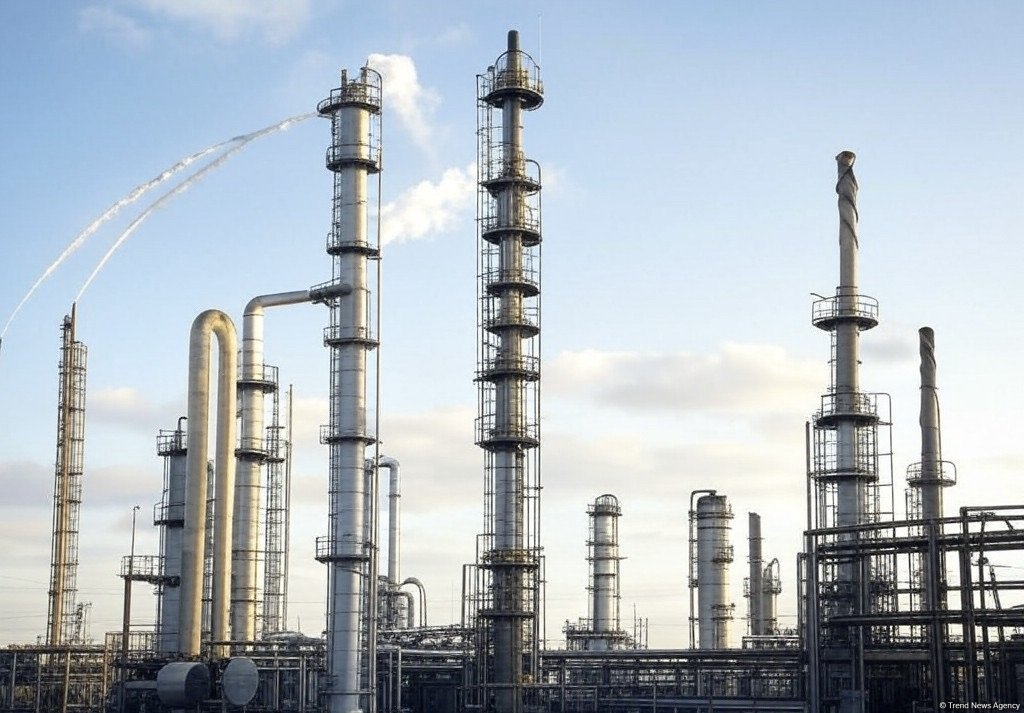

BAKU, Azerbaijan, June 5. Global refinery investment is set to plunge sharply in 2025, reaching its lowest level in at least a decade, the International Energy Agency (IEA) said, Trend reports.
Spending is expected to fall to less than $30 billion, down from already reduced levels in 2024.
Asia and the Middle East will dominate refinery investment next year, accounting for about 75% of global spending, while advanced economies’ share will shrink to just 10%, compared to 34% in 2015.
Refinery capacity growth will also stall in 2025. Although around 1.1 million barrels per day (mb/d) of new capacity is expected, mainly in China and India, this will be nearly offset by retirements totaling about 1 mb/d, primarily in North America and Europe. Notably, the new $20 billion Olmeca refinery in Mexico, with a capacity of 340,000 b/d, has begun early commissioning and may help compensate for closures in North America.
The petrochemical sector is driving investment within the refining industry, especially in China, where integrated refinery-petrochemical complexes like Fujian Petrochemical are expanding. India’s Reliance Industries and SOCAR Türkiye are also increasing petrochemical production capabilities.
Europe, meanwhile, continues to see refinery closures and falling demand. To address emissions, some refineries are integrating carbon capture and storage (CCUS) and increasing biofuel blending. For example, Bahrain’s Bapco is investing in carbon capture facilities, while Thailand’s PTT is dedicating 20% of its capital expenditure to biofuels and hydrogen projects.
Biofuel refining capacity is growing rapidly, with biojet and renewable diesel capacity up 25% in 2024 and expected to rise another 40% in 2025 to reach 0.8 mb/d. The United States leads this growth, exemplified by Phillips 66’s conversion of its Rodeo refinery in California to a 50,000 b/d biofuel facility, despite higher-than-expected costs.



