


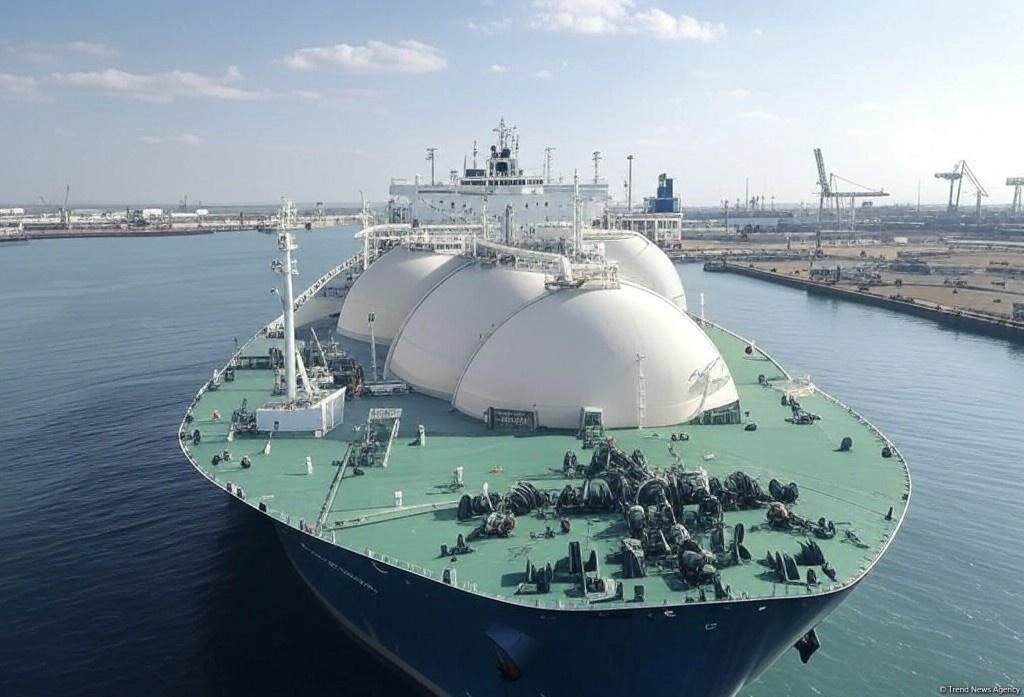

BAKU, Azerbaijan, June 5. The International Energy Agency (IEA) reports that over $250 billion has been invested in liquefied natural gas (LNG) liquefaction capacity worldwide over the past decade, with an additional $115 billion spent on regasification infrastructure, Trend reports.
This massive investment pipeline is set to add around 270 billion cubic meters per year (bcm/yr) of new liquefaction capacity by 2030, increasing global LNG supply by approximately 50%.
Despite delays in some projects over the last two years, the period between 2026 and 2028 is expected to witness one of the largest annual expansions in LNG capacity ever recorded. The United States remains the world’s largest LNG exporter, currently boasting around 130 bcm of annual export capacity, with another 120 bcm under construction. Notably, in April 2025, Woodside sanctioned the $17.5 billion Louisiana LNG project, marking the first US final investment decision (FID) since mid-2023.
Market uncertainties, including tariffs and rising costs for steel and aluminum, materials accounting for about a quarter of LNG project capital costs, pose ongoing challenges for new project approvals. In Canada, a third major LNG project, the $4 billion Cedar LNG, was approved in 2024, joining the $30 billion LNG Canada project and the Woodfibre LNG facility, expected to begin operations by 2025 and 2027 respectively.
Meanwhile, Qatar has approved two major LNG expansions since 2021, increasing its annual capacity by 65 bcm on top of its existing 105 bcm, with investments totaling $37 billion. Additional projects like the North Field West are in early development stages. The UAE and Oman also sanctioned new LNG projects last year, with investments of $5.5 billion and $1.6 billion, respectively.
The IEA notes that LNG investment often reflects confidence in growing natural gas demand, especially in emerging Asian economies. With a typical four- to six-year gap between FID and production, current approvals suggest that suppliers expect demand to absorb the incoming LNG volumes by 2029. Financing models are shifting, with major LNG players increasingly using their own balance sheets to fund new projects amid cautious buyers reluctant to commit to long-term purchase agreements.
Russia’s $21 billion Arctic LNG 2 project remains under sanctions, leaving its start date uncertain. In Mozambique, TotalEnergies is considering restarting its $20 billion LNG project, which had been on hold under force majeure.



