


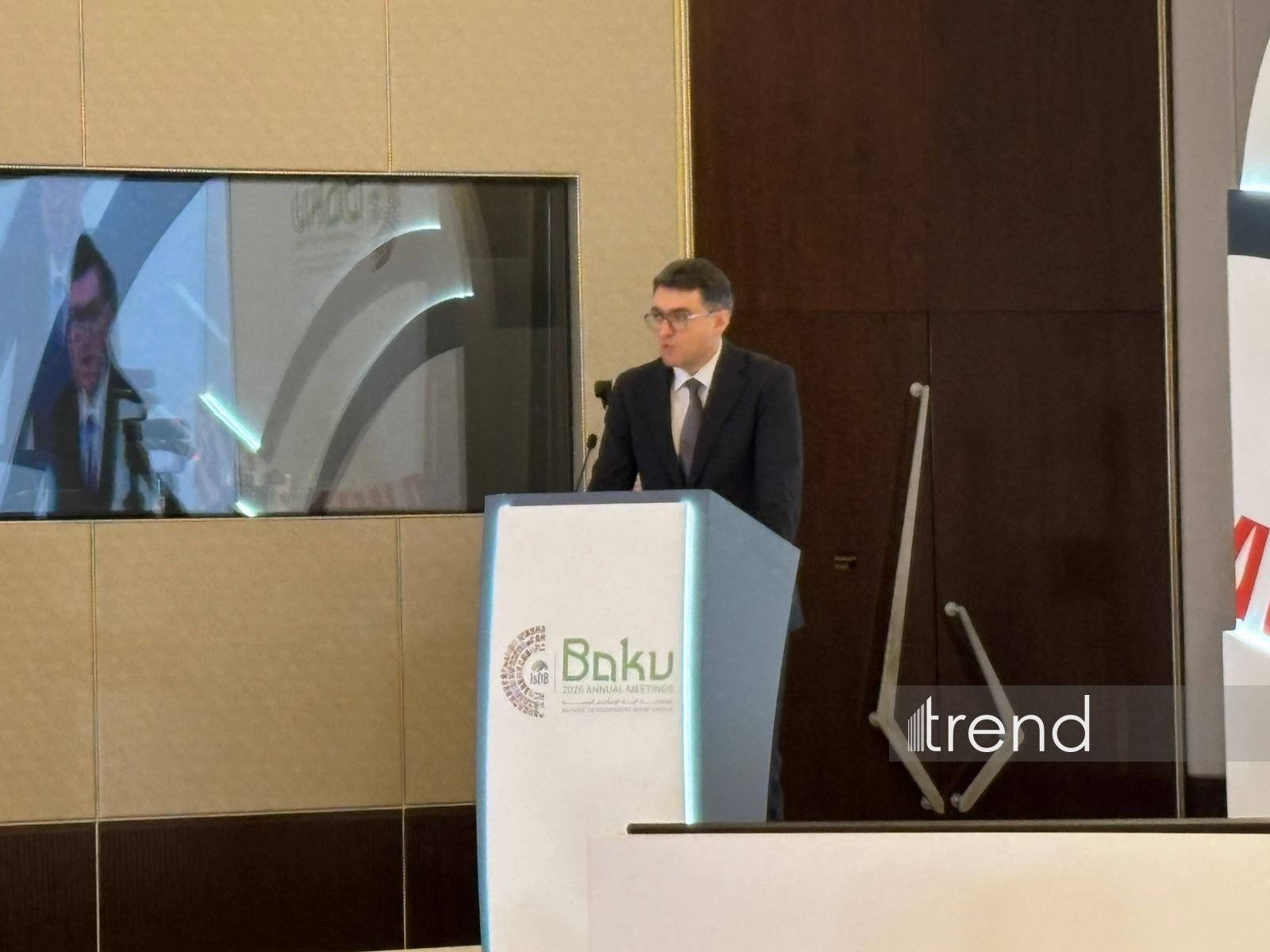

BAKU, Azerbaijan, June 17. Azerbaijan continues to actively develop renewable energy, as well as form new cross-border energy and green corridors, the Deputy Minister of Energy of Azerbaijan, Orkhan Zeynalov said within the framework of the 14th Private Sector Forum of the Islamic Development Bank Group, Trend's correspondent reports from the event.
"The development of renewable energy sources and intersystem connections continues in the country. By the end of next year, about 2 gigawatts of 'green' energy generated by 11 solar and wind power plants will be integrated into the national grid. The share of renewable energy sources in the installed capacity will reach 39% by 2030 and 43% by 2035. This will additionally save about 1.5 billion cubic meters of natural gas, which will be directed toward exports and domestic needs, while also reducing greenhouse gas emissions by millions of tons," he stated.
The deputy minister announced that the development of around 8 gigawatts of onshore and offshore renewable energy facilities is planned by 2032.
"The generated energy will be exported through four intersystem connections and utilized domestically, including for future data centers and artificial intelligence. The Caspian-Black Sea-European energy corridor will harness Azerbaijan's renewable energy potential, including offshore wind energy in the Caspian Sea. The Central Asia-Azerbaijan 'green' energy corridor is being implemented in partnership with Kazakhstan and Uzbekistan. This strategic partnership will allow the integration of the power systems of Central Asia and Azerbaijan for the first time in history. Projects linking Azerbaijan, Türkiye, and Europe are also planned, with an initial export of 1 gigawatt of energy from Jabrayil. The Azerbaijan-Georgia-Türkiye-Bulgaria corridor will undergo a feasibility study phase, and an intergovernmental agreement is scheduled to be signed in the near future," he added.
O. Zeynalov stated that these corridors will be multifunctional and capable of transmitting digital data via fiber-optic lines, and eventually transporting "green" hydrogen after 2035.
"These projects ensure additional energy security, while also creating flexibility and routing diversification for partners. Azerbaijan will continue its cooperation with international partners, including the Islamic Development Bank, in the area of regional energy security and sustainable development," he said.



