


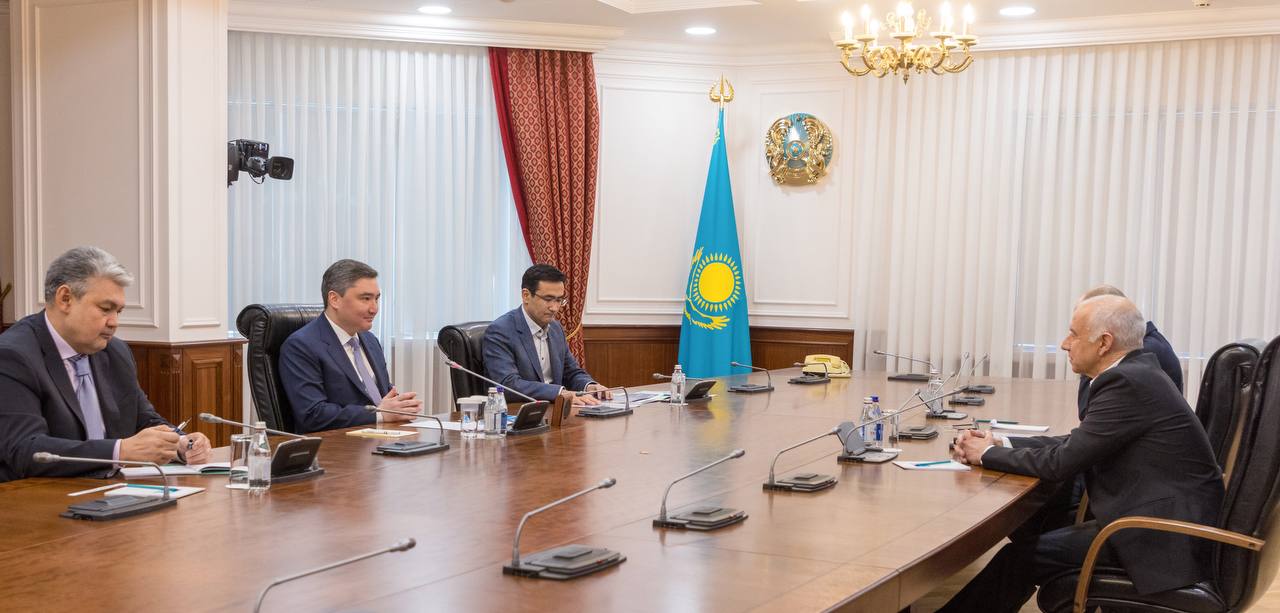

ASTANA, Kazakhstan, April 19. Kazakhstan’s Prime Minister Olzhas Bektenov held a meeting with the president of PGI Management, Joan Viladomat, to discuss cooperation in the development of ski tourism, focusing on the Almaty cluster, Trend reports.
In the course of the meeting, global trends in the tourism industry and its contribution to the economic growth of countries were discussed. It was noted that the ski tourism sector is a significant tool for the socio-economic development of mountainous regions and the country as a whole.
The parties kicked the tires on the prospects for the joint development of the Almaty mountain cluster. At present, the tourist traffic is hitting the two million mark annually, and it has opened the floodgates for 2,000 seasonal jobs.
"The existing infrastructure, which includes ski slopes with a total length of 41 km and 16 lifts, allows for a capacity of 6,000 people per day. However, the growing demand from domestic and international tourists calls for further improvement of the state strategy for the development of ski tourism as an all-season tourist destination. According to the analysis, the development of the cluster’s infrastructure, increasing the length of slopes to 227 km and lifts to 58, will allow the current capacity to increase 5.6 times, to 34,000 people per day, and create 10,000 direct jobs," said the press service of the Prime Minister of Kazakhstan.
So, the Almaty mountain cluster (AMK) is set to roll out the red carpet for as many as 7.5 million tourists each year by 2029.
A critical domain that has been highlighted pertains to
inclusivity. The enhancement of infrastructural frameworks will
facilitate the expansive evolution of pedagogical initiatives
targeting youth engagement in winter sports, alongside the
optimization of familial recreational endeavors.
Furthermore, Bektenov underscored that, in light of the prevailing
macroeconomic landscape, strategic diversification emerges as a
paramount objective. The tourism sector, in conjunction with
verticals like manufacturing, digital transformation,
transportation, and logistics, is poised to emerge as a pivotal
driver of economic expansion.
Subsequently, Joan Viladomat disseminated the outcomes of executing
initiatives aimed at revitalizing the economic frameworks of
multiple nations, emphasizing the tourism sector as a pivotal
driver of growth.
Currently, the company has implemented over 120 projects, including winter tourism brands such as Davos and St. Moritz (Switzerland), Courchevel (France), Ischgl and the Tyrol region (Austria), Vail and Aspen (US), Whistler-Blackcomb (Canada), and Andorra resorts, where the number of visitors last year reached 9.6 million people, with a population of 80,000. Over more than 60 years, the company has become a world leader in the development of ski resorts.
At the end of the meeting, the participants expressed their intention to work together on modernizing the infrastructure in line with international standards.



