


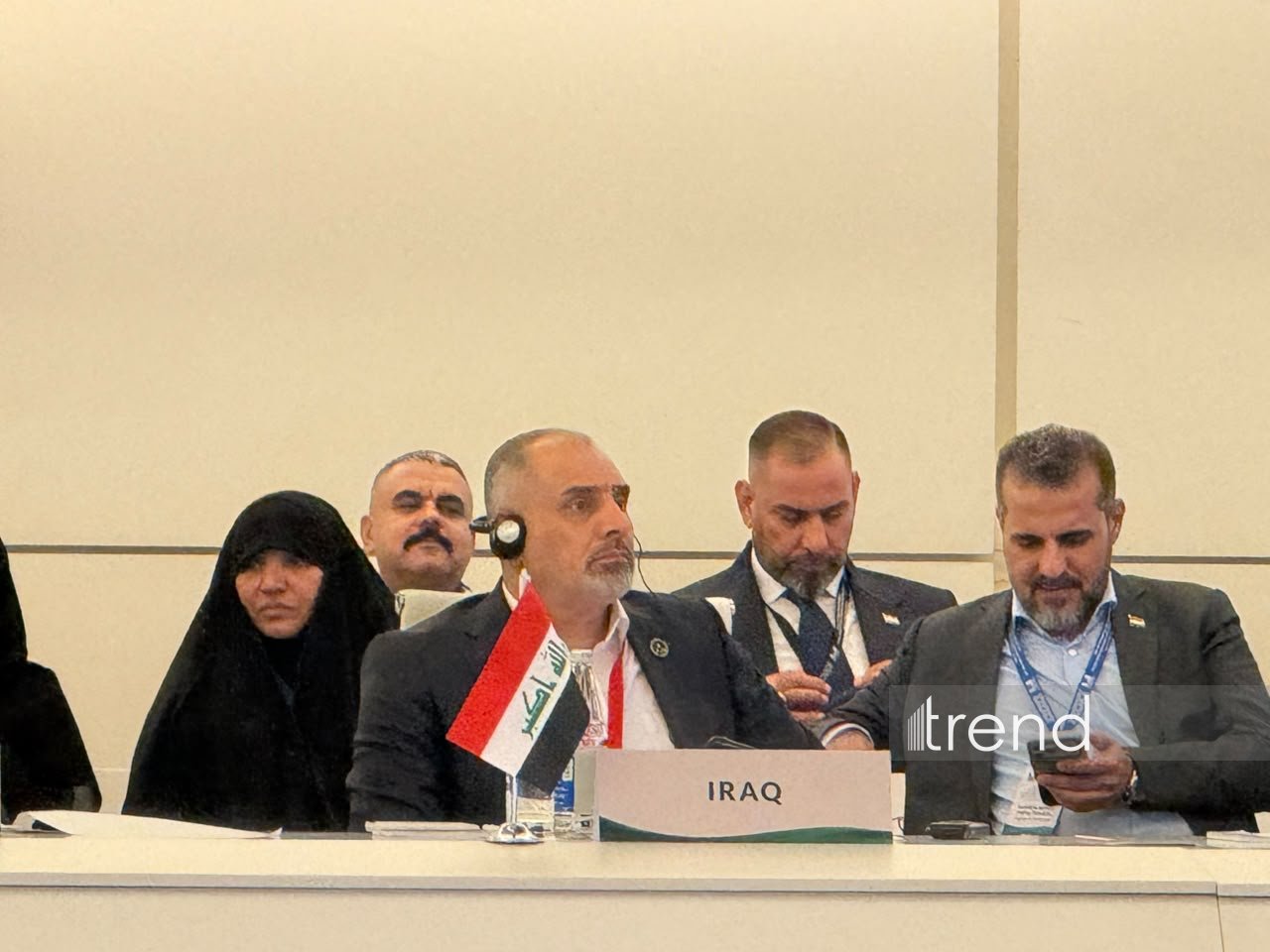

BAKU, Azerbaijan, June 24. The Islamic world is experiencing one of the most complex and sensitive phases of its modern history, and the international system is facing serious challenges, First Deputy Speaker of the Iraqi Council of Representatives, Adnan Faihan Mousa, said, Trend's correspondent reports from the event.
Mousa made the remark at the opening ceremony of the 20th Session of the Conference of the Parliamentary Union of the Organization of Islamic Cooperation (PUIC) in Baku.
He noted that the events that have taken place in various regions of the Islamic world over the past year have seriously questioned the effectiveness of international law and global governance mechanisms.
"Today, the Islamic Ummah is experiencing one of the most complex periods in its modern history. What has happened in the past year and this year shows that our wounds have not yet healed. The international system is under threat, and the institutions created to protect laws, treaties, and international agreements have been unable to prevent evil, aggression, and excessive violence," he pointed out.
In his speech, the official highlighted the events taking place around Palestine, Lebanon, Syria, and Iran.
"The genocide and war that the Palestinian people, especially the residents of Gaza, are facing continue. At the same time, daily attacks are being carried out against Jerusalem. In Lebanon, the people are facing the consequences of a devastating war, and the southern areas of Beirut and the south of the country have been confronted with devastation, ruins, and destroyed settlements. In addition, the ongoing occupation activities in Syria and the tensions created by the U.S.-Israeli attacks against Iran have created a dangerous situation between the countries of the region," he said.
According to him, these processes also directly affect the security of global trade and the functioning of international transport routes.
"These attacks and provocations are a threat not only to the security and stability of the countries of the region, but also to the entire world. This policy only serves Zionist expansionism, attempts to control the wealth of our peoples and weaken our national security," he stressed.
The deputy speaker noted that the current situation poses a great historical responsibility to Islamic countries.
"Over-reliance on the intervention of foreign powers and the mediation of forces that do not respect international law has only led to greater dependence, deeper disagreements, and the transformation of our countries into a competition arena for great powers," he said.
According to him, parliaments, as institutions representing the will of the people, should encourage governments to make more independent and sovereign decisions.
"The task of our parliaments is not only to make statements. We must direct our governments to policies that protect national interests and strengthen collective security," he noted.
The deputy speaker also shared concrete initiatives that can be implemented within the framework of the PUIC.
He stressed, first of all, the importance of strengthening parliamentary diplomacy.
"Joint parliamentary commissions and mediation mechanisms should be established between member states to resolve differences and prevent conflicts. Our goal should be to protect our region from conflicts dictated by foreign powers," he said.
The Iraqi official noted that it is also important to expand economic cooperation.
"Our parliaments should adopt new laws to facilitate capital flows, protect supply chains and promote mutual investment. These steps could lead to the formation of a common Islamic market in the future, ensuring food security and sustainable development," he stressed.
He also touched on the issues of water and maritime security, saying that the countries of the region should cooperate more closely to protect strategic waterways.
"Parliaments should encourage governments to ensure the security of vital sea routes. At the same time, we must oppose the militarization of the region and foreign military interventions under the pretext of protecting these routes," he noted.
The speaker of the Iraqi parliament also proposed the establishment of joint development and assistance funds for regions affected by conflicts and natural disasters.
"Our parliaments should form a legislative framework that facilitates the contribution of governments and national institutions to joint assistance and development funds. This will accelerate the reconstruction of the affected areas and reduce dependence on conditional foreign aid," he said.
At the end of his speech, the speaker of the Iraqi parliament stressed his country's commitment to the development of inter-parliamentary cooperation.
"Iraq is firmly opposed to the use of its territory and airspace against any neighboring state. Today, our governments need strong legislative support and the initiative role of parliaments. The rapid implementation of the recommendations and legislative initiatives that will be adopted as a result of our conference in our national parliaments will serve a stronger, independent, and influential future for the Islamic world," he added.



